
Repowering old solar plant
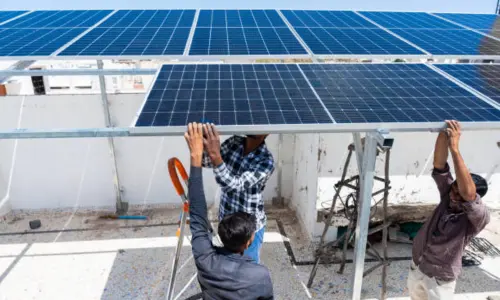
Synergy Solar Solutions provides a professional solar plant efficiency improvement service for rooftop and ground-mounted systems. If your solar plant is producing less power or your solar plant output has reduced compared to earlier years, we help you identify the real loss points and implement the right solution—revamping or repowering—based on site condition, data, and component health.
Our goal is simple: boost solar plant output, improve old solar efficiency, and extend life of solar power plant through practical engineering corrections and upgrade planning.
Our Service Covers
Our solar plant efficiency improvement service includes two work tracks, selected after a plant audit:
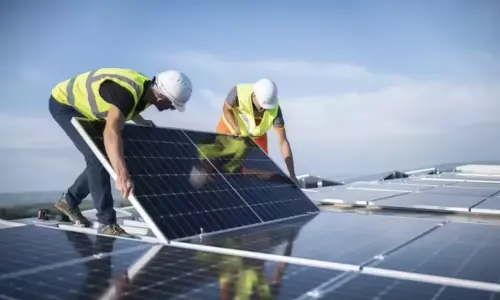
Revamping (Restore and Correct)
Revamping focuses on restoring performance by fixing faults and hidden losses, such as:
Weak or overheated terminations and DC joints
Damaged/aged wiring sections and connectors
Protection and junction issues (as applicable)
Revamping (Restore and Correct)
Earthing/bonding corrections (as applicable)
This track is commonly used as a solar plant low output solution when the plant can recover through correction and restoration.
Repowering (Upgrade for Long-Term Improvement)
Repowering is chosen when core components are outdated, frequently failing, or limiting performance. It may include:
Inverter replacement/upgrade (where required)
String redesign / MPPT balancing (where needed)
BOS improvements (project-dependent)
Old solar panels replacement (only after compatibility and feasibility checks)
This track suits owners planning an old solar plant upgrade or looking to upgrade old solar plant reliability for the long run.
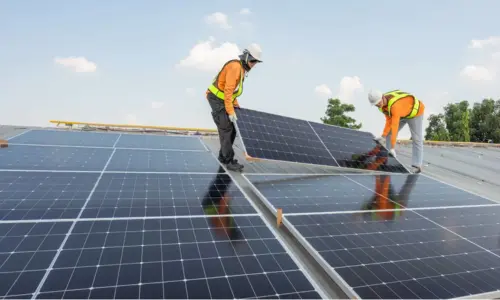
Our Audit-First Approach (What We Check)
Before recommending any major changes, we verify the real reason behind low generation. The audit typically includes:
Generation trend review (season-to-season comparison)
Inverter downtime and fault pattern review
DC-side checks (string balance indicators, junction quality, connector health)
Cable routing and voltage-drop risk review (where applicable)
Site-level causes (shading, soiling pattern, layout constraints)
Mechanical checks (structure condition and alignment if relevant)
Design & Connection Correction
This approach helps avoid “trial-and-error” replacements and supports a clear improvement roadmap.
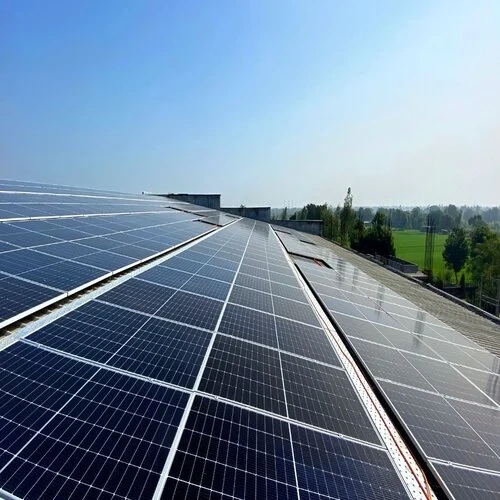
What You Receive (Deliverables)
To keep the service transparent, Synergy Solar Solutions provides:
- Plant audit summary and priority action list
- Recommendation: revamping vs repowering scope
- Work completion checklist and punch closure (for executed scope)
- Post-work verification notes (where measurable)
High Efficiency Improvement Recommendations We Provide (Site-Dependent)
After the audit, we recommend the right improvement plan to improve solar plant performance and boost solar plant output. Depending on site conditions, this may include:
Panel Cleaning System & SOP (We Provide This)
We implement a structured cleaning method and schedule based on your site’s dust/soiling pattern, water quality, and cleaning impact—so generation stays stable and the plant doesn’t drop output quickly after cleaning.
Solar Tracker Assessment (Where Suitable)
Trackers change panel position based on sunlight. We evaluate feasibility (land layout, wind zone, foundation requirements, O&M practicality) and recommend only where it improves performance realistically.
Capacity Optimization / Adding Modules (For Large Land + Low Output Plants)
In many older plants, customers have 4–5 acres available but are using low-wattage modules, resulting in low generation despite high land availability. In such cases, we recommend:
- Upgrading to higher-efficiency modules (more output per panel / per area)
- Re-optimizing layout and strings to utilize available space better
- Adding additional modules where structure/layout allows
- Necessary design, DC/AC matching, and commissioning checks (project-dependent)
This approach helps increase solar plant generation by improving power density and reducing avoidable losses—without wasting available land.
Why Choose Synergy Solar Solutions
Audit-first approach (no guesswork): We identify the exact loss points before recommending revamping or repowering, so you don’t waste money on unnecessary replacements.
Root-cause fixing, not temporary patches: We solve recurring issues like downtime, DC losses, mismatch, and weak joints for lasting performance improvement.
Design & connection expertise included: String mapping, MPPT balancing, polarity/termination checks, and DC routing optimization are part of our efficiency improvement process.
Output-focused recommendations: From correcting losses to upgrade planning, we aim to boost solar plant output and stabilize generation based on site conditions.
Structured cleaning system support: We provide a cleaning SOP/system plan matched to your site’s dust pattern to maintain consistent generation.
Capacity optimization for large sites: If you have available land (e.g., 4–5 acres) but low generation due to old/low-wattage modules, we recommend higher-efficiency upgrades.
Safe, standards-based execution: Work is carried out with proper safety practices, documentation, and inspection-ready handover.
Audit-first approach (no guesswork): We identify the exact loss points before recommending revamping or repowering, so you don’t waste money on unnecessary replacements.
Frequently Asked Questions (FAQ)
How to increase solar plant output?
Start with data: compare generation with the same season last year, check inverter downtime, then verify DC-side losses and recurring faults before deciding upgrades.
How to improve solar efficiency in an old plant?
Focus on reducing losses: correct connections, improve string balance, fix weak cables/joints, reduce inverter downtime, and upgrade only where the audit confirms it.
Ways to improve solar plant performance
Typical ways include revamping electrical joints, correcting DC routing, replacing weak BOS parts (as applicable), improving monitoring response, and repowering aging equipment when necessary.
My solar plant producing less power—what is the first step?
A plant audit: generation trend + inverter fault history + DC-side checks. This identifies whether it’s a maintenance issue or an upgrade requirement.
What is the best solar plant low efficiency solution?
There’s no one-size solution. The best approach is to identify the loss category (downtime, DC losses, module health, layout/soiling) and solve it in priority order.
My solar plant output reduced after a few years—why?
Common reasons are increased soiling impact, shading changes, aging joints/connectors, inverter downtime, and gradual component degradation.
Can you fix underperforming solar plant issues without replacing everything?
Yes. Many plants recover with revamping actions. Repowering is recommended only when core components are outdated or repeatedly failing.
What is included in a solar repowering service?
It generally covers upgrade planning, compatibility checks, and execution support for major components like inverters, strings, and—when required—modules.