
How to Invest in Solar Energy Projects
Solar power is one of the safest and smartest investment choices today. Electricity demand in India is growing every year, and the government is pushing clean energy. This makes solar projects a reliable way to earn steady returns for 20–25 years.
At Synergy Solar, we help investors, landowners, and businesses step into solar — from small rooftop plants to large solar parks.
What Does Investing in Solar Mean?
Investing in solar means putting money into projects that generate electricity using the sun.
The project can be a rooftop solar plant on a factory or office.
It can also be a solar park spread across hundreds of acres.
You earn money by selling the electricity through long-term contracts called PPA (Power Purchase Agreements).
Investing in solar energy is no longer just about going green — it is about earning reliable, long-term returns while contributing to a sustainable future. Here’s why solar is considered one of the best investments today:
Why Invest in Solar Energy?
The cost of a solar EPC project is not fixed — it varies depending on system size, technology, and site conditions. Below are the major factors that determine the EPC pricing and long-term ROI.
Stable and Predictable Returns
- Solar projects sell electricity through long-term Power Purchase Agreements (PPA), often for 20–25 years.
- Once installed, the project generates steady income with very low operating costs.
- Investors can expect 12–20% ROI, depending on the model (utility-scale, rooftop, or land lease).
Rising Demand for Clean Energy
- India’s electricity demand is growing every year.
- The government has committed to 500 GW of renewable capacity by 2030, with solar as the backbone.
- Corporates are under pressure to meet ESG and carbon neutrality goals, increasing demand for solar PPAs.

Government Support & Policies
- Subsidies, tax benefits, and green finance make solar attractive.
- Net-metering policies allow consumers to sell extra power to the grid.
- Renewable Purchase Obligations (RPOs) force industries to buy renewable energy, creating guaranteed demand.
Low Maintenance, Long Lifespan
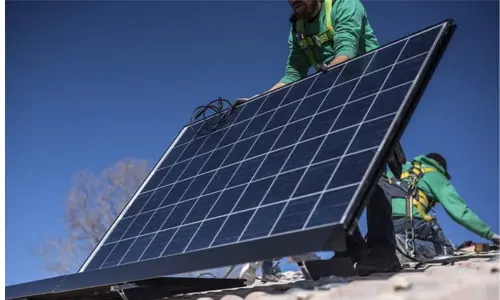
- A solar plant has a lifespan of 25+ years.
- Panels require minimal maintenance — mainly cleaning and occasional inverter servicing.
- Once built, projects are highly reliable with 95%+ uptime.

Multiple Investment Options
- Big investors can fund utility-scale solar parks.
- Businesses can adopt rooftop projects with quick payback.
- Landowners can earn by leasing land for solar farms.
- Even small investors can participate through green bonds and funds.
Environmental & Social Benefits
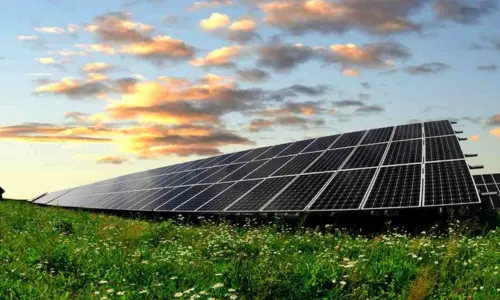
- Every 1 MW of solar power reduces 1,200–1,500 tons of CO₂ per year.
- Solar projects promote energy independence and rural development (jobs, infrastructure).
- Investors can also earn carbon credits, boosting revenue and sustainability credentials.
Phases of a Solar Project
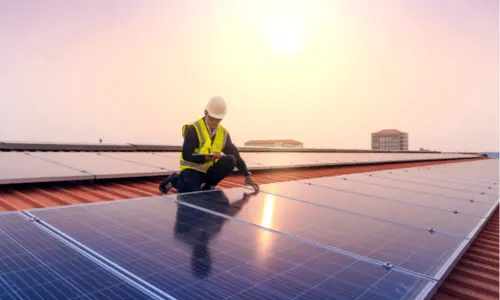
Every solar project has 3 main stages:
- Development – Land selection, approvals, PPA signing.
- Construction – Solar panels and equipment installed.
- Operation – The plant generates power for 20–25 years and earns revenue.
Risk is highest in the first stage and lowest once the project is running.
Ways to Invest in Solar Energy
Utility-Scale Solar Parks
These are large solar farms, usually between 10 MW to 500 MW, built on open land.
- How it works: Investors fund the setup (land, panels, inverters, transmission) and sign a long-term Power Purchase Agreement (PPA) with government utilities (DISCOMs) or private companies.
- Why invest:
1. Predictable income for 20–25 years.
2. Lower risk once the PPA is signed because the buyer is locked in.
- Returns: Typically 12–16% IRR depending on project size, tariff, and location.
- Best for: Large investors, corporates, or consortiums with higher capital to deploy.
Rooftop Solar Projects
Rooftop solar plants are installed on industrial, commercial, or institutional buildings.
- How it works: Investors can own the system (CAPEX model) or fund it under a PPA model where the consumer pays per unit of power.
- Why invest:
1. Entry cost is lower compared to solar parks.
2. Rooftop demand is increasing rapidly due to rising grid tariffs.
3. Payback period is relatively short (4–6 years).
- Returns: ROI between 15–20%, with steady cash flow for 20+ years.
- Best for: Medium-scale investors, businesses, schools, hospitals, malls, housing societies.
Solar Land Leasing
If you own land in a high solar potential state (like Rajasthan, Gujarat, Karnataka, or Tamil Nadu), you can earn by leasing it to solar developers.
- How it works: Developers usually sign 25–30 year lease contracts with fixed annual payments.
- Why invest:
1. No upfront cost — you already own the land.
2. Guaranteed rental income every year for decades.
3. Land value usually appreciates over time.
- Returns: Depends on location but can be ₹25,000–₹60,000 per acre per year or a fixed escalated rent.
- Best for: Farmers, landowners, or investors holding large land parcels.
Green Bonds & Solar Funds
Not every investor wants to directly own land or plants. Green bonds and solar investment funds make solar accessible even with small amounts.
- How it works: You invest money into bonds or funds that finance solar projects. In return, you get fixed annual returns.
- Why invest:
1. No operational responsibility.
2. Diversified portfolio — your money supports multiple projects.
3. Good option for retail or small investors.
- Returns: Typically 8–12% annually, safer but lower than direct ownership.
- Best for: Small investors, corporates looking for ESG-focused financial instruments, and those seeking low-risk green investments.
Example – 1 MW Solar Project Investment
- Land Required: 4–5 acres.
- Investment: ₹3.5–4.5 crore.
- Units Generated: ~15 lakh per year.
- Tariff (selling price): ₹3.5–₹5 per unit.
- Revenue: ₹50–70 lakh per year.
- Payback: ~5 years.
- Project Life: 25 years.
Over 25 years, your returns can be 5–6x the initial cost.
Financing Models
| Model | What It Means | Who It Suits | ROI |
| CAPEX | You own the plant, invest full cost. | Corporates with capital. | 15–20%. |
| OPEX/PPA | Developer owns plant, you invest as partner | Businesses avoiding upfront spend. | 12–16%. |
| Lease Land | You rent land to solar developers. | Landowners. | Fixed income. |
| Green Bonds | Buy solar-backed financial products. | Small investors. | 8–12%. |
Risks in Solar Energy Investment & How to Manage Them
Like any investment, solar projects come with certain risks. The good news is that most of these risks can be minimized with the right planning and partners.
Tariff & Policy Risks
- The Risk: Electricity tariffs and renewable energy policies can change over time. If tariffs fall, project revenues may reduce.
- How to Manage:
1. Sign long-term Power Purchase Agreements (PPA) (15–25 years) with fixed tariffs.
2. Work with creditworthy buyers (government DISCOMs or reputed corporates).
3. Ensure contracts include escalation clauses (annual tariff increase of 1–3%).
Land Disputes & Legal Challenges
- The Risk: Many solar parks require hundreds of acres. Land in India is often fragmented, with unclear ownership, encroachments, or title disputes. This can delay or even block projects.
- How to Manage:
1. Partner with professional solar land aggregators who handle land consolidation and title verification.
2. Use long-term leases instead of outright purchase to reduce upfront costs and farmer resistance.
3. Conduct thorough due diligence on records and permissions before investment.
Technology & Equipment Failure
- The Risk: Low-quality solar panels, inverters, or trackers may fail early, reducing energy output and profits.
- How to Manage:
1. Use Tier-1 solar modules with 25-year performance warranties.
2. Choose experienced EPC contractors with a track record of utility-scale projects.
3. Invest in O&M (Operations & Maintenance) contracts with performance guarantees.
Grid Connectivity & Power Evacuation
- The Risk: Even if the plant generates electricity, weak or unreliable grid infrastructure can prevent smooth evacuation. This means power may not be fully sold.
- How to Manage:
1. Select project sites close to substations or high-capacity transmission lines.
2. Work with state utilities to secure grid access approvals early.
3. In hybrid models, consider battery storage to reduce grid dependency.
Financing & Payment Risks
- The Risk: Project financing may be delayed, or buyers (DISCOMs) may delay payments.
- How to Manage:
1. Secure bankable PPAs with reliable off-takers (corporates often pay faster than state DISCOMs).
2. Explore green loans or ESG-linked finance for lower-cost funding.
3. Diversify buyer portfolio (sell to multiple buyers if possible under open access).
Environmental & Social Risks
- The Risk: Projects can face opposition due to environmental clearances or community concerns.
- How to Manage:
1. Choose non-agricultural, barren, or wasteland for projects.
2. Engage with local communities and provide CSR benefits (jobs, infrastructure support).
3. Ensure compliance with environmental and zoning regulations.
Why Choose Us?
Trusted by corporates & global investors
Pan-India presence in top solar states
Stable ROI with long-term contracts
End-to-end solutions: land, EPC, PPA, O&M
10+ years of solar expertise
FAQ – Solar EPC Cost & ROI in India
Is solar energy a good investment in India?
Yes. Solar energy projects provide stable 12–20% returns, long-term contracts through PPA (Power Purchase Agreements), and strong government support, making them a safe and profitable investment.
How do I invest in solar energy projects?
You can invest in solar through:
- Utility-scale solar parks (large farms selling power to DISCOMs/corporates).
- Rooftop solar projects (factories, malls, hospitals).
- Solar land leasing (earn rental income from land).
- Green bonds or solar funds (low entry option for small investors).
How much land is required for a 1 MW solar plant?
On average, 4–5 acres of land per MW is required. The land must be flat, non-shaded, and close to a substation for grid connection.
What is the ROI from solar projects?
ROI depends on the model:
- Utility-scale projects: 12–16% IRR.
- Rooftop projects: 15–20% ROI.
- Green bonds: 8–12% annually.
- Land leasing: Fixed annual rent for 25–30 years.
Do I need a loan to invest in solar energy?
Not always. In a CAPEX model, you may finance the project through equity or loans. But in a PPA/OPEX model, the developer funds the project and you invest through equity, profit-share, or bonds.
Which states are best for investing in solar parks in India?
The top states are Rajasthan, Gujarat, Karnataka, Tamil Nadu, and Telangana — they have high solar irradiation, available land, and strong grid connectivity.
How long does it take to recover investment in solar?
For CAPEX projects, the payback period is 4–6 years, after which the plant generates pure profits for the remaining project life of 20+ years.
Do solar projects in India get subsidies?
Yes, subsidies are available mainly for rooftop solar projects (residential, commercial). Large-scale utility projects under PPA generally don’t receive subsidies, as developers handle investment.
What risks are involved in solar investment?
Risks include tariff changes, land disputes, equipment failure, and grid issues. These can be managed through long-term PPAs, Tier-1 solar panels, clear land titles, and reliable developers.
Can small investors put money in solar projects?
Yes. Small investors can participate through solar green bonds, mutual funds, or small rooftop partnerships, with entry points starting at around ₹10,000.