
Solar Dryer
At Synergy Solar, we are a trusted supplier, distributor, and installer of solar dryers across India and abroad. Our solutions help farmers, cooperatives, food processors, and industries reduce post-harvest losses, cut energy costs, and improve product quality
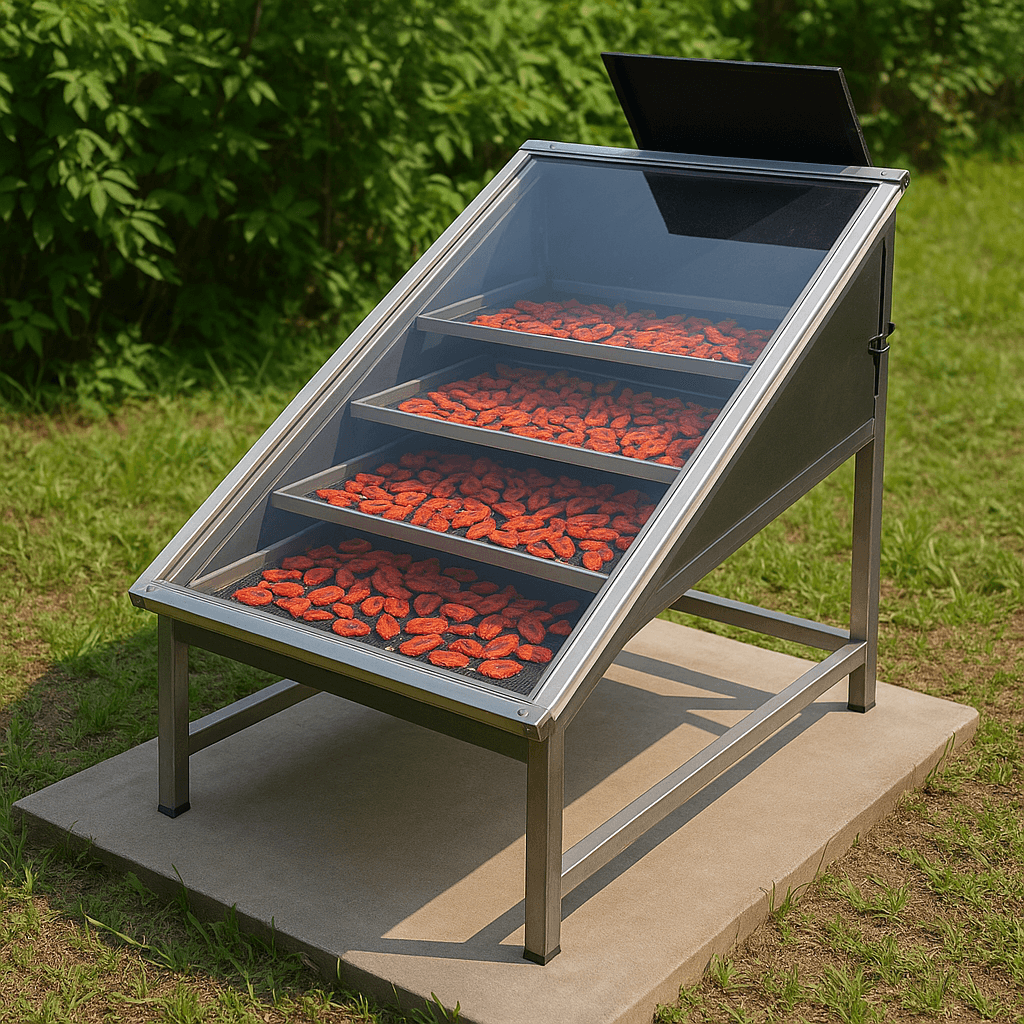
What is a Solar Dryer?
A solar dryer is a controlled system that uses solar thermal energy, airflow, and insulation to remove moisture from food and other products. Compared to open sun drying, solar dryers are:
Faster (50–70% time reduction)
Hygienic (no dust, flies, or sand contamination)
Energy-saving (free solar energy, lower fuel bills)
Quality-preserving (better color, nutrients, aroma)
How Does a Solar Dryer Work?
Heat Transfer Principles:
- Conduction – heat passes through trays and materials
- Convection – hot air circulates around the product
- Radiation – solar rays heat absorber plates or glazing
Core Components:
- Solar collector (absorbs sun’s heat)
- Drying chamber (insulated cabinet with trays/racks)
- Air circulation (natural or forced with fans)
- Vents (to exhaust humid air)

Applications of Solar Dryers

Fruits & Vegetables
- Mango, banana, tomato, papaya, jackfruit, chili, grapes
- Extends shelf life by 300–500%
- Used by farmers, FPOs, and food processors

Fish & Seafood
- Shrimp, anchovies, sardines, mackerel, shellfish
- Prevents sand/fly contamination
- Retains protein & omega-3 oils
- Suitable for fisheries and seafood exporters
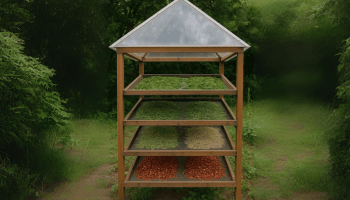
Herbs & Spices
- Turmeric, ginger, pepper, cardamom, mint, moringa
- Retains essential oils and aroma
- Prevents mildew during monsoon
- Ideal for spice traders and herbal medicine manufacturers
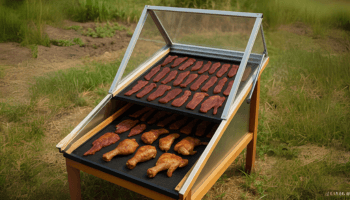
Meat & Poultry
- Jerky, dried chicken, rural meat preservation
- Indirect models reduce bacteria load
- Used in food processing and packaging
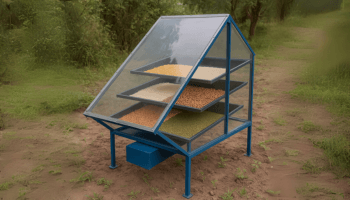
Grains & Pulses
- Paddy, maize, pulses, cocoa, coffee beans
- Dries to safe storage moisture levels
- Prevents fungal growth and aflatoxin
Types of Solar Dryers (with Costs & ROI)
We supply and install different types of solar dryers depending on scale, crop, and budget.

Direct Solar Dryer
The simplest model where products are dried under a transparent cover.
- How it Works: Sunlight directly heats trays inside a glazed cabinet.
- Capacity: 5–50 kg
- Best For: Small farmers, households, pilot projects
- Applications: Fruits (banana, mango, tomato), herbs, spices
- Cost: ₹4,000 – ₹30,000 (DIY to small commercial)
- ROI: 1–2 years (low-cost model, quick returns)
- Limitation: Direct sunlight may affect color/nutrients in some crops

Indirect Solar Dryer
Products are not exposed to sunlight; heated air is transferred from a solar collector.
- How it Works: Collector heats air → air enters insulated chamber → moisture is vented out.
- Capacity: 20–500 kg
- Best For: Fisheries, spice processors, herbal medicine producers
- Applications: Fish, shrimp, meat, turmeric, ginger, mint, tulsi
- Cost: ₹50,000 – ₹5 lakh (small to medium capacity)
ROI: 2–3 years
Advantage: Hygienic, protects sensitive products from UV

Hybrid Solar Dryer
Combines solar energy with electricity, LPG, or biomass backup for 24/7 drying.
- How it Works: Uses solar during the day, auxiliary heating at night or cloudy times.
- Capacity: 100 kg – 3 tons/day
- Best For: Commercial food processors, exporters, agro-industries
- Applications: High-value crops like mango, chili, cocoa, coffee, meat products
- Cost: ₹3 lakh – ₹40 lakh+ (depending on size & features)
- ROI: 2–4 years (savings on electricity/diesel)
- Advantage: Consistent drying regardless of weather

Greenhouse Solar Dryer
Large-scale continuous drying system shaped like a tunnel or greenhouse.
- How it Works: Covered with UV-stabilized polyfilm or glass; forced airflow distributes heat.
- Capacity: 500 kg – 10 tons/day
- Best For: Farmer cooperatives, agribusiness, bulk crop drying
- Applications: Paddy, maize, chili, cocoa, coffee, fruits & vegetables in bulk
- Cost: ₹5 lakh – ₹50 lakh+ (industrial scale)
- ROI: 3–5 years (bulk savings + large output)
- Advantage: High capacity, uniform drying, scalable for industry
Costs & Subsidy Support
Approximate Costs:
- DIY Cabinet Dryer: ₹4,000 – ₹30,000
- Indirect Dryers (20–500 kg): ₹50,000 – ₹5 lakh
- Hybrid Commercial Dryers: ₹3 – 40 lakh
- Tunnel/Greenhouse Dryers: ₹5 – 50 lakh+
Subsidies & Grants:
- India (MNRE): 40–60% subsidy for farmers and cooperatives
- Africa: FAO, UNDP, GIZ-funded projects
- Southeast Asia: Government agriculture department support
We provide assistance with subsidy applications and documentation for eligible buyers.
Benefits & Limitations
Free Renewable Energy
Uses solar power, reducing energy bills and dependency on non-renewable sources.
Hygienic and Dust-Free Drying
Enclosed systems prevent contamination by dust, insects, or pollutants.
50–70% Faster Than Open Sun Drying
Accelerated drying reduces spoilage and increases batch turnover.
Carbon-Neutral & Eco-Friendly
Emits zero greenhouse gases, aligning with sustainable practices.
ROI in Just 2–3 Years
Why Choose Us?
Customized solar dryer solutions for different industries
Complete installation & commissioning
Training & after-sales service
Subsidy application support
Solar Dryer FAQs
What is a solar dryer and how does it work?
A solar dryer is an enclosed system that uses solar energy, heated air circulation, and controlled ventilation to remove moisture from food or agricultural products, ensuring faster and hygienic drying compared to open sun drying.
How long does solar drying take?
Drying time varies with product type and climate, but most crops take 4–10 hours, while high-moisture products may require 1–3 days.
Can solar dryers work in high-humidity or rainy climates?
Yes. In such regions, hybrid solar dryers with electric or biomass backup ensure reliable drying. Desiccant-based designs are also used for extra humidity control.
What is the lifespan of a solar dryer?
A well-maintained solar dryer lasts 10–15 years. Periodic cleaning of collectors, trays, and ducts, along with replacing UV films when needed, keeps it running efficiently. and herbicide use, farmers save money, while earning extra income from livestock products (milk, wool, meat). This can shorten the payback period by up to 1 year.
What maintenance is required for a solar dryer?
Maintenance is minimal and includes cleaning trays, checking vents and ducts for blockage, ensuring fans (if used) work properly, and occasionally replacing glazing or UV sheets.
Do solar dryers preserve nutrients better than open drying?
Yes. Solar dryers operate in controlled conditions that protect vitamins, proteins, aroma, and color, unlike open drying where nutrients degrade due to excessive heat, dust, and pests.
Is government subsidy available for solar dryers?
Yes. In India, MNRE and state agriculture departments provide 40–60% subsidy support for farmers, cooperatives, and FPOs. We assist clients in applying for these schemes.
Do you provide installation and after-sales support?
Yes. We handle supply, distribution, installation, and training, and also offer after-sales service, spare parts, and maintenance support.