
Solar Farm Installation in Haryana
Haryana is rapidly becoming a hub for renewable energy due to its high solar potential, industrial growth, and government support. Establishing a solar farm in Haryana is both a sustainable and profitable investment, offering long-term revenue opportunities for businesses, farmers, and landowners.Synergy Solar is a trusted solar farm installation company in Haryana, providing complete EPC (Engineering, Procurement, and Construction) services, from project feasibility and land assessment to installation, grid connectivity, and long-term operation.
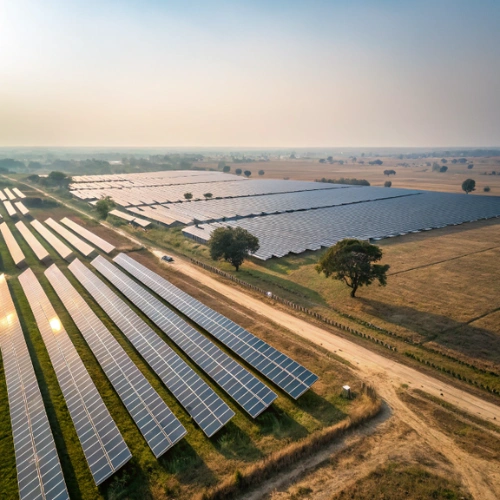
Benefits of Investing in a Solar Farm in Haryana
Investing in solar farms per MW in Haryana ensures environmental and financial benefits:
High Solar Irradiation: Maximizes electricity generation per MW annually.
Government Support & Incentives: Subsidies, tax benefits, and net metering reduce costs.
Industrial & Residential Demand: Cities like Gurugram, Faridabad, Karnal, and Panipat have high electricity requirements.
Agricultural Land Utilization: Farmers can use agrivoltaics or lease land for additional income.
Long-Term Financial Stability: Solar farms provide steady revenue for 25+ years per MW.
Understanding Land Costs for Solar Plants in Haryana
Land Requirement per MW: 4–5 acres.
Average Land Cost: ₹12–₹35 lakh per acre, depending on district and proximity to grid substations.
Lease Income: Farmers can earn ₹30,000–₹60,000 per acre annually through solar farm leasing in Haryana.
Top districts for solar farm projects: Hisar, Sirsa, Karnal, Bhiwani, Rohtak, Panipat.
Detailed Solar Energy Farm Cost per MW in Haryana
| Component | Approx. Cost (₹ Crore per MW) | % of Total |
| Solar Panels & Inverters | 2.2 – 2.5 | 50–55% |
| Civil & Electrical Works | 0.9 – 1.0 | 20–25% |
| Transmission & Grid Connectivity | 0.4 – 0.6 | 10–12% |
| Land (4–5 acres) | 0.5 – 1.0 | 10–15% |
| O&M & Miscellaneous | 0.2 – 0.3 | 5–8% |
Total Investment per MW: ₹4–5 crore (approx.)
Commercial Solar Farm Subsidy & Incentives in Haryana
Although large-scale subsidies are limited, several incentives apply:
Rooftop Subsidy
Available for systems up to 3 kW.
Accelerated Depreciation
Up to 40% for commercial projects.
Net Metering
Sell surplus electricity to DISCOMs.
Power Purchase Agreements (PPAs)
Secure long-term electricity sales with industries or government entities.
Maximizing Solar Farm ROI per MW in Haryana
Annual Energy Production: 14–16 lakh units per MW.
Revenue: ₹80 lakh – ₹1 crore per MW annually.
Payback Period: 4–6 years per MW.
Internal Rate of Return (IRR): 12–16%.
Plant Life: 25+ years ensures consistent profits.
Structured Solar Business Plan for Haryana
A clear business plan ensures solar farm success per MW:
- Conduct a feasibility study for solar irradiation, grid access, and land suitability.
- Secure land or lease agreements (4–5 acres per MW).
- Partner with a trusted solar EPC company in Haryana for design and installation.
- Arrange financing via CAPEX, OPEX/BOOT, or bank loans.
- Sign PPAs with DISCOMs or private buyers for steady revenue.
- Commission and monitor the plant using IoT/SCADA systems.
Solar Plants on Agricultural Land in Haryana
Farmers can generate income from their land without disrupting crops:
Dual-Use Agrivoltaics
Solar panels installed above crops generate energy while crops continue to grow.
Land Leasing
Farmers earn ₹30,000–₹60,000 per acre per year without investment.
Government Support
Small-scale solar projects with subsidies and grid connectivity.
Collaborative Farming Projects
Multiple farmers can pool land for larger solar farms.
Future of Solar Farms in Haryana
Hybrid Solar + Storage Projects: Continuous power supply.
Industrial Solar Adoption: Factories and IT parks switching to renewable energy.
Leasing Opportunities: Farmers and landowners earn revenue by leasing land.
Residential Rooftop Solar: Growing adoption in Gurugram, Faridabad, and Rohtak.
Government Goals: Achieving 6,000 MW solar capacity by 2030.
Why Choose Us – Solar Farm Installation in Haryana
Trusted Solar EPC Partner – Years of experience handling commercial and utility-scale solar projects across Haryana.
ROI-Focused Approach – Projects per MW are optimized for maximum returns, fast payback, and long-term efficiency.
End-to-End Services – From feasibility studies, design, installation, to financing support, O&M, and PPAs.
Advanced Monitoring – IoT/SCADA-enabled systems for real-time performance tracking.
Customized Solutions – Solar farms designed for industrial, agricultural, and residential land types.
Sustainability Commitment – Supporting Haryana’s renewable energy goals while reducing carbon footprint.
Government Compliance – Smooth approvals from HAREDA, DISCOMs, and local authorities.
Frequently Asked Questions – Solar Farms in Haryana
Q1. How much does a solar farm cost per MW in Haryana?
The total investment per MW typically ranges from ₹4–5 crore, including solar panels, inverters, civil works, land, and grid connectivity.
Q2. Can I set up a solar plant on agricultural land in Haryana?
Yes. Farmers can use dual-use agrivoltaics or lease their land to developers, earning ₹25,000–₹50,000 per acre annually without upfront investment.
Q3. Are there subsidies available for commercial solar farms in Haryana?
Yes. Subsidies are available primarily for rooftop solar systems up to 3 kW. For utility-scale farms, tax incentives, leasing models, and Power Purchase Agreements (PPAs) help improve ROI.
Q4. What is the expected ROI for a solar farm in Haryana?
A well-planned solar farm per MW offers 12–16% IRR with a payback period of 4–6 years and a plant life of 25+ years.
Q5. Which locations in Haryana are best for solar farm projects?
High-potential districts include Hisar, Sirsa, Karnal, Bhiwani, and Rohtak due to good solar irradiation and connectivity.
Q6. How do I get government approvals for a solar farm in Haryana?
Approvals are required from state DISCOMs, Haryana Renewable Energy Development Agency (HAREDA), and local authorities for land, grid connectivity, and power evacuation.