
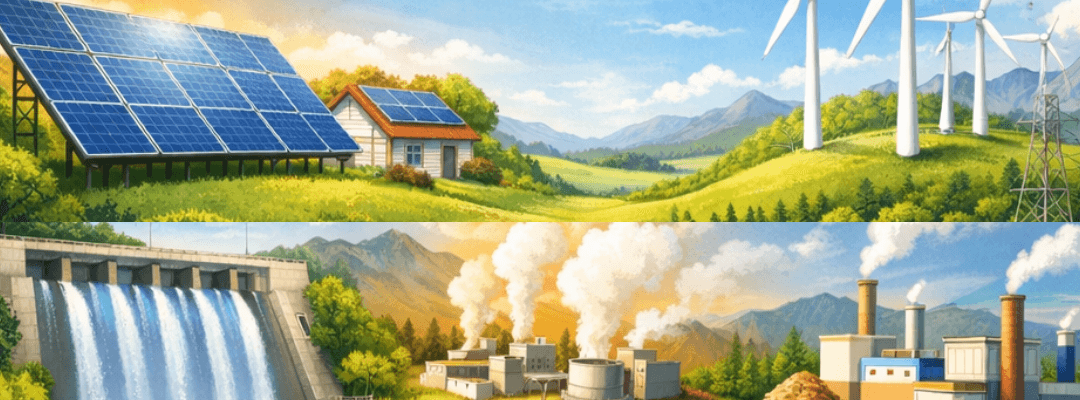
As the global energy landscape shifts, renewable energy technologies are becoming central to how we power our homes, industries, and cities. Driven by the need to reduce carbon emissions, achieve energy independence, and build resilient systems, renewables are no longer an alternative—they're the standard.
This guide explores the leading renewable technologies today, how they work, and where each excels. While all of them play vital roles, we’ll also take a closer look at solar energy, which continues to be one of the most accessible and fast-growing solutions for homeowners and small businesses.
What Is Renewable Energy?
Renewable energy is power generated from natural sources that replenish themselves—like sunlight, wind, water, and underground heat. Unlike fossil fuels, these sources produce little or no greenhouse gas emissions and are considered vital to achieving net-zero carbon goals globally.
1. Wind Energy: The Giant of Clean Power
Wind energy is now one of the fastest-growing sources of electricity worldwide. By capturing kinetic energy from the wind using massive turbines, it provides a clean, renewable, and cost-effective energy source.
Onshore vs. Offshore Wind
- Onshore Wind: Common in rural areas; generally cheaper to install.
- Offshore Wind: Located in oceans where wind is stronger and steadier; higher energy potential.
Innovations :
- Floating offshore wind farms
- Taller turbines with advanced sensors
- AI-powered predictive maintenance systems
2. Hydropower: The Backbone of Renewable Electricity
Hydropower uses the flow of water—usually from dams or rivers—to turn turbines and generate electricity. It currently provides over 15% of global electricity, making it the largest source of renewable power worldwide.
Types of Hydropower:
- Reservoir (dam-based) systems
- Run-of-river projects
- Pumped storage (acts like a battery)
Pros:
- Reliable base-load power
- Long life span (50+ years)
Cons:
- Ecological impact on river systems
- Limited geographic scalability
3. Geothermal Energy: Power from the Earth’s Core
Geothermal power harnesses heat from beneath the Earth’s surface to produce electricity and heat buildings.
Best suited for:
- Volcanic regions (Iceland, parts of the U.S., New Zealand)
- Direct heating applications (district heating, greenhouses)
What’s New :
- Enhanced Geothermal Systems (EGS): Use fracking-style tech to unlock heat in dry rock areas
- Hybrid plants that combine geothermal with solar or biomass
4. Green Hydrogen: The Clean Fuel of the Future
Green hydrogen is made by splitting water molecules using electricity from renewable sources (like wind or solar). The result is a clean, storable fuel with zero emissions when used.
Key Benefits:
- Can power industries that can’t easily electrify (steel, cement, shipping)
- Useful in long-term energy storage and fuel cells
Growth Trends:
- Pilot hydrogen trains, trucks, and ships
- Electrolyzer costs are dropping fast
- Backed by large-scale government investments (EU, Japan, U.S.)
5. Biomass & Bioenergy: From Waste to Watts
Biomass energy involves converting organic material—wood chips, crop residue, or even garbage—into electricity, heat, or fuel.
Applications:
- Combined heat and power (CHP) plants
- Biofuels for transport
- Waste-to-energy incineration
Challenges:
- Must be sustainably sourced
- Can compete with food crops
- Not always carbon-neutral
6. Solar Energy: Widely Accessible and Rapidly Advancing
Though it’s not the sole solution, solar energy remains a key pillar of renewable power—especially in residential and decentralized settings.
Most Common Uses:
- Rooftop PV panels for homes
- Community solar projects
- Utility-scale solar farms
- Solar + battery storage systems
Solar Highlights :
- Widespread use of bifacial panels
- Growth in solar-integrated building materials
- Falling costs make it more accessible worldwide
While solar covers just over 30% of global renewable additions, it remains the most popular choice for individual consumers.
7. Battery Storage: The Enabler of Intermittent Renewables
Although not a power source itself, energy storage is crucial for balancing renewable supply and demand. Battery storage allows solar and wind energy to be used even when the sun isn’t shining or the wind isn’t blowing.
Popular Technologies:
- Lithium-ion batteries: Dominant in homes and EVs
- Flow batteries: For grid-scale applications
- Solid-state batteries: Safer, higher-capacity tech on the horizon
Quick Comparison of Renewable Energy Types
| Technology | Scalability | Reliability | Cost Trend | Ideal For |
|---|---|---|---|---|
| Wind | High | High | Falling | Grid-scale electricity |
| Hydropower | Medium | Very High | Stable | Base-load power |
| Geothermal | Low | Very High | High | Heating, base-load power |
| Green Hydrogen | Medium | Medium | High | Industry, storage |
| Biomass | Medium | Medium | Moderate | Heat, electricity, fuel |
| Solar | High | Moderate | Falling | Homes, small business, rural areas |
The Future of Renewable Energy Is Integrated
Each renewable energy technology plays a distinct role in achieving global sustainability. While large utilities may favor wind, hydro, and hydrogen for their power needs, homeowners and small businesses often turn to solar for its accessibility and simplicity.
In the coming years, expect to see hybrid energy systems that combine:
- Wind + Solar + Storage
- Hydrogen + Solar
- Geothermal + Solar heating