
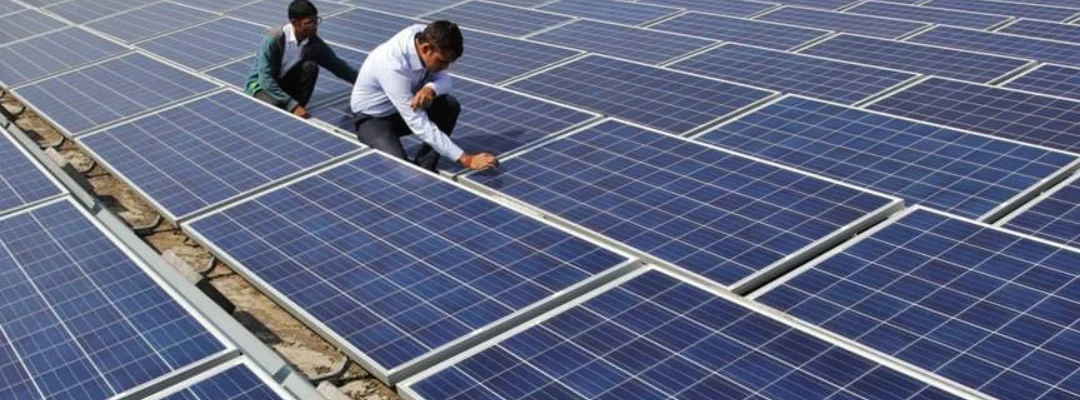
Solar Subsidy & Policy
Solar System Price and Subsidy in Delhi (2026)
Solar energy is rapidly becoming the preferred choice for homeowners, businesses, and industries in Delhi due to its affordability and sustainability. As the government pushes for increased adoption of renewable energy, solar power offers a cost-effective way to reduce electricity bills while contributing to environmental sustainability.
With generous subsidies and incentives, Delhi residents can install solar panels at a reduced cost while benefiting from long-term energy savings. This guide provides a detailed breakdown of the latest solar system prices, subsidy structures, and installation processes for 2026.
Solar Subsidy for Rooftop Solar Systems in Delhi
To make solar energy affordable, the Government of India offers subsidies through the National Portal for Rooftop Solar. These subsidies significantly reduce the solar panel installation cost in Delhi, making solar energy an attractive investment.
Subsidy Structure for Rooftop Solar Installations
| Solar System Capacity | Applicable Subsidy (₹) |
| Up to 3 kW | ₹18,000/kW |
| 3 kW – 10 kW | ₹9,000/kW* |
| Above 10 kW | ₹1,17,000** |
| RWA / Group Housing Societies (GHS) | ₹9,000/kW (for common facilities up to 500 kWp) |
Who Can Apply for a Solar Subsidy?
- Individual homeowners installing on-grid rooftop solar panels
- Housing societies (RWAs/GHSs) planning shared solar systems
- Schools, hospitals, offices, and commercial buildings
- Industries and startups aiming for long-term energy savings
Solar Panel Prices in Delhi (2026)
The cost of installing a solar system depends on several factors, including solar panel type, installation complexity, and local labor costs. Below is the estimated price range for different solar system sizes.
| Solar System Size | Estimated Price (₹) |
| 1kW | ₹75,000 – ₹85,000 |
| 2kW | ₹1,50,000 – ₹1,70,000 |
| 3kW | ₹1,89,000 – ₹2,15,000 |
| 4kW | ₹2,52,000 – ₹2,85,600 |
| 5kW | ₹3,15,000 – ₹3,57,000 |
| 10kW | ₹5,31,000 – ₹6,07,000 |
Solar Panel Prices in Delhi After Subsidy
With the government subsidy applied, the cost of installing solar panels significantly reduces, making it an affordable energy alternative.
| Solar System Size | Estimated Price (₹) | Subsidy (₹) | Price After Subsidy (₹) |
| 1kW | ₹75,000 – ₹85,000 | ₹18,000 | ₹57,000 – ₹67,000 |
| 2kW | ₹1,50,000 – ₹1,70,000 | ₹36,000 | ₹1,14,000 – ₹1,34,000 |
| 3kW | ₹1,89,000 – ₹2,15,000 | ₹54,000 | ₹1,35,000 – ₹1,61,000 |
| 4kW | ₹2,52,000 – ₹2,85,600 | ₹63,000 | ₹1,89,000 – ₹2,22,600 |
| 5kW | ₹3,15,000 – ₹3,57,000 | ₹72,000 | ₹2,43,000 – ₹2,85,000 |
| 10kW | ₹5,31,000 – ₹6,07,000 | ₹1,17,000 | ₹4,14,000 – ₹4,90,000 |
How to Apply for a Solar Subsidy in Delhi?
Applying for a solar subsidy in Delhi involves a few simple steps:
- Register Online: Visit the National Portal for Rooftop Solar and create an account.
- Submit Application: Fill out the solar subsidy application form with property details.
- Site Inspection: A DISCOM representative will inspect your site for feasibility.
- Get NOC Approval: If eligible, you will receive a No Objection Certificate (NOC).
- Select a Vendor: Choose a government-approved solar vendor and finalize the installation contract.
- Installation & Verification: Complete the installation and request final verification.
- Subsidy Disbursement: Upload payment receipts and required documents. The subsidy will be credited to your bank account within 30 days.
Benefits of Installing a Solar System in Delhi
- Lower Electricity Bills: Save up to 90% on electricity costs.
- Government Incentives: Avail subsidies, tax benefits, and net metering advantages.
- Energy Independence: Reduce dependence on grid electricity.
- Environment-Friendly: Contribute to a cleaner, greener Delhi
- Long-Term Investment: Solar panels offer ROI within 6-8 years and last 25+ years.
Frequently Asked Questions
What is the significance of the DBT scheme, and who administers it?
The DBT scheme, or Direct Benefit Transfer scheme, initiated by the Indian government, aims to lower solar panel prices in Delhi and promote off-season adoption of solar energy. The designated platform for facilitating online processing and disbursement of the scheme is the National Portal for Rooftop Solar.
How does the DBT scheme operate?
Under the government-sanctioned DBT scheme in India, consumers pay the full installation cost to their solar system vendor. Following thorough verification, the scheme refunds the appropriate subsidy amount directly to their bank account. This process is applicable for 30 days after the system is commissioned.
What is virtual net metering, and why is it noteworthy?
Many states are implementing VNEM, or virtual net metering, policies. These policies benefit residential customers by enabling them to receive net metering concessions even if the solar panels are not installed on their property. An example of this type of net metering is community solar farm-based policies, where subscribers of one solar farm receive net metering credits during periods of low power generation. All members equally benefit from this arrangement.
Can I avail solar subsidy in Delhi for any type of solar system?
Solar panel systems are available in various types and sizes to meet the diverse needs of residential and commercial customers. These include off-grid solar, on-grid, and hybrid solar systems. Presently, the solar subsidy in Delhi is only applicable to on-grid solar systems installed on-site.
Would residents of Delhi opt for solar panel installation? Why is the state government emphasizing this initiative in Delhi?
Delhi grapples with poor air quality and high pollution levels. With the government incentivizing the use of solar panels to power residential, commercial properties, and farmhouses, an increasing number of customers are transitioning to solar energy. Modern solar systems have the capacity to generate ample electricity to fulfill our power requirements and offset the usage of grid-supplied power. Unlike conventional energy sources, solar energy generation is clean and does not emit harmful gases into the environment.
Planning solar?
Get a free site survey and subsidy guidance
Our engineers size the system to your bill and roof, handle the subsidy paperwork and install it end to end.
What size solar system does my home need?
Divide your average monthly units by about 120 to get a rough kW size (1 kW makes around 4 units a day in most of India). A home using 300–400 units a month usually needs 3 kW. We confirm the size after a free site survey.
How much subsidy can I get for a home system?
Under PM Surya Ghar: Muft Bijli Yojana, homes get a central subsidy of ₹30,000 per kW for the first 2 kW and ₹18,000 for the third kW, up to ₹78,000 for systems of 3 kW and above. Some states add their own top-up. We register your application on the national portal and handle the DISCOM paperwork.
How much roof space is needed?
Plan roughly 80–100 sq ft of shade-free roof per kW. A 3 kW system needs about 250–300 sq ft.
Keep reading
Related articles
Government Solar Subsidy Explained: Benefits of the Pradhan Mantri Surya Ghar Yojana
Solar Panels for Hillside Homes: Understanding Costs and Considerations
Complete details about Solar Panel Subsidy in Jharkhand
Free site survey · Written quote
Planning solar? Get a free site survey
Share your monthly electricity bill and roof size. Our engineers size the system, explain the subsidy and send a written quote.