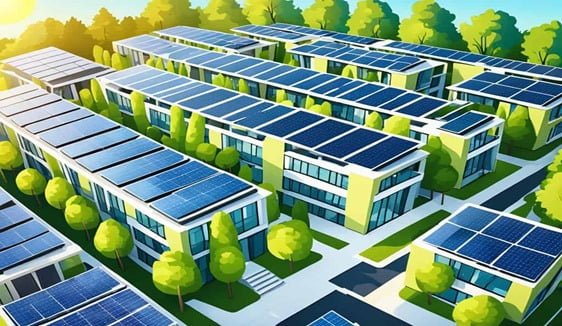
Introduction: A Smarter Way for Housing Societies to Save
In most Indian housing societies, electricity bills are one of the biggest monthly expenses. From running lifts and water pumps to lighting common areas, the costs quickly add up — often forming 40–50% of the maintenance fees residents pay.
The good news? Rooftop solar power can cut these costs almost in half, making societies more sustainable and financially independent.
Why Housing Societies Spend So Much on Power
Lifts & Elevators – constant usage in multi-storey buildings
Water Pumps – to supply overhead tanks
Common Area Lighting – corridors, parking, gardens, security cabins
Rooftop solar is one of the smartest investments Indian homeowners and housing societies can make. It can slash electricity bills, provide energy independence, and increase property value.
But to get the best performance and safest return, you need to evaluate a few critical factors before installation. This simple guide explains what you should check before going solar.
1. Assess Your Energy Needs
Review your last 12 months’ electricity bills.
Average monthly consumption helps size your system (3 kW, 5 kW, etc.).
Consider peak load appliances like ACs, geysers, and washing machines.
Sizing correctly ensures you don’t under- or over-invest.
2. Roof Space and Strength
Space needed: ~100 sq. ft. per 1 kW of solar panels.
Roof structure: Must support panel weight and mounting frames.
Orientation: South-facing with the right tilt (equal to your latitude) gives maximum output.
Avoid shadows from nearby trees/buildings.
3. Local Rules & Net Metering Policies
Check DISCOM policies in your state — rules differ for system size and approvals.
Ensure your installer helps with subsidy applications and net-metering paperwork.
Under the Pradhan Mantri Surya Ghar Yojana, homeowners can get up to 40% subsidy on rooftop systems.
4. Choose Quality Components
Panels: Go for Tier-1, MNRE-approved monocrystalline or bifacial panels with a 25-year performance warranty.
Inverters: Pick a trusted brand. String inverters are common; microinverters are better for partially shaded rooftops.
Balance of System: High-quality cables, mounting structures, surge protection, and proper earthing ensure safety.
5. Select a Certified, Experienced Installer
Always hire an MNRE-approved EPC contractor.
Ask for references or visit past installations.
Ensure they cover design, installation, subsidy, net-metering, and maintenance.
Check if they offer an Annual Maintenance Contract (AMC) for long-term support.
6. Estimate Cost, Savings & Payback
Get multiple quotes with a clear breakdown of panels, inverter, wiring, labor, and approvals.
Typical ROI is 3–5 years after subsidy.
Ask for a generation estimate report (units per year + projected savings).
Example: A 5 kW system costing ₹2.4 lakh (₹1.6 lakh after subsidy) can save ₹70,000–₹80,000 per year, paying for itself in ~3 years.
7. Know the Maintenance Needs
Solar is low-maintenance but not zero-maintenance:
Clean panels every 2–4 weeks to remove dust.
Monitor output using the inverter app.
Get annual inspections to check wiring, earthing, and panel health.
In most Indian apartment complexes and housing societies, electricity costs for common areas are among the largest monthly expenses. Lifts, water pumps, corridor lights, and clubhouses consume power daily, driving up maintenance charges for residents.
Installing rooftop solar for these common area loads is the smartest first step societies can take. It’s predictable, cost-efficient, and ensures shared benefits for every resident.
Why Focus on Common Area Loads?
1. High and Predictable Consumption
Common facilities (lifts, pumps, security systems, and lights) operate daily, with steady and measurable energy usage.
Unlike individual flats, where consumption fluctuates, these loads are easier to estimate — allowing societies to size their solar systems accurately.
2. Single Meter Connection
Most housing societies already maintain a separate electricity meter for shared facilities.
This makes it simple to:
Integrate rooftop solar into one central system
Apply for net metering with DISCOMs
Track savings transparently for all residents
3. Shared Benefits for All Residents
Reduced electricity bills directly translate into lower monthly maintenance fees.
Every household benefits, regardless of individual electricity consumption inside flats.
Solar becomes a community asset, strengthening resident support and unity.
I short: Common area solar = predictable loads + easy billing + shared savings.
Example: Savings for a 100-Flat Housing Society
Common Load Consumption: ~15,000 units/month
Solar System Size: 50 kW rooftop solar
Gross Cost: ₹30–35 lakh
Subsidy (MNRE, PM Surya Ghar Yojana): ₹8–10 lakh
Net Cost: ₹22–25 lakh
Monthlyb Bill Before Solar: ₹1,20,000
Monthly Bill After Solar: ₹60,000
Annual Savings: ₹7 lakh+
Payback Period: ~4 years
Lifetime Savings (25 years): ₹1.5 crore+
“After going solar for common loads, our maintenance charges dropped by ₹700 per flat. Residents were thrilled with the savings.” – RWA President, Bengaluru
Government Subsidies & Support
Pradhan Mantri Surya Ghar Yojana: Up to 40% subsidy on residential rooftop systems.
Net Metering: Sell surplus solar power back to the grid and earn credits.
Green Financing: Banks and NBFCs offer low-interest loans for RWAs and co-operatives.
Always work with MNRE-approved vendors to ensure subsidy eligibility.
Benefits Beyond Cost Savings
Lower Maintenance Fees → Residents save ₹500–₹1,000 per month.
Higher Property Value → Flats in solar-powered societies are more attractive to buyers.
Eco-Friendly Living → Every 50 kW system saves ~60 tons of CO₂ annually (like planting 2,500 trees).
Energy Independence → Less dependence on DISCOMs and rising tariffs.
Community Pride → Being recognized as a “green housing society.”
Key Tips for Housing Societies
Conduct an energy audit to measure common load usage.
Ensure shadow-free rooftop space (~100 sq. ft. per kW).
Choose Tier-1 panels and branded inverters for reliability.
Sign an AMC (Annual Maintenance Contract) for worry-free operation.
Present a clear cost-benefit analysis to residents for easy approval.
Introduction: Rising Power Costs Make Solar More Attractive
Electricity prices in India have risen steadily, with households in cities paying ₹5,000–₹8,000 per month in electricity bills. This has made rooftop solar energy not just an eco-friendly choice—but a financially smart investment.
Among various options, a 4 kW rooftop solar system has proven ideal for average Indian homes, with the potential to cut electricity bills to zero—thanks to its energy generation capacity and the net metering policy.
How Much Power Does a 4 kW Solar System Generate?
A 4 kW solar system typically generates:
16–20 kWh per day
~500–600 units per month
Equivalent to ₹5,000–₹7,000/month in electricity savings
This is enough to cover energy needs like:
Lights, fans, refrigerators, and washing machines
1–3 AC units (moderate usage)
TVs, Wi-Fi routers, kitchen appliances, laptops, and other devices
Net Metering Benefit Any excess solar power is sent back to the grid. These exported units are credited against your electricity usage—reducing your bill to ₹0 in many cases.
Financial Breakdown: Real Savings and ROI
Cost of a 4 kW System (2025 Estimate)
Gross Cost: ₹2,20,000 – ₹2,60,000
MNRE Subsidy (40% for ≤3kW + 20% for remaining 1kW): ~₹85,000
Net Cost: ₹1,35,000 – ₹1,75,000
Annual Savings
₹60,000–₹85,000/year in bill savings
Payback Period: 4–6 years
Free electricity for 15–20 years after payback
“Our 4 kW system paid for itself in 4.5 years. Since then, no bills—just savings,” shares Mr. Rao, homeowner from Hyderabad.
Environmental Impact: Clean Energy for a Cleaner Planet
Each 4 kW rooftop solar system reduces your carbon footprint by:
4–5 tons of CO₂/year
Equivalent to planting over 100 trees annually
Reduces dependence on fossil fuels and stabilizes the grid
Is a 4 kW Solar System Right for Your Home?
Ideal For:
Households with monthly bills of ₹5,000–₹8,000
2–3 BHK homes with moderate to high appliance usage
Homes using 2–3 ACs, fridges, geysers, washing machines
Space Needed:
350–400 sq. ft. of unshaded rooftop space
Flat RCC rooftops or metal sheds are suitable
South-facing orientation preferred for optimal performance
Bonus Features: Hybrid & Backup Options
A 4 kW system can be integrated with:
Hybrid inverters for solar + grid + battery usage
Lithium or lead-acid batteries for backup during power cuts
Smart monitoring apps to track energy generation
Government Support & Net Metering Explained
MNRE Subsidy: 40% for the first 3kW and 20% for next 2kW (capped at 10kW)
Net Metering: Any unused solar energy is exported to the grid; you get credits
Loans: Green loans and EMI options available from SBI, HDFC, and others
Note: Work with MNRE-registered installers to ensure subsidy eligibility.
Expert Insight: Efficiency Depends on Design
“System size alone doesn’t guarantee bill reduction. Correct orientation, inverter quality, and real-time monitoring are crucial,” says Dr. Meera Patel, Solar Systems Engineer.
Harnessing the Power of the Sun: How to Set Up a Solar System for Your Home in Chennai
With the increasing desire for Eco-friendly and sustainable energy solutions, adopting a home solar solution has become a smart and popular choice. In Chennai, where sunlight is abundant throughout the year, setting up a solar system for home is not only environmentally responsible but can also save you money in the long run. However, the process of setting up a solar system can be overwhelming for many homeowners.
In this article, we will guide you through the steps involved in setting up a solar system for your home in Chennai. From understanding the benefits of solar energy to finding the right solar panels and choosing a reliable installer, we've got you covered. We will also explore the different types of solar systems available, such as grid-tied and off-grid systems, and help you determine which one is right for your home.
If you're ready to start harnessing the power of the sun and enjoy the benefits of solar energy, keep reading to discover how to set up a solar system for home in Chennai.
Benefits of solar energy for homes
One of the primary benefits of solar energy for homes in Chennai is the potential for significant cost savings on energy bills. Solar panels can generate enough electricity to power an entire home, reducing or even eliminating the need for electricity from the grid. This can result in significant savings over time, especially as energy prices continue to rise.
In addition to cost savings, solar energy is also a more environmentally-friendly option than traditional fossil fuel-based energy sources. Solar power produces no greenhouse gas emissions, making it a clean and sustainable way to power your home. This can be especially appealing to homeowners in Chennai who are concerned about their environmental impact and want to do their part to reduce their carbon footprint
Another benefit of solar energy for homes in Chennai is the potential for increase property value. Homes with solar panels are often seen as more desirable by potential buyers, as they offer the promise of lower energy bills and a more sustainable lifestyle. This can translate into a higher selling price for the home, making solar panels a valuable investment for homeowners.
Hiring a professional solar installer
Installing a solar system for your home in Chennai is a complex process that requires the expertise of a professional solar installer. These installers have the knowledge and experience to ensure that your solar system is designed and installed correctly, maximizing its efficiency and performance.
When choosing a solar installer, it's important to do your research and select a reputable and experienced company. Look for installers who are licensed and insured, and who have a track record of successful solar
installations in the Chennai area. It's also a good idea to ask for references from past customers and to get quotes from multiple installers to ensure you're getting the best value for your money.
In addition to the installation process, a professional solar installer can also help you navigate the various government incentives and subsidies available for solar energy systems in Chennai. They can guide you through the application process and ensure that you're taking advantage of all the financial benefits available to you
Government incentives and subsidies
One of the key factors that has contributed to the increasing popularity of solar energy in Chennai is the availability of government incentives and subsidies. These programs are designed to make solar energy more accessible and affordable for homeowners, and can significantly reduce the upfront cost of installing a solar system.
In Chennai, the Tamil Nadu government offers a variety of incentives and subsidies for homeowners who install solar energy systems. This includes a 30% subsidy on the cost of the solar panels, as well as tax benefits and net metering programs that allow homeowners to sell excess energy back to the grid.
In addition to the state-level incentives, the Indian government also offers a number of national-level incentives and subsidies for solar energy systems. This includes the Rooftop Solar Photovoltaic Programme, which provides financial assistance for the installation of rooftop solar systems, and the Solar Energy Corporation of India, which offers a range of support and funding programs for solar energy projects.
By taking advantage of these government incentives and subsidies, homeowners in Chennai can significantly reduce the cost of installing a solar system and enjoy a faster return on their investment.
Conclusion: Enjoying the benefits of solar power in Chennai
As homeowners in Chennai continue to embrace the benefits of solar energy, the installation of solar systems is becoming an increasingly common sight across the city. By harnessing the power of the sun, homeowners can enjoy significant cost savings on their energy bills, reduce their carbon footprint, and potentially increase the value of their homes.
However, the process of setting up a solar system can be complex and overwhelming for many homeowners. That's why it's important to work with a professional solar installer who can guide you through the process and ensure that your system is designed and installed correctly.
From understanding the basics of solar power to choosing the right solar panels and components, this article has provided a comprehensive overview of the steps involved in setting up a solar system for your home in Chennai. By taking advantage of the government incentives and subsidies available, and by working with a reputable solar installer, homeowners in Chennai can unlock the full potential of solar energy and enjoy the many benefits it has to offer.
As the world increasingly recognizes the urgency of addressing climate change and reducing reliance on fossil fuels, solar energy has emerged as a promising solution. While most discussions about solar panels often focus on standalone homes, apartment dwellers or those living in flats can also benefit from this sustainable energy source. In this article, we will explore the feasibility, benefits, types of solar installations, and considerations for solar panels for flats.
Understanding the Basics
Solar panels, or photovoltaic (PV) panels, convert sunlight into electricity that can be used to power homes and appliances. They are modular in design and can be installed on rooftops, balconies, or as part of a community solar project. For those living in flats, the challenge of limited space or ownership rights can make installation more complex, but recent innovations and legislative changes have opened new possibilities.
Benefits of Solar Panels for Flats
Reduced Energy Bills: Utilizing solar energy can significantly lower electricity bills. Depending on the size of the installation and energy consumption, flats can either go off-grid or drastically reduce reliance on the main energy supply.
Environmental Impact: Solar energy is clean and renewable. By switching to solar power, flat owners contribute to reducing carbon footprints and fostering a sustainable future.
Increase Property Value: Homes with solar installations often command higher market value, making home solar solutions a wise investment.
Grid Independence: For those keen on sustainability, solar panels can provide a degree of independence from the grid. This is especially appealing in times of rising energy prices or unreliable power supplies.
Community Solutions: For residents in multi-unit buildings or flats, community solar programs allow multiple tenants to invest in a single solar installation, sharing the benefits.
Types of Solar Setups for Flats
Rooftop Solar Installations: If your flat has access to rooftop space, installing solar panels there is often the most straightforward approach. It’s essential to check with the building's management and local regulations.
Balcony Solar Panels: For residents without rooftop access, balcony-mounted solar panels can be an excellent alternative. These compact systems can be affixed to balconies and provide power for common areas or individual units.
Community Solar Projects: If individual installation is not feasible, consider participating in community solar projects. These setups allow multiple households to invest in a shared solar array, generating power that can offset individual energy bills.
Building Integrated Photovoltaic (BIPV): BIPV systems can be integrated into the building materials, like windows and walls, providing a seamless aesthetic while generating energy for the building.
Considerations Before Installation
Building Regulations: Before proceeding with solar panel installation, it’s crucial to understand local building codes, regulations, and restrictions. Some homeowners associations (HOAs) or condominium boards may have specific rules regarding the installation of solar panels.
Structural Integrity: Ensure that the building structure can support solar panel installations, especially for rooftop setups. It’s advisable to consult with structural engineers if necessary.
Orientation and Sunlight Access: For maximum efficiency, solar panels should face toward the equator (south in the Northern Hemisphere), and there should be minimal obstruction from trees, other buildings, or structures that could cast shadows.
Installation Costs and Aesthetics: Evaluate the upfront costs against potential savings on energy bills. Additionally, consider how the installation will affect the aesthetic appeal of the flat, especially if the building has specific architectural guidelines.
Financing Options: Many financing models are available for solar installations, including cash purchases, loans, leases, or power purchase agreements (PPAs). Research to find the best fit for your financial situation.
Conclusion
Solar panels represent an exciting opportunity for flat residents looking to reduce energy costs, contribute to environmental sustainability, and enhance their property’s value. While challenges exist, advancements in technology and increasing support for renewable energy initiatives make it easier than ever for those living in flats to embrace solar solutions. By understanding the available options and considering local regulations, apartment dwellers can harness the power of the sun and enjoy the benefits that come with it.