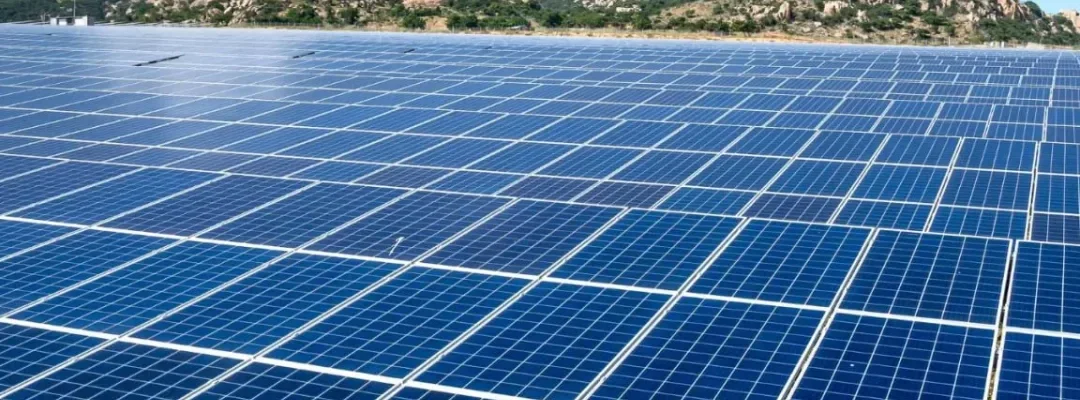
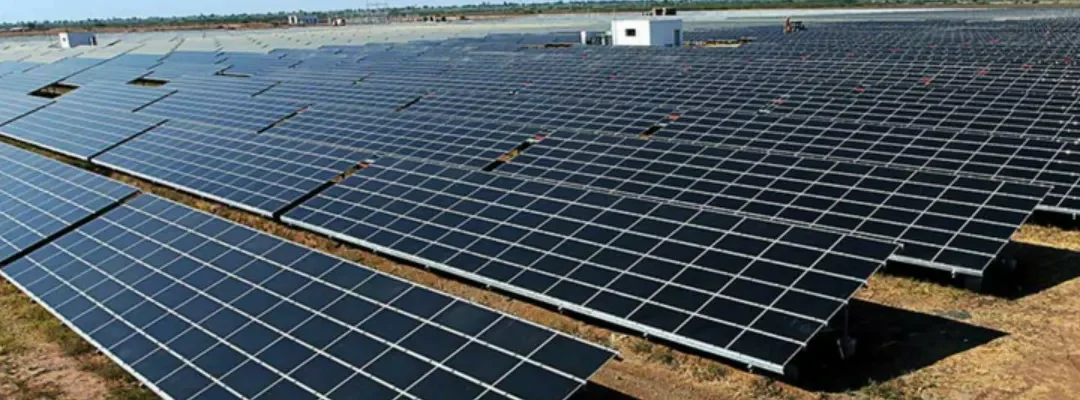
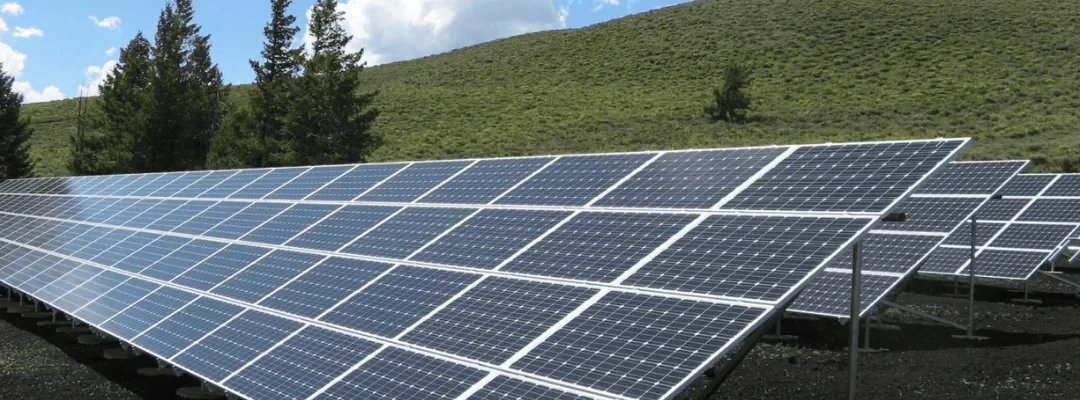
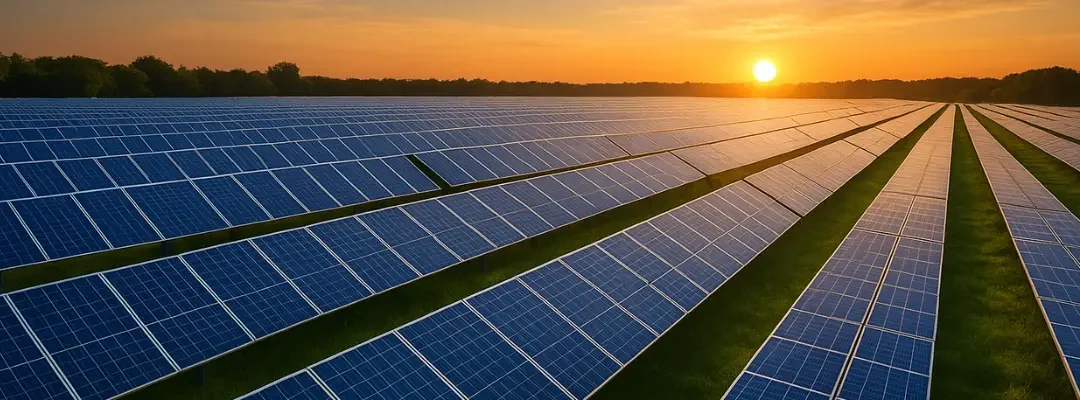
Developing a solar park is not just about panels and power purchase agreements — it starts with land.
Solar projects need hundreds or even thousands of acres.
In India, this land is often fragmented, with multiple owners, unclear titles, and legal risks.
This is where land aggregators step in. They act as a bridge between landowners, developers, and investors, ensuring smooth land acquisition and project execution. In this blog, we’ll explain step-by-step how land aggregators work.
Step 1: Identifying Suitable Land
Aggregators scout for land in areas with high solar radiation, good grid connectivity, and stable soil conditions.
They check:
Proximity to substations and transmission lines
Flat terrain with minimal shadow
Land use regulations (non-forest, non-disputed agricultural land)
Only suitable, risk-free land is shortlisted.
Step 2: Engaging with Landowners
Most solar park land belongs to farmers or small landholders.
Aggregators:
Negotiate with each landowner.
Offer outright purchase or long-term lease models.
Ensure farmers get fair compensation or steady rental income.
This creates a win-win deal for both farmers and developers.
Step 3: Consolidating Land Parcels
Developers need large continuous blocks of land (100–500+ acres).
Aggregators consolidate multiple small plots into one large parcel.
They handle:
Boundary surveys
Plot demarcation
Legal mapping
The end result: a ready-to-use, contiguous land parcel for solar projects.
Step 4: Legal Due Diligence
Title checks, ownership verification, and clearance of disputes.
Verification of:
Encumbrances (mortgages/loans)
Land records and mutation status
Zoning compliance
This ensures the land is legally clean, giving confidence to developers and investors
Step 5: Structuring the Deal for Developers & Investors
Based on project type, land can be offered as:
Outright Sale → Developer owns the land.
Lease Agreement → Developer leases land for 25–30 years.
Joint Venture Models → Farmers or investors share revenue.
Aggregators design deals that reduce upfront burden for developers and give steady income to landowners.
Step 6: Facilitating Approvals & Grid Access
Support in getting:
Local authority NOCs
Conversion of agricultural land (if needed)
Transmission and grid connection approvals
Faster approvals mean fewer project delays.
Step 7: Handover to Developers & Investors
Once land is clean, consolidated, and approved → it is handed over to developers.
Investors benefit from:
Lower project risk
Faster project execution
Improved ROI
Example: How an Aggregator Simplified a Project
A developer needed 300 acres in Karnataka for a 60 MW solar park.
The land was owned by 120 farmers with small plots.
The aggregator negotiated with all owners, cleared disputes, and delivered a single consolidated parcel.
Result: The project was commissioned 8 months faster, saving crores in delays.
One of the biggest challenges in building a solar park is not panels, inverters, or financing — it’s land.
Solar projects need large, continuous land parcels.
But in India, land is often owned in small, fragmented plots by multiple farmers or families.
Negotiating with each owner, checking titles, and resolving disputes can take years.
This is where land aggregators play a crucial role. They bridge the gap between landowners, developers, and investors, making solar projects faster, smoother, and risk-free.
Who Are Land Aggregators?
Land aggregators are specialized professionals or companies who identify, acquire, and consolidate land for solar projects.
They act as a link between multiple farmers/landowners and solar developers.
Instead of a developer dealing with 50 small owners, the aggregator delivers a ready-to-use, dispute-free land parcel.
Why Land Aggregators Are Essential for Solar Projects
Consolidating Fragmented Land
In many states, agricultural land is divided into small holdings.
Aggregators bring these together into large, solar-suitable plots.
Legal Due Diligence
They check land titles, encumbrances, and legal clearances.
This avoids delays and costly disputes later.
Negotiation with Farmers
Aggregators negotiate fair deals with multiple farmers.
Many offer lease models, ensuring farmers get steady yearly income.
Speeding Up Projects
Developers save months (or years) in land acquisition.
Faster land availability = faster project commissioning.
Reducing Risks for Investors
Investors are assured of clean titles, clear boundaries, and legal compliance.
How Land Aggregators Support Developers and Investors
For Developers:
Save time and effort by avoiding hundreds of land negotiations.
Get land parcels that are already surveyed and compliant.
For Investors:
Lower risk of title disputes or acquisition delays.
Higher confidence in project execution and ROI.
In short: Land aggregators make projects bankable.
Example of Land Aggregation in Action
A 100 MW solar park in Gujarat required 500 acres of land.
The land was owned by over 200 farmers in small plots.
The land aggregator negotiated with each farmer, consolidated the land, and provided a clear, legally verified parcel to the developer.
Farmers earned lease income for 25 years, developers got ready land, and investors saw fast project execution.
Challenges Without Land Aggregators
Years of delay due to title disputes.
High risk of legal cases and government intervention.
Difficulty in achieving large continuous parcels of land.
Loss of investor confidence.
The Future of Land Aggregation in Solar
With India targeting 500 GW renewable energy by 2030, demand for large solar parks will rise sharply.
Land aggregators will play a key role in scaling projects quickly.
Transparent land deals will also benefit farmers, developers, and investors equally.
Electricity is the backbone of modern life—from homes and offices to industries, everything runs on power. But with rising demand, grid electricity is becoming expensive and polluting.
This is why megawatt (MW) solar energy projects are gaining popularity. They not only generate clean and green energy but also provide steady income for investors and entrepreneurs. In this blog, let’s understand what MW solar means, how much it costs, and why it is one of the most profitable investments in renewable energy.
What is Megawatt Solar Project?
1 Megawatt (MW) = 1,000 kilowatts (kW).
A 1 MW solar plant can generate about 1.5 million units of electricity per year.
That’s enough to power:
~400–500 middle-class homes, or
A small factory, or
The common facilities of multiple housing societies.
These projects are built on open land or solar parks, and the power is sold to industries, DISCOMs (state power companies), or directly to corporates.
Why Entrepreneurs Are Investing in MW Solar
Huge Market Demand
India’s target: 500 GW renewable power by 2030.
Industries and corporates are shifting to 100% renewable energy.
Government Support
Subsidies, tax benefits, and special policies encourage large projects.
Long-term Power Purchase Agreements (PPAs) make revenue predictable.
Falling Solar Costs
Solar panel prices have dropped by 80% in the last 10 years.
Cheaper setup cost = higher profitability.
Stable Long-Term Income
PPAs lock electricity selling price for 15–25 years, giving guaranteed revenue.
India is undergoing an energy revolution, with renewable power at the center of its growth story. Among all clean energy options, solar energy parks have emerged as the biggest driver of large-scale transformation. With India targeting 500 GW of renewable energy by 2030, solar parks are set to play a defining role.
For entrepreneurs, developers, and investors, this sector represents not only a chance to support sustainability but also to tap into highly profitable opportunities. Let’s explore why solar energy parks are the future and how entrepreneurs can benefit from them.
What Are Solar Energy Parks?
A solar energy park is a large piece of land where multiple solar power projects are developed, often ranging from megawatt (MW) to gigawatt (GW) scale.
Unlike rooftop solar, which powers homes or societies, solar parks are designed for large-scale generation.
Power generated is fed into the grid, supplying electricity to industries, businesses, or government utilities.
They often involve land aggregation, government support, and long-term power purchase agreements (PPAs).
In simple words: A solar park is like an industrial hub for electricity, but powered by the sun.
Why Solar Energy Parks Are the Future of Power in India
National Renewable Targets – India aims to install 500 GW of renewable power by 2030, with solar taking the lion’s share.
Industrial Demand – Corporates and SMEs are increasingly committing to 100% green energy for sustainability and cost reasons.
Government Push – Schemes like the MNRE Solar Park Scheme and state-level renewable policies are actively encouraging solar park development.
Climate Goals – Solar parks help India meet its Paris Agreement and net-zero commitments.
In short: Solar parks are not just an energy project; they are part of India’s national growth and climate strategy.
The Investment Opportunity for Entrepreneurs
For entrepreneurs, solar parks open doors to multiple business opportunities:
Power Generation Projects
Set up MW-scale plants and sell electricity through PPAs to DISCOMs or corporates.
Earn predictable revenue streams for 20–25 years.
Land Aggregation & Leasing
Buy or consolidate agricultural land and lease it to solar developers.
Profitable for entrepreneurs and beneficial for farmers.
EPC & O&M Services
Engineering, Procurement & Construction (EPC) and long-term maintenance services are in high demand.
ROI Potential
Solar parks typically deliver 20–25% ROI annually.
Safer compared to volatile investments like stocks.
Key Benefits of Investing in Solar Parks
Stable and Recurring Income – PPAs lock in tariffs for 15–25 years.
Government Incentives – Subsidies, viability gap funding (VGF), and tax benefits.
Low Operating Costs – After installation, solar systems require minimal maintenance.
Sustainability Edge – Entrepreneurs can attract ESG-focused investors.
Job Creation – Solar parks create employment in rural areas, building goodwill.
Challenges Entrepreneurs Should Know
Like any sector, solar parks also come with challenges:
Land Acquisition Issues – Title disputes, fragmented ownership, or unclear records.
Tariff Risks – Some DISCOMs delay payments or renegotiate tariffs.
Grid Bottlenecks – Evacuation infrastructure may not always match solar park capacity.
Solution: Work with experienced EPCs, land aggregators, and legal advisors to reduce risks.
Case Studies of Successful Solar Parks
Bhadla Solar Park, Rajasthan
World’s largest solar park with 2,245 MW capacity.
Spans 14,000 acres in the Thar Desert.
Powers millions of homes while providing long-term returns to investors.
Charanka Solar Park, Gujarat
India’s first large-scale solar park (590 MW+).
Attracted entrepreneurs, land aggregators, and global investors.
Set the foundation for India’s solar park policy.
Future Outlook: Why Now Is the Right Time
Declining Costs – Solar panel costs have dropped over 80% in the last decade.
Hybrid Models – Solar + Wind + Storage projects are gaining traction.
Green Hydrogen Push – Solar parks will fuel India’s hydrogen economy.
Policy Support – 500 GW by 2030 = massive opportunities for developers and entrepreneurs.
Waiting means missing out on the early-mover advantage
Conclusion
Solar energy parks are no longer an experimental idea — they are the future of power generation in India. For entrepreneurs, they offer a rare mix of profitability, stability, and sustainability.
For any housing society, the first question before investing in solar is simple: “How fast will we get our money back?”
The good news is that solar is not just an eco-friendly choice — it’s also one of the safest financial investments a society can make. Unlike other expenses, a solar system pays for itself within a few years and then generates free electricity for the next 20+ years.
In this blog, we’ll break down:
What ROI (Return on Investment) means for societies
How to calculate the payback period
Real examples from different system sizes
Case studies of societies already saving with solar
Understanding ROI in Solar for Housing Societies
ROI (Return on Investment) means the percentage of profit your society earns each year compared to the initial investment.
Payback Period is the time it takes for savings from solar to equal the cost of the system.
After the payback period, the society enjoys free electricity for decades, lowering monthly maintenance charges for residents.
Payback Period Calculation – Examples
Let’s see how ROI works for different solar plant sizes commonly used in housing societies.
Example 1: 25 kW Solar Plant
Investment: ~₹12 lakhs
Annual Generation: ~37,000 units
Annual Savings: ~₹3 lakhs
Payback: ~4 years
Lifetime Savings (25 years): ₹60–70 lakhs
Example 2: 50 kW Solar Plant
Investment: ~₹22–25 lakhs
Annual Generation: ~75,000 units
Annual Savings: ~₹6 lakhs
Payback: ~3.5–4 years
Lifetime Savings: ₹1.2–1.5 crore
Example 3: 100 kW Solar Plant
Investment: ~₹40–45 lakhs
Annual Generation: ~1.5 lakh units
Annual Savings: ~₹12–15 lakhs
Payback: ~3.5 years
Lifetime Savings: ₹3–4 crore
With subsidy support, payback reduces by 6–12 months, making ROI even more attractive.
Factors That Affect ROI
Electricity Tariff – Higher local power rates = faster savings.
System Size – Larger plants have better efficiency and ROI.
Subsidy & Financing Model – CAPEX gives highest ROI; OPEX gives steady savings without upfront investment.
Maintenance – Regular AMC ensures full generation and prevents revenue loss.
Net Metering – Enables export of surplus units for maximum benefit.
Case Studies – Real Housing Society ROI Results
Case Study 1: Green Meadows Society, Mumbai
Installed: 120 kW rooftop solar
Investment: ₹50 lakhs
Annual Savings: ₹18 lakhs
Payback: 3 years
Lifetime Savings: ₹4+ crore
Impact: Monthly maintenance charges reduced by 20%.
Case Study 2: Sunrise Apartments, Bangalore
Installed: 80 kW rooftop solar
Investment: ₹35 lakhs
Annual Savings: ₹11 lakhs
Payback: 3.2 years
Residents: Over 200 families now pay ₹500–700 less per month in maintenance.
Solar ROI vs Other Investments
Investment Type
Annual ROI
Risk
Bank FD
6–7%
Very low
Mutual Funds
10–12%
Moderate–High
Stock Market
12–15%+
High
Solar for Housing Societies
20–25%
Very low (guaranteed by savings)
This shows why solar is not just an energy solution, but also a safe financial investment for housing societies.