by trueimpactdigital | Oct 17, 2024 | Solar Technology & Innovation
Introduction: India’s Energy Shift
India’s power sector is going through a historic change. For decades, coal was the backbone of electricity generation. It fueled factories, railways, and homes — but at a high cost to both the economy and the environment.
Today, solar power has overtaken coal as the cheapest source of electricity in India. This isn’t just about being “green.” It’s about economics, energy security, and a cleaner future for millions of Indians.
The Cost Revolution: Solar Beats Coal
According to recent tariff auctions:
- Solar energy costs only ₹2.0–₹2.5 per kWh in large projects.
- Coal power costs ₹3.5–₹6 per kWh — and sometimes more when transport, pollution controls, and imported coal are added.
That means solar is now 30–50% cheaper than coal on a per-unit basis.
Why Solar Costs Are Falling
- Cheaper panels & inverters due to mass production and local manufacturing
- More efficient solar panels producing higher output
- Competitive bidding driving prices down
- Government incentives like subsidies, tax breaks, and accelerated depreciation
Why Coal Keeps Getting Costlier
While solar is becoming cheaper every year, coal plants face growing costs:
- Higher mining and transport expenses
- Pollution control systems (like flue gas desulfurizers) add costs
- Carbon penalties and taxes are on the rise
- Imported coal prices are volatile
- Coal plants need constant maintenance and face supply shortages
Coal is no longer the “cheap” option it once was.
Environmental & Health Benefits
Solar power isn’t just cheaper — it’s cleaner and safer.
- Every 1 MW of solar reduces 1,200–1,500 tons of CO₂ per year
- Coal plants cause air pollution, smog, and health issues like asthma and lung disease
- Solar supports India’s Paris Agreement goals and the 500 GW renewable energy target by 2030
Switching to solar saves money and saves lives.
Energy Security & Sustainability
Unlike coal, which depends on finite and often imported resources, solar energy is:
- Abundant — India gets 300+ sunny days a year
- Local — reduces dependence on imported coal and oil
- Decentralized — rooftop solar allows even villages to be energy-independent
This makes solar not just affordable, but also strategic for India’s future.
Impact on Consumers and Businesses
Cheaper solar benefits everyone:
- Households → Rooftop solar + net metering = drastically lower (sometimes zero) electricity bills
- Businesses → Lower power costs = higher profits and competitiveness
- Investors → Solar projects offer stable, long-term returns
Expert Insights: The Future of Power in India
Energy experts predict that by 2030:
- Renewables (mostly solar) will dominate new power projects
- Solar + storage + wind hybrids will provide 24/7 clean electricity
- Coal will gradually decline as older plants retire and investment shifts to green energy
“Solar isn’t just India’s cleanest power source — it’s now the most affordable. It’s the future of energy for homes, businesses, and the entire nation,” says Dr. Meera Patel, Energy Policy Expert.
by trueimpactdigital | Oct 4, 2024 | Solar Technology & Innovation
A Technology in Constant Reinvention
When solar panels first appeared on rooftops in India two decades ago, they were expensive, bulky, and delivered modest efficiency. Fast forward to 2025, and solar is now the cheapest source of new power in the country.
But the story doesn’t stop here. Solar technology is evolving rapidly — from the polysilicon panels that dominate today, to emerging materials like perovskite, which promise higher efficiency at lower costs. The next chapter of India’s clean energy growth may well depend on how quickly these innovations scale.
The Era of Polysilicon: Today’s Workhorse
Most solar modules today use crystalline silicon wafers, made from refined polysilicon. They dominate because they are:
- Proven and reliable, with 25+ year lifespans.
- Mass-manufactured at scale, driving prices down.
- Continuously improving, with efficiencies now reaching 20–23%.
India’s domestic manufacturing push under PLI schemes is largely focused on this technology, ensuring supply chains for polysilicon → wafers → cells → modules.
Yet, silicon has limitations — energy-intensive production, rigid form factors, and efficiency ceilings. This is where next-gen materials come in.
The Next Frontier: Perovskites
Perovskites are a new class of materials that can absorb sunlight more efficiently than silicon. What makes them exciting?
- Efficiency potential → Lab tests show >30% efficiency when paired with silicon (tandem cells).
- Lightweight & flexible → Can be coated onto glass, plastic, or even fabrics.
- Cheaper to produce → Manufactured at lower temperatures, reducing energy use.
For India, perovskites could enable cheaper rooftop panels, solar windows, and even building-integrated photovoltaics (BIPV).
The catch? Stability. Perovskite cells degrade faster when exposed to heat and moisture — a big challenge in Indian conditions. Global R&D is racing to solve this.
Other Emerging Solar Technologies
The solar world isn’t betting on one horse. Alongside perovskite, several innovations are in the pipeline:
- Bifacial Panels → Generate electricity from both sides, capturing reflected sunlight.
- Thin-Film Solar → Lightweight, flexible modules for rooftops with limited load capacity.
- Quantum Dot Solar → Nanomaterials engineered for high-efficiency light absorption.
- Solar Paints & Coatings → Early-stage concepts where buildings can be coated with solar-active layers.
What This Means for India
India’s solar journey has so far been about cost reduction and scaling silicon. But in the coming decade, innovation will play a bigger role:
- Domestic R&D Hubs → India needs to invest in perovskite and tandem research to adapt them to hot, humid conditions.
- Flexible Solar Applications → Lightweight and building-integrated tech could revolutionize urban solar adoption.
- Export Leadership → If India cracks perovskite stability, it could become a global supplier of next-gen modules.
Expert View
“The silicon era made solar cheap. The perovskite era could make solar limitless — powering not just rooftops and farms, but every surface exposed to sunlight.”
— Dr. Meera Patel, Solar Materials Scientist
by trueimpactdigital | Sep 21, 2024 | Solar Technology & Innovation
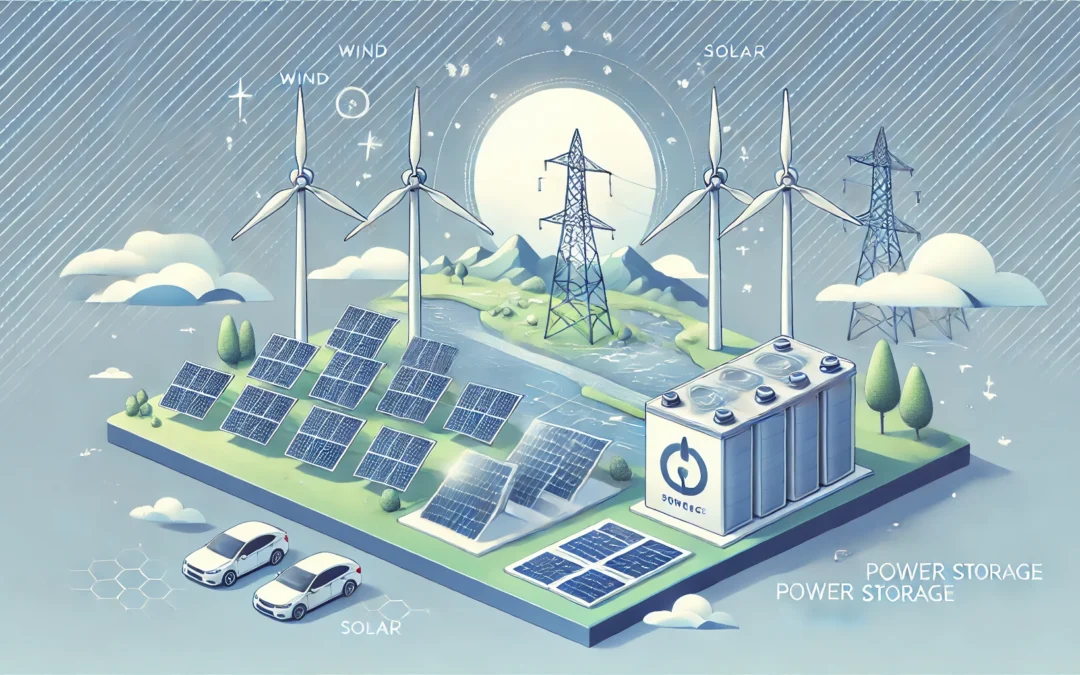
Hybrid energy systems that integrate wind, solar, and energy storage represent a significant advancement in the pursuit of reliable, sustainable, and cost-effective renewable energy solutions. These systems combine the strengths of multiple renewable sources, ensuring a more consistent power supply, especially in areas with variable weather conditions. Here’s an in-depth look at how these hybrid systems work and their advantages.
1. What is a Hybrid Energy System?
A hybrid solar energy solution combines two or more energy generation sources, Hybrid Energy Systems with solar ,Wind & batteries to create a stable and reliable power supply. The system maximizes renewable energy generation, reduces reliance on fossil fuels, and can operate either on-grid or off-grid.
Key Components of a Hybrid System:
- Wind Turbines: Capture kinetic energy from wind and convert it into electricity. Wind energy is typically more available at night or during periods of cloudy weather.
- Solar Panels: Photovoltaic (PV) panels generate electricity from sunlight during the day. Solar energy is especially productive during sunny periods.
- Energy Storage (Batteries): Stores excess energy produced by wind and solar systems for use during periods when generation is low (e.g., night, cloudy days, or calm wind conditions).
- Control System: A smart management system that monitors energy production and consumption, switching between sources as needed and ensuring that stored energy is used when necessary.
2. Benefits of a Hybrid Energy System (Wind + Solar + Storage)
A. Complementarity of Wind and Solar Power
- Balancing Intermittency: One of the major challenges of wind and solar energy is their intermittent nature—solar power is only available during daylight hours, and wind power is not constant. However, wind and solar energy sources often complement each other. Wind energy tends to be stronger at night or during cloudy weather when solar power is not available. By combining both sources, the hybrid system can generate power more consistently.
- Maximizing Resource Use: Using both wind and solar maximizes the use of available natural resources, ensuring that renewable energy is produced throughout the day and night.
B. Energy Storage Increases Reliability
- Energy Storage Smoothing: Batteries store excess energy produced during periods of high wind or strong sunlight. This stored energy can then be used when demand exceeds the immediate generation, such as at night or during periods of low wind or cloudy days.
- Grid Independence: For off-grid systems, energy storage is crucial for ensuring power availability when renewable energy sources are not generating electricity. With a battery system, the hybrid system can operate autonomously, providing power 24/7.
- Grid Support: In on-grid systems, energy storage can provide backup power during outages, improve grid stability, and even allow users to sell excess energy back to the grid during peak hours (time-of-use optimization).
C. Higher Efficiency and Lower Costs
- Increased Efficiency: By utilizing both wind and solar, hybrid systems can produce energy more consistently and efficiently than systems relying on a single renewable source.
- Cost Reduction: Over time, hybrid energy systems can reduce electricity costs by lowering dependence on fossil fuels and decreasing energy bills. Initial setup costs are increasingly offset by technological advancements in solar, wind, and energy storage technologies, making hybrid systems more affordable.
- Long-Term ROI: Hybrid systems often yield a better return on investment (ROI) compared to standalone wind or solar systems due to their higher utilization rates and reduced downtime.
D. Environmental Benefits
- Lower Carbon Footprint: Hybrid systems significantly reduce greenhouse gas emissions by replacing fossil fuels with clean, renewable energy. By integrating wind, solar, and storage, hybrid systems provide a continuous supply of renewable energy, minimizing reliance on polluting backup generators.
- Land and Resource Optimization: In regions with limited land, hybrid systems allow for more efficient use of space by combining wind and solar installations in a single area.
3. Applications of Hybrid Energy Systems
A. Rural and Remote Areas
- Off-Grid Communities: In areas where grid infrastructure is unreliable or non-existent, hybrid systems provide a reliable source of electricity. By combining wind, solar, and storage, off-grid communities can enjoy continuous power supply without relying on expensive diesel generators.
- Agricultural Sector: Farmers can benefit from hybrid systems by powering irrigation systems, livestock operations, and storage facilities, especially in remote locations where grid connections are costly or unreliable.
B. Commercial and Industrial Applications
- Commercial Buildings: Hybrid solar energy solution systems can provide reliable energy for businesses, reducing their energy costs and carbon footprints. Industrial facilities that operate around the clock benefit from having a steady supply of renewable energy that offsets peak-hour pricing.
- Microgrids: Hybrid energy systems are often used in microgrids, which provide localized energy solutions for communities, campuses, or industrial complexes. Microgrids that combine wind, solar, and storage are especially valuable in disaster-prone or energy-constrained areas.
C. Utility-Scale Projects
- Large-Scale Wind-Solar Hybrid Farms: Utility-scale projects are increasingly integrating wind, solar, and storage to create hybrid power plants that feed clean energy directly into the grid. These plants can provide more consistent energy generation, reduce transmission losses, and offer backup power during outages.
- National Energy Security: Hybrid energy systems are a part of national energy strategies aimed at enhancing energy security by diversifying the energy mix and reducing dependency on imported fossil fuels.
4. Challenges in Hybrid Energy Systems
A. Initial Capital Costs
- Although the long-term savings and ROI of hybrid systems are significant, the initial capital costs for purchasing and installing wind turbines, solar panels, and energy storage systems can be high. However, decreasing costs of solar PV, wind turbines, and battery storage are making hybrid systems more affordable over time.
B. Energy Storage Limitations
- While energy storage technology is advancing, current battery systems still have limitations, including high costs, limited capacity, and degradation over time. Developing more efficient, affordable, and durable storage technologies is crucial for the future success of hybrid energy systems.
C. Regulatory and Grid Integration Challenges
- Integrating hybrid systems into existing grid infrastructures can be complex. Regulatory policies, grid connection requirements, and tariffs may vary by region, and utilities may need to adapt their systems to accommodate decentralized renewable generation.
D. Resource Availability
- Hybrid systems depend on the availability of both solar and wind resources. In regions where one resource is scarce, the benefits of a hybrid system may be limited. Careful site selection and resource assessment are critical to the success of these projects.
5. Future Trends in Hybrid Energy Systems
- Advances in Storage Technology: Energy storage technology, particularly lithium-ion and solid-state batteries, is evolving rapidly, offering greater storage capacities, longer lifespans, and faster charging times. This will improve the reliability and cost-effectiveness of hybrid systems.
- Hydrogen as Storage: Green hydrogen production from surplus solar and wind energy could emerge as a large-scale energy storage solution, allowing energy to be stored for longer durations than traditional batteries.
- Artificial Intelligence (AI) Integration: AI and machine learning are being increasingly used to optimize energy management within hybrid systems. AI can predict energy demand, weather conditions, and generation capacity, allowing hybrid systems to maximize efficiency.
- Floating Wind-Solar Systems: Combining floating solar panels with offshore wind farms is an emerging trend, offering efficient use of ocean and lake surfaces while producing large amounts of renewable energy.
Conclusion
Hybrid energy systems that integrate wind, solar, and energy storage offer a comprehensive solution to the challenges of renewable energy intermittency, providing a stable, efficient, and environmentally friendly power supply. As technology continues to improve, the adoption of these hybrid systems will increase, playing a key role in global efforts to transition to a low-carbon future and enhance energy security. The combination of wind and solar with storage ensures renewable energy availability around the clock, making hybrid systems a cornerstone of future energy infrastructure.
by trueimpactdigital | Aug 21, 2024 | Solar Technology & Innovation
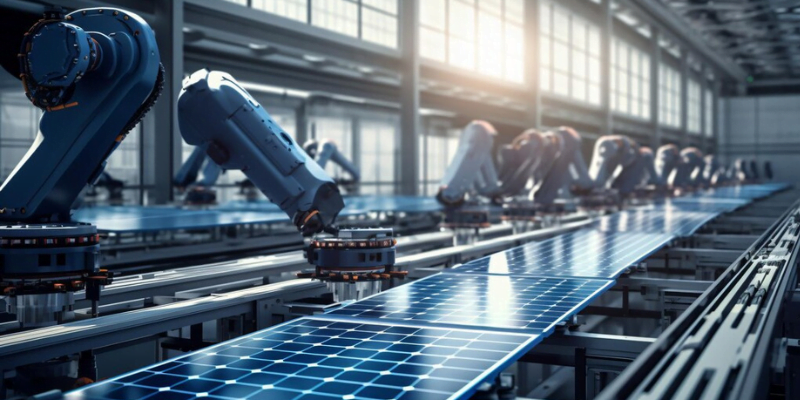
Integrating solar power into automation systems presents a unique opportunity not only to reduce environmental impact but also enhance operational efficiency and neglect costs. As the global community becomes increasingly aware of climate change and resource depletion, industries are under pressure to adopt more sustainable practices. The manufacturing industry is also a significant contributor to global carbon emissions and faces the challenge of reducing its environmental footprint while maintaining or even improving productivity.
Cost Reduction:
Utilizing solar energy can significantly lower operational costs. By harnessing free sunlight, manufacturers can reduce their reliance on grid electricity, resulting in lower utility bills.
Sustainability:
Solar power is a clean, renewable source of energy. Integrating solar energy into manufacturing processes not only aids in reducing greenhouse gas emissions but also positions companies as environmentally responsible, potentially enhancing brand reputation.
Energy Independence:
By generating their own electricity, manufacturers decrease their vulnerability to fluctuations in energy prices and supply disruptions, leading to enhanced operational stability. Increased Efficiency: Automated systems powered by solar energy can optimize energy use during peak sunlight hours, thus improving overall operational efficiency
Solar Panels:
Photovoltaic (PV) panels are essential for converting sunlight into usable electricity. They can be installed on rooftops or as part of ground-mounted systems, depending on space availability.
Energy Storage Systems:
To ensure continuous operation during non sunny periods, integrating energy storage solutions, such as batteries, is
critical. These systems store excess energy produced during the day for use at night or during cloudy days.
Smart Grid Technology:
Automation of energy distribution requires advanced software solutions that can manage and coordinate energy flows, ensuring that solar power is efficiently utilized across various manufacturing processes.
Internet of Things (IoT):
IoT devices can be integrated into manufacturing systems to monitor energy consumption and optimize the use of solar energy, allowing real-time adjustments for maximum efficiency.
Initial Investment:
The upfront cost of solar energy systems can be substantial, making it essential to carefully assess return on investment.
Space Limitations:
Manufacturers may face challenges related to space availability for solar panel installation, requiring creative solutions such as vertical installations or collaborations with neighbouring facilities.
Intermittency:
Solar power is dependent on weather conditions and daylight availability. Manufacturers need to ensure that their automation systems can function seamlessly during periods of low solar energy production.
Maintenance:
Solar panels and battery systems require regular maintenance to ensure optimal performance. Manufacturers must factor in the cost and logistics of maintaining these systems over their lifespan.
Integrating solar power into automation is a powerful strategy for achieving sustainable manufacturing. It not only reduces environmental impact but also enhances efficiency, lowers costs, and increases energy independence. As technology continues to advance, the barriers to adopting solar-powered automation are diminishing, making it a viable option for manufacturers committed to sustainability. By embracing this pathway, the manufacturing industry can play a critical role in the global transition to a greener future.
by trueimpactdigital | Aug 21, 2024 | Solar Technology & Innovation
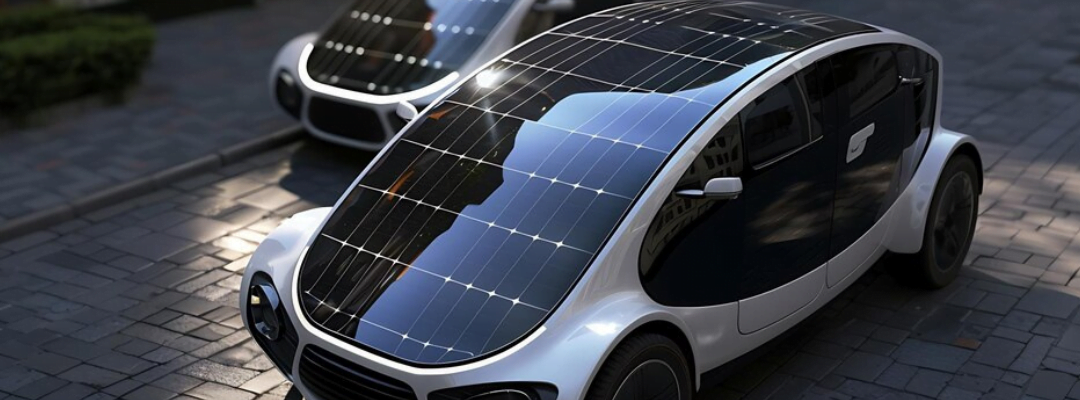
The escalated adoption of greener energy solutions has been a wide advantage of electric vehicles (EVs) integrating solar panels in electric vehicles (EVs) making a technology that could significantly enhance the efficiency and range of electric vehicles, transforming the future of transportation and producing a greener pathway.
Electric vehicles, while environmentally friendly, are still limited by the capacity of their batteries. Range anxiety remains a major concern for many potential EV owners, as the fear of running out of charge far from a charging station can be a significant barrier. Additionally, the reliance on the electrical grid to recharge these vehicles can sometimes negate the environmental benefits, especially in regions where the grid is powered by fossil fuels.
One of the prominent advantages of equipping electric vehicles with solar panels is the potential for an extended driving range. Solar panels can generate electricity as the vehicle is parked or in motion, providing an additional power source to supplement the vehicle's battery. This technology can contribute several miles of extra range each day, which is especially beneficial for short commutes and can alleviate concerns regarding finding charging stations.
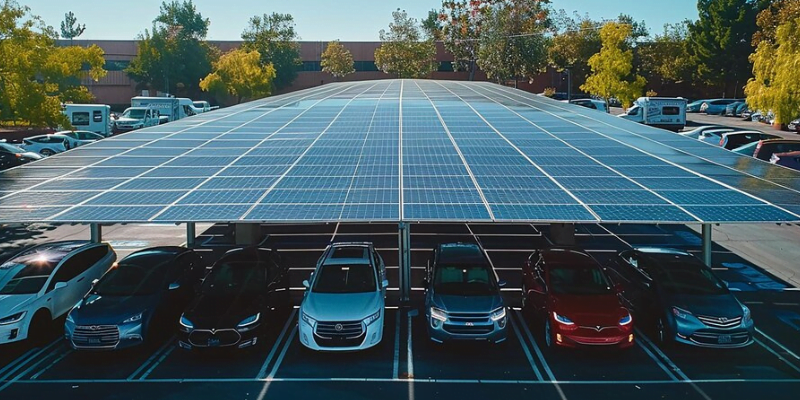
Solar-powered electric vehicles can recharge anytime there is access to sunlight, allowing drivers to harness energy while parked in an open area. This feature provides significant flexibility compared to conventional EVs that depend solely on charging stations. It enables users to mitigate electricity costs associated with traditional charging, further enhancing the overall costeffectiveness of owning an electric vehicle.
As more EVs hit the roads, the demand for electricity from the grid will increase. Solar-powered EVs can alleviate some of this demand by using renewable energy directly from the sun. This reduces the need for frequent gridbased charging, especially during peak hours when electricity demand is high.
The environmental impact of transportation can be reduced by incorporating solar panels into electric vehicles. By generating their power through solar energy, these vehicles diminish the need for energy from fossil fuels. This not only results in lower carbon emissions but also promotes a broader shift toward sustainable transportation and clean energy practices.
The future of solar panels on electric vehicles is promising, with ongoing innovations poised to enhance efficiency and feasibility. Technologies like photovoltaic paint and vehicle-to-grid (V2G) systems, which allow electric vehicles to share surplus energy with the grid, are on the horizon. Such advancements could lead to a scenario where every aspect of vehicle design maximizes energy capture and utilization, redefining the efficiency of transportation.
As the world moves towards a greener future, the synergy between solar energy and electric vehicles will play a crucial role in shaping the transportation systems of tomorrow. While challenges remain, the potential benefits make this an exciting area of innovation with the power to transform the way we think about mobility.