by trueimpactdigital | Aug 7, 2025 | General
Introduction
For solar developers, every project begins with land. Whether it’s a 10 MW project or a 500 MW solar park, securing the right land is often the biggest bottleneck. Developers who try to manage land acquisition themselves often face years of delay, rising costs, and legal disputes.
This is why partnering with a land aggregator is not just helpful — it’s a strategic decision. By consolidating land, clearing legal hurdles, and ensuring transparency, land aggregators save developers both time and money.
The Real Challenges Developers Face in Land Acquisition
Fragmented Ownership
- Large projects need hundreds of acres.
- Land is divided among dozens or hundreds of farmers.
Legal Uncertainty
- Title disputes, inheritance claims, and mortgage issues are common.
- Any single dispute can stall an entire project.
Regulatory Delays
Approvals for conversion, registration, and NOCs can take months.
Farmer Negotiations
- Developers need to engage with multiple farmers.
- Mistrust or miscommunication often slows deals.
How Land Aggregators Help Developers
- Faster Land Consolidation
- Aggregators combine small fragmented plots into large parcels.
- Developers save months of time negotiating with individual farmers.
- Legal Due Diligence
- Title checks, mutation, and encumbrance clearance handled by experts.
- Developers get dispute-free land that is ready for project execution.
- Cost Savings
- Delays cost developers crores in interest, penalties, and lost opportunities.
- By providing clean, approved land quickly, aggregators cut costs drastically.
- Farmer Confidence
- Aggregators build transparent lease/purchase agreements with farmers.
- This reduces resistance and creates smoother cooperation.
- Faster Approvals
- With consolidated land and local expertise, NOCs and approvals are processed faster.
Example: Time & Cost Savings
- A developer in Karnataka needed 250 acres for a 50 MW project.
- Direct purchase approach: Negotiating with 100+ farmers, expected 18–24 months delay.
- Direct purchase approach: Negotiating with 100+ farmers, expected 18–24 months delay.
- Savings: ₹20 crore in potential interest and project delay costs.
Benefits of Partnering with Land Aggregators
- Time Efficiency: Projects move faster from planning to commissioning.
- Cost Reduction: Lower legal costs, reduced interest payments, and fewer disputes.
- Risk Mitigation: Clean titles mean less chance of litigation.
- Investor Confidence: Transparent land aggregation builds trust with lenders and equity investors.
- Focus on Core Strengths: Developers can concentrate on EPC, technology, and financing.
by trueimpactdigital | Aug 5, 2025 | General
Introduction
Farmers are the backbone of India, and their land is at the heart of the country’s solar revolution. As India pushes towards 500 GW of renewable energy by 2030, thousands of acres of farmland are being converted into solar parks.
But farmers often have concerns:
- Will they lose their land?
- Will they get fair compensation?
- Will solar projects affect their future security?
This is where land aggregators come in. They act as a bridge between farmers and solar developers, ensuring farmers get fair, long-term benefits from solar projects.
Who Are Land Aggregators?
- Land aggregators are professionals or companies who collect and consolidate farmland from multiple owners.
- Instead of a developer negotiating with 100 different farmers, an aggregator manages all discussions.
- They ensure that farmers, developers, and investors all benefit fairly.
Key Benefits for Farmers
1.Fair and Transparent Deals
- Farmers often fear being underpaid for their land.
- Aggregators negotiate fair market rates or lease agreements.
- All contracts are documented and registered legally.
2. Long-Term Lease Income
- Many farmers prefer leasing their land instead of selling.
- Typical lease periods: 20–30 years, with yearly rental payments.
- Rental income is stable and predictable, unlike crop yields which depend on weather.
3. Alternative to Low Crop Income
- Agriculture income is often uncertain due to rainfall, pests, and market prices.
- Solar leasing gives farmers risk-free income, often higher than crop profits.
- Example: A farmer earning ₹30,000–40,000/acre per year from crops can earn ₹60,000–1,00,000/acre from solar lease.
4.Farmers don’t have to move.
- They keep ownership rights and can even use nearby land for farming.
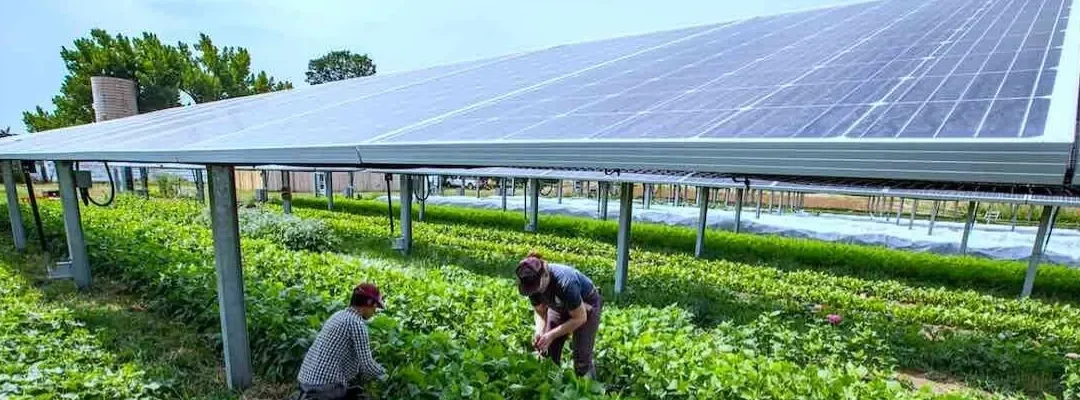
- In some cases, agrivoltaics (farming + solar panels) allows them to grow crops under or around solar panels.
5. Community Development
- Solar projects bring infrastructure, jobs, and electricity access to rural areas.
- Local youth often get employment in construction, security, or O&M (Operations & Maintenance).
- Villages benefit from improved roads and facilities.
Real Example
- In Gujarat, farmers leased 500 acres of land for a 100 MW solar park.
- Farmers earn ₹70,000 per acre annually, compared to ₹35,000 from crops.
- Lease is for 25 years, ensuring steady income.
- Developers built access roads, which also improved connectivity for villages.
Common Concerns from Farmers (and Solutions)
Fear of Losing Land Permanently
Solution: Lease model allows farmers to keep ownership.
Worried About Cheating
Solution: Transparent, legally registered agreements.
Uncertainty About Payments
Solution: Agreements often include annual bank transfers to farmers.
Impact on Farming
Solution: Agrivoltaic models allow farming under panels in some cases.
Future for Farmers in Solar Parks
- As more solar parks come up, farmer participation will grow.
- With clear, transparent deals, farmers will see solar as a partner, not a threat.
- Over the next decade, lakhs of farmers may benefit from lease income + rural development.
by trueimpactdigital | Aug 4, 2025 | General
Introduction
India has set an ambitious target: 500 GW of renewable energy capacity by 2030, with solar power contributing the largest share. To achieve this, the country needs massive solar parks spread across thousands of acres.
But here’s the challenge: acquiring land in India is often complex. Farmers worry about unfair deals, developers face legal hurdles, and investors fear hidden risks.
This is why transparent land aggregation is not just helpful — it is essential for achieving India’s renewable energy goals.
What is Transparent Land Aggregation?
- Land aggregation means collecting multiple small plots of land from different farmers or owners and consolidating them into a large, usable parcel for solar projects.
- Transparency means doing this process in a fair, open, and accountable way so that all parties — farmers, developers, and investors — trust the deal.
Transparency involves:
- Clear communication with farmers about price, lease terms, and benefits.
- Proper legal documentation and verified land titles.
- No hidden clauses or unfair contracts.
- Regular updates to developers and investors.
Why Transparency Matters for Renewable Energy Goals
1. Protecting Farmers’ Interests
- Farmers often fear being exploited in land deals.
- Transparent aggregation ensures they receive fair compensation or steady lease income for 20–25 years.
- This encourages more farmers to participate in solar projects.
2. Reducing Legal Disputes
- Hidden ownership issues or unclear contracts often lead to court cases.
- Transparent processes with proper verification reduce litigation.
- Developers get risk-free land and projects move faster.
3. Building Investor Confidence
- Investors want clarity and accountability before putting in money.
- Transparent land deals mean lower risk and better ROI.
- This attracts both domestic and foreign investment into solar parks.
4. Faster Project Execution
- Lack of transparency leads to delays of months or years.
- Transparent aggregation clears disputes upfront, ensuring on-time commissioning.
5. Supporting India’s 2030 Goal
- Without smooth land acquisition, solar parks cannot scale.
- Transparent aggregation ensures land is available, compliant, and dispute-free — helping India achieve its 500 GW renewable energy mission.
Example of Transparency in Action
Case 1: Gujarat Solar Park (Success with Transparency)
- Farmers were given clear lease agreements and annual rental payments.
- Developers got land free from disputes within 6 months.
- Investors funded confidently, and the project was commissioned on time.
Case 2: Non-Transparent Land Deal (Failure in Maharashtra)
- Farmers were promised lump-sum payments, but terms were unclear.
- Disputes broke out among owners → project delayed by 3 years.
- Investors pulled out, causing huge losses to developers.
The Future of Transparent Land Aggregation in India
- Digital Land Records: With land record digitization, transparency will improve further.
- Government Support: State renewable policies now emphasize farmer-friendly solar projects.
- Trust Building: Developers who use transparent models will earn better reputations, attracting more investment.
by trueimpactdigital | Aug 3, 2025 | General
Introduction
In India, one of the biggest hurdles in building solar parks is not solar panels or financing — it’s land.
Many large projects get delayed because of land title issues (unclear ownership) or legal disputes (court cases, boundary fights, or loans on the land).Developers who try to manage this on their own face years of delay, mounting costs, and loss of investor trust.This is where land aggregators play a very important role. They act as problem-solvers — verifying ownership, clearing disputes, and delivering clean, ready-to-use land to developers and investors.
Why Land Title Problems Happen So Often in India
Multiple Owners of the Same Land
- In rural India, land is often divided among children and grandchildren.
- Many times, all names are not updated in official records.
- Result → confusion about who really owns the land.
Outdated Land Records
- Some records are handwritten or decades old.
- Information in the registry may not match the actual land in use.
Mortgages and Loans
- Farmers often use their land as collateral for bank loans.
- If the loan is unpaid, the land cannot be sold or leased for solar projects.
Boundary Disputes
- Neighboring farmers may argue over where one plot ends and another begins.
- Even a small disagreement can stop a project.
Pending Court Cases
If the land is already under dispute, developers cannot use it until the case is settled.
How Land Aggregators Solve These Problems
1.Checking Ownership (Title Verification)
- Land aggregators verify ownership through official records, revenue offices, and registries.
- They confirm the rightful owner and prepare clean documents.
2.Clearing Loans and Encumbrances
- If the land is mortgaged with a bank, aggregators negotiate with the bank and ensure the loan is cleared or settled.
- This makes the land free for solar use.
3.Resolving Family and Inheritance Disputes
- Aggregators act as mediators between family members.
- They ensure all heirs sign agreements, preventing future disputes.
4.Handling Legal Approvals
- Aggregators work with local lawyers, surveyors, and officials.
- They complete processes like mutation, registration, and land-use conversion.
5.Delivering Dispute-Free Land
- Only after clearing all risks, the land is handed over to developers.
- This builds trust with investors and speeds up project timelines.
Real Example
- A solar park in Madhya Pradesh needed 300 acres.
- The land was split among 90 families, many with inheritance disputes.
The land aggregator:
- Verified land records with the tehsildar office.
- Negotiated settlements between heirs.
- Cleared mortgage liens from a local bank.
- Within 6 months, the land was legally verified and consolidated.
- The developer got risk-free land and the project started on time.
Why Land Aggregators Are Essential for Solar Parks
- They know how to work with farmers, lawyers, and local authorities.
- They ensure fair, transparent deals for landowners and developers.
- They reduce risks, which makes it easier to secure financing and investor confidence.
by trueimpactdigital | Aug 2, 2025 | General
Introduction
Building a solar park is not just about technology — it’s about land. Developers often plan projects in megawatts, but without the right land, projects get stuck in legal disputes, fragmented ownership, and endless approvals.
This is why land aggregation is so important. By consolidating fragmented plots into clear, dispute-free parcels, land aggregators save developers and investors from years of delay and millions in losse.
Why Delays Happen in Solar Projects
- Fragmented Land Ownership
- A 500-acre solar park may involve 200+ farmers.
- Negotiating with each farmer takes months.
- Title Disputes
- Many lands in India have unclear titles, pending court cases, or multiple heirs.
- Regulatory Approvals
- Conversion of agricultural land to non-agricultural use.
- Getting NOCs from local bodies.
- Farmer Resistance
- Fear of losing livelihood.
- Disagreements over pricing or lease terms.
Without professional handling, these issues cause multi-year delays.
How Land Aggregation Solves These Problems
1. Consolidation of Land Parcels
- Aggregators bring together multiple small plots into one large block.
- Developers get ready land parcels without negotiating individually.
2. Legal Due Diligence
- Aggregators check ownership records, encumbrances, and pending disputes.
- They ensure the land is legally clean before transferring to developers.
3. Faster Approvals
- With consolidated land, approvals like land conversion, NOCs, and registration move faster.
- Aggregators often have local government experience to speed up the process.
4. Transparent Farmer Deals
- Farmers get fair compensation or long-term lease income.
- Aggregators build trust between landowners and developers.
Real Examples of Delays vs. Aggregation
- Without Land Aggregation
- A solar project in Maharashtra needed 200 acres.
- Negotiations with 80 farmers took 18 months, and title disputes delayed the project by 2 years.
- With Land Aggregation
- In Gujarat, a 500-acre solar park was aggregated from 150 farmers in just 5 months.
- Legal checks done → project started on time → investors gained confidence.
Legal Risks Avoided Through Land Aggregation
- Duplicate ownership claims
- Disputed inheritance rights
- Mortgaged land with banks
- Unclear land-use classification
- Encroachment or boundary conflicts
By cleaning these risks upfront, land aggregators protect both developers and investors.
Future Outlook
With India targeting 500 GW of renewable energy by 2030, the need for large solar parks is only growing. Land aggregation will be the key enabler for scaling projects quickly and reducing legal hurdles.