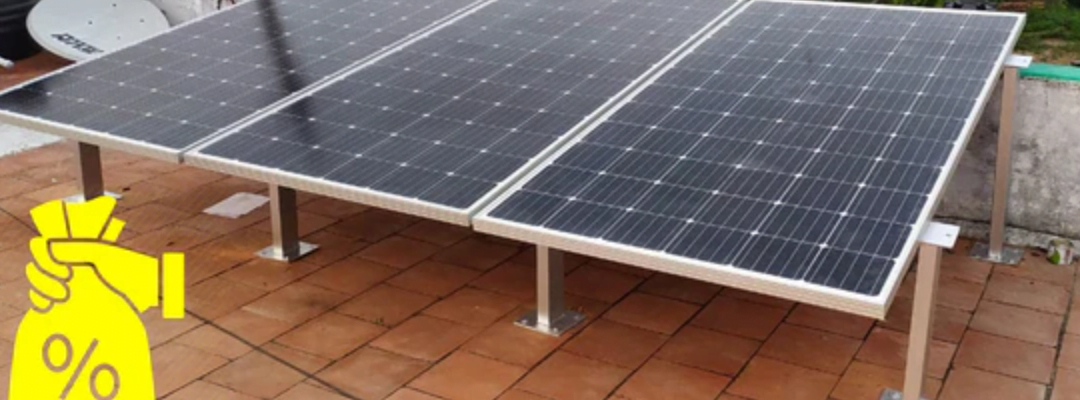
The sun is more than just a source of light and warmth—it’s an abundant and renewable energy powerhouse. With advancements in photovoltaic (PV) technology, sunlight is now efficiently converted into electricity, making solar energy a cost-effective and eco-friendly alternative to conventional power sources.
Punjab, a state that receives ample sunlight throughout the year, is embracing solar energy through various government subsidy programs. This initiative makes rooftop solar panel installations more affordable for residential and commercial users, significantly reducing electricity costs while promoting sustainability.
Why Go Solar in Punjab?
Reduced Electricity Bills: Solar energy lowers your dependence on the grid, cutting down electricity costs by up to 90%.
Government Subsidy Support: Central and state subsidies significantly reduce installation expenses.
Eco-Friendly Solution: Reduces carbon footprint and supports green energy initiatives.
Long-Term Investment: Solar panels have a lifespan of 25 years, ensuring long-term energy savings.
Net Metering Benefits: Surplus electricity is fed back into the grid, generating additional savings.
Government Subsidies for Solar Panels in Punjab
The government offers attractive incentives to make solar system in Punjab installations affordable:
Subsidy Rates for Residential Consumers
Rooftop Solar System Capacity
Subsidy Amount
Up to 3 kW
₹18,000 per kW
Above 3 kW up to 10 kW
₹9,000 per kW
Above 10 kW
₹1,17,000 (fixed)
Housing Societies (RWA/GHS)
₹9,000 per kW for common facilities up to 500 kWp
Who Can Apply?
Individual homeowners
Resident Welfare Associations (RWA) & Group Housing Societies (GHS)
Public sector undertakings (PSUs) and commercial entities are not eligible for subsidies.
Solar Panel Prices in Punjab (Pre- & Post-Subsidy)
The cost of a solar system varies based on capacity, quality, and installation type. Here’s an estimated price breakdown before and after applying subsidies:
Estimated Solar System Costs
System Size
Price Range (Pre-Subsidy)
Subsidy
Price After Subsidy
1 kW
₹75,000 – ₹85,000
₹18,000
₹57,000 – ₹67,000
2 kW
₹1,50,000 – ₹1,70,000
₹36,000
₹1,14,000 – ₹1,34,000
3 kW
₹1,89,000 – ₹2,15,000
₹54,000
₹1,35,000 – ₹1,61,000
5 kW
₹3,15,000 – ₹3,57,000
₹72,000
₹2,43,000 – ₹2,85,000
10 kW
₹5,31,000 – ₹6,07,000
₹1,17,000
₹4,14,000 – ₹4,90,000
For a precise quote tailored to your home’s energy needs, consult a trusted solar installation company in Punjab.
Step-by-Step Guide to Applying for Solar Subsidy in Punjab
Applying for a solar panel subsidy is now easier with the National Portal for Rooftop Solar. Here’s how you can apply:
Application Process
Register Online: Visit National Portal for Rooftop Solar and sign up.
Submit Documents: Upload property ownership proof, electricity bill, and ID verification.
Technical Approval: Your local DISCOM will evaluate the feasibility of your installation.
Select an Empanelled Vendor: Choose a government-approved solar vendor for installation.
Net Metering Installation: Apply for a net meter to monitor electricity generation and consumption.
Inspection & Approval: DISCOM will inspect your system and issue a commissioning certificate.
Subsidy Disbursement: The approved subsidy amount will be credited to your bank account within 30 days.
Increasing usage of multiple electrical appliances in households has led to a significant surge in electricity bills. However, there's a solution to mitigate these costs without sacrificing your power requirements: harnessing alternative energy sources. While the upfront investment in solar energy may seem daunting, it's actually a more cost-effective option compared to traditional sources. Thanks to advancements in photovoltaic technology, solar power is becoming increasingly accessible and affordable.
In Gujarat, the adoption of solar systems is on the rise, fueled by subsidies offered by both the state and central governments. The price range for solar panels in the region varies from Rs. 75,000 to Rs. 85,000 per 1kW, influenced by factors such as panel efficiency, technology, and brand. The process of accessing subsidies for solar panel installation in Gujarat has been streamlined with the introduction of the National Portal for Rooftop Solar, making it more convenient for residents.
Solar Panel System Subsidy in Gujarat
Establishing a solar rooftop in Gujarat has become more accessible and cost-effective, thanks to the availability of solar subsidies in the region. The Ministry of New and Renewable Energy's Rooftop Solar Programme Phase 2 extends fixed financial assistance for grid-tied solar rooftop systems not only in Gujarat but throughout India. This subsidy initiative aims to reduce the initial expenses associated with solar PV systems for individual households and residential complexes. However, it's worth noting that industrial and commercial structures, including PSUs, do not qualify for this subsidy scheme.
The introduction of the National Portal for Rooftop Solar has streamlined the process of applying for and receiving subsidies. This online platform offers a unified, transparent, and efficient avenue for consumers to submit subsidy applications effortlessly from the comfort of their homes, making the entire process more accessible and user-friendly.
Rooftop Solar System Capacity
Applicable Subsidy (₹)
Up to 3 kW
18,000/kW
Above 3 kW and up to 10 kW
9,000/kW*
Above 10 kW
1,17,000**
Resident Welfare Associations (RWA) / Group Housing Societies (GHS)
Rs. 9,000/- per kW For common facilities up to 500 kWp @ 10 kWp per house, with the upper limit being inclusive of individual rooftop plants already installed by individual residents in that GHS/RWA at the time of installation of RTS for common activity.
Solar System price in Gujarat
Solar system pricing in Gujarat is subject to several factors, including the capacity and type of system chosen, such as a grid-connected or hybrid setup. It's important to note that only grid-tied solar systems qualify for the national solar subsidy scheme. Additionally, factors like efficiency ratings, the brand of solar panels available in Gujarat, and the provision of after-sales services can impact the overall cost of transitioning to solar energy.
For those uncertain about the most suitable solar system for their residence, consulting with Powermatics India can help assess individual requirements and preferences. This consultation can provide insights into selecting the right solar system and determining the optimal mounting design to conserve rooftop space effectively.
Below is an estimated breakdown of installed solar panel prices, ranging from 1kW to 5kW and beyond, in Gujarat.
Solar System Size
Price Range (Estimated)
1kW Solar System
Rs. 75,000 – 85,000
2kW Solar System
Rs. 1,50,000 – 1,70,000
3kW Solar System
Rs. 1,89,000 – 2,15,000
4kW Solar System
Rs. 2,52,000 – 2,85,600
5kW Solar System
Rs. 3,15,000 – 3,57,000
10kW Solar System
Rs. 5,31,000 – 6,07,000
Solar System Price in Gujarat with subsidy (Table & Content)
Determining the price of a 3kW solar panel system in Gujarat, with or without subsidy, is relatively straightforward. Subsidy rates are standardized per kilowatt, regardless of system capacity. The calculation of solar rooftop subsidies in Gujarat involves subtracting the subsidy amount from the estimated price to derive the subsidized cost for any solar rooftop installation in the region. Below is a compilation of solar power plants in Gujarat alongside information regarding solar subsidies available in the area.
Solar System Size
Estimated Price Range
Subsidy Applicable
Prices After Subsidy
1kW Solar System
Rs. 75,000 – Rs. 85,000
Rs. 18,000
Rs. 57,000 – Rs. 67,000
2kW Solar System
Rs. 1,50,000 – Rs. 1,70,000
Rs. 18,000 x 2 = Rs. 36,000
Rs. 1,14,000 – Rs. 1,34,000
3kW Solar System
Rs. 1,89,000 – Rs. 2,15,000
Rs. 18,000 x 3 = Rs. 54,000
Rs. 1,35,000 – Rs. 1,61,000
4kW Solar System
Rs. 2,52,000 – Rs. 2,85,600
Rs. 18,000 x 3 + Rs. 9,000 x 1 = 63,000
Rs. 1,89,000 – Rs. 2,22,600
5kW Solar System
Rs. 3,15,000 – Rs. 3,57,000
Rs. 18,000 x 3 + Rs. 9,000 x 2 = Rs. 72,000
Rs. 2,43,000 – Rs. 2,85,000
10kW Solar System
Rs. 5,31,000 – Rs. 6,07,000
Rs. 1,17,000
Rs. 4,14,000 – Rs. 4,90,000
Steps to Apply for a Subsidy in Gujarat
Household consumers aiming to transition to solar energy can access subsidies for solar panel systems starting from 5kW capacity in Gujarat or opt for higher capacity systems of 10kW and beyond. The installation process for rooftop solar systems is streamlined, facilitated through application submission on the National Portal for Rooftop Solar. Registering on this online platform necessitates providing an active mobile number and email address, along with downloading the SANDES APP for OTP verification.
To ensure eligibility for subsidy benefits under the simplified solar subsidy scheme, it's crucial to understand the eligibility criteria. Consumers must procure PV modules and other components manufactured in India to qualify for the Gujarat solar subsidy. Referencing the ALMM list is recommended to ensure purchase of BIS-compliant solar PV modules from Approved Models and Manufacturers.
Benefits of Solar Panel Subsidy in Delhi
Situated as the westernmost state of India, Gujarat enjoys an average of over 300 days of sunshine annually. The availability of solar panel subsidies in Gujarat incentivizes homeowners to harness this abundant sunlight for generating cost-effective electricity. The solar rooftop scheme in Gujarat offers multiple advantages.
Recent reports highlight a significant uptake of solar technology among households in Gujarat, contributing to increased production of clean energy for the state. Solar energy generation processes are environmentally friendly, emitting no greenhouse gases or harmful substances into water bodies. Additionally, modern solar systems require minimal maintenance and offer enhanced safety compared to traditional energy sources.
By utilizing the electricity generated by on-site solar panels, homeowners can gradually reduce their utility bills and decrease reliance on grid electricity.
Process for Installing Solar System in Tamil Nadu
The procedure for installing a solar system in Gujarat is straightforward. Below are the step-by-step instructions to guide you through the process:
Step 1 – Registration on the official website:
Begin by registering on the National Portal for Rooftop Solar using the provided link: https://solarrooftop.gov.in/. Follow the registration instructions outlined on the portal.
Step 2 – Application for rooftop solar installation:
Once your account is set up, log in and submit your application for the Gujarat solar panel subsidy. Ensure accurate completion of all required information to avoid delays or rejections.
Step 3 – Technical Feasibility Approval/TFR:
Your subsidy application undergoes review by your state's DISCOM to assess the technical feasibility of your intended rooftop solar (RTS) installation. Approval is granted upon verification of application accuracy; otherwise, corrections may be requested.
Selection of vendor:
Upon receiving TFR approval, choose an empanelled vendor to carry out the RTS installation, aligning with your specific needs. Select from empanelled vendors to maintain eligibility for the Gujarat solar panel subsidy. Additionally, sign the ALMM Declaration form with the chosen vendor to ensure compliance with technical specifications and MNRE standards.
Step 4 – Submission of Installation Details:
After successful installation of your home solar energy system, upload all relevant documents and installation details to the National Portal. Include a photo of the plant and beneficiary together. These details facilitate inspection and net metering integration.
Step 5 – Inspection by DISCOM:
Authorized personnel from your local DISCOM service provider conduct an onsite inspection of the installed rooftop solar energy system. They verify compliance with mandatory standards and facilitate net metering system integration.
Step 6 – Project Commissioning Status:
Upon net meter installation, the DISCOM provider approves your installed RTS plant details. An online commissioning certificate becomes available in your National Portal account. At this stage, you can proceed to pay the total solar panel price in Gujarat to the hired solar vendor.
Step 7 – Subsidy/CFA Request:
Following the generation of your plant's commissioning certificate, submit a subsidy/CFA claim request, providing bank details along with a copy of a cancelled bank cheque or passbook.
Subsidy Release:
Upon verification of provided details, expect the Central Govt. subsidy/CFA amount to be credited directly to your bank account within 30 days post-installation.
What is net metering?
Solar system owners often generate more electricity than they actually use. To account for this surplus electricity and receive credit, households typically install a net meter. Net metering is a utility billing method that allows solar system owners to receive credit for the excess electricity they contribute to the grid from their solar panels.
In this context, 'net' indicates the variance between the total solar energy produced and the total solar energy consumed. Through net metering, solar system owners can earn additional revenue by exporting any unused solar energy back to the main grid.
How to Apply for a Net Meter in Gujarat?
To request a net meter for your solar power plant in Gujarat, you should follow these steps:
Request your installer to initiate the net meter application process.
Provide the required one-time password and essential documents.
Once the application is submitted, a DISCOM officer will review it. Note that approval from the officer is mandatory.
Upon approval, you will receive a letter generated by the state DISCOM.
An officer will visit your premises to assess suitability.
Proceed with the payment.
Following payment, the installation and verification process will commence.
Finally, the net meter will be installed, and your home solar system will be commissioned.
Conclusion
There's a growing awareness among people about the environment and the detrimental effects of global warming. Consequently, they are making concerted efforts to protect it. Embracing solar power as an alternative to conventional energy sources is one such initiative. Government subsidies have significantly bolstered the installation of solar systems, driving this movement forward.
The central government is providing subsidies with the aim of achieving its target of adding 40 GW of solar (RTS) capacity by March 2026. Once this target is reached, the subsidy program may be phased out. Therefore, it's advisable to take advantage of the subsidy assistance now to both positively impact the environment and benefit your finances.
Frequently Asked Questions
What distinguishes between Gujarat solar subsidy and the central government solar subsidy?
The Rooftop Solar Programme Phase 2 constitutes a nationwide subsidy initiative that reduces rooftop solar system costs for residential installations. The National Portal for Rooftop Solar extends its invitation to consumers from all states to apply for solar subsidies and transition to clean energy sources. Additionally, subsidy rates are standardized, and the online application process remains uniform for all interested consumers seeking to adopt solar energy under the subsidy scheme.
What is the cost of a 5kW solar panel system in Gujarat?
The cost of a 5kW solar panel system in Gujarat ranges from Rs. 3,15,000 to Rs. 3,57,000, contingent on factors such as size, material, efficiency, and brand. Eligible consumers can avail themselves of a subsidy amounting to Rs. 58,352 under the central government solar policy.
On-grid solar system versus hybrid solar system – which suits my home?
When contemplating 3kW solar panel prices in Gujarat, an on-grid configuration emerges as the most economically viable option. An on-grid solar system comprises fewer components, all of which must meet ALMM guidelines and BIS standards to qualify for the subsidy scheme. Alternatively, if maximizing your location's solar energy potential and mitigating power outages are priorities, a hybrid model integrating solar batteries may be preferable. Unlike the on-grid counterpart, the hybrid system provides round-the-clock power availability; however, it does not qualify for the subsidy scheme.
How do I determine the appropriate solar system size for my residence?
Selecting the optimal system size hinges on various factors including household dimensions, energy requirements, and the unobstructed area available for solar panel installation. For example, a 2/3 BHK residence with a 10 square meter solar panel installation space necessitates a 1kW solar system, sufficient to power the entire household. Typically, setting up a 1kW solar system requires the installation of merely 3-4 solar panels ranging from 330 to 250 watts each.
Are solar panels covered by warranty?
Indeed, most solar panel suppliers furnish a performance warranty spanning 20-25 years for solar panels, while ancillary components like solar inverters and batteries carry product warranties ranging from 5 to 10 years. Prior to procurement, it's advisable to verify the warranty duration and post-sales services offered by solar component manufacturers. Moreover, empanelled vendors under the central government subsidy program are mandated to provide 5 years of maintenance services for subsidized rooftop solar systems.
Solar energy is rapidly becoming the preferred choice for homeowners, businesses, and industries in Delhi due to its affordability and sustainability. As the government pushes for increased adoption of renewable energy, solar power offers a cost-effective way to reduce electricity bills while contributing to environmental sustainability.
With generous subsidies and incentives, Delhi residents can install solar panels at a reduced cost while benefiting from long-term energy savings. This guide provides a detailed breakdown of the latest solar system prices, subsidy structures, and installation processes for 2026.
Solar Subsidy for Rooftop Solar Systems in Delhi
To make solar energy affordable, the Government of India offers subsidies through the National Portal for Rooftop Solar. These subsidies significantly reduce the solar panel installation cost in Delhi, making solar energy an attractive investment.
Subsidy Structure for Rooftop Solar Installations
Solar System Capacity
Applicable Subsidy (₹)
Up to 3 kW
₹18,000/kW
3 kW – 10 kW
₹9,000/kW*
Above 10 kW
₹1,17,000**
RWA / Group Housing Societies (GHS)
₹9,000/kW (for common facilities up to 500 kWp)
Who Can Apply for a Solar Subsidy?
Individual homeowners installing on-grid rooftop solar panels
Housing societies (RWAs/GHSs) planning shared solar systems
Schools, hospitals, offices, and commercial buildings
Industries and startups aiming for long-term energy savings
Solar Panel Prices in Delhi (2026)
The cost of installing a solar system depends on several factors, including solar panel type, installation complexity, and local labor costs. Below is the estimated price range for different solar system sizes.
Solar System Size
Estimated Price (₹)
1kW
₹75,000 – ₹85,000
2kW
₹1,50,000 – ₹1,70,000
3kW
₹1,89,000 – ₹2,15,000
4kW
₹2,52,000 – ₹2,85,600
5kW
₹3,15,000 – ₹3,57,000
10kW
₹5,31,000 – ₹6,07,000
Solar Panel Prices in Delhi After Subsidy
With the government subsidy applied, the cost of installing solar panels significantly reduces, making it an affordable energy alternative.
Solar System Size
Estimated Price (₹)
Subsidy (₹)
Price After Subsidy (₹)
1kW
₹75,000 – ₹85,000
₹18,000
₹57,000 – ₹67,000
2kW
₹1,50,000 – ₹1,70,000
₹36,000
₹1,14,000 – ₹1,34,000
3kW
₹1,89,000 – ₹2,15,000
₹54,000
₹1,35,000 – ₹1,61,000
4kW
₹2,52,000 – ₹2,85,600
₹63,000
₹1,89,000 – ₹2,22,600
5kW
₹3,15,000 – ₹3,57,000
₹72,000
₹2,43,000 – ₹2,85,000
10kW
₹5,31,000 – ₹6,07,000
₹1,17,000
₹4,14,000 – ₹4,90,000
How to Apply for a Solar Subsidy in Delhi?
Applying for a solar subsidy in Delhi involves a few simple steps:
Register Online: Visit the National Portal for Rooftop Solar and create an account.
Submit Application: Fill out the solar subsidy application form with property details.
Site Inspection: A DISCOM representative will inspect your site for feasibility.
Get NOC Approval: If eligible, you will receive a No Objection Certificate (NOC).
Select a Vendor: Choose a government-approved solar vendor and finalize the installation contract.
Installation & Verification: Complete the installation and request final verification.
Subsidy Disbursement: Upload payment receipts and required documents. The subsidy will be credited to your bank account within 30 days.
Benefits of Installing a Solar System in Delhi
Lower Electricity Bills: Save up to 90% on electricity costs.
Government Incentives: Avail subsidies, tax benefits, and net metering advantages.
Energy Independence: Reduce dependence on grid electricity.
Environment-Friendly: Contribute to a cleaner, greener Delhi
Long-Term Investment: Solar panels offer ROI within 6-8 years and last 25+ years.
Frequently Asked Questions
What is the significance of the DBT scheme, and who administers it?
The DBT scheme, or Direct Benefit Transfer scheme, initiated by the Indian government, aims to lower solar panel prices in Delhi and promote off-season adoption of solar energy. The designated platform for facilitating online processing and disbursement of the scheme is the National Portal for Rooftop Solar.
How does the DBT scheme operate?
Under the government-sanctioned DBT scheme in India, consumers pay the full installation cost to their solar system vendor. Following thorough verification, the scheme refunds the appropriate subsidy amount directly to their bank account. This process is applicable for 30 days after the system is commissioned.
What is virtual net metering, and why is it noteworthy?
Many states are implementing VNEM, or virtual net metering, policies. These policies benefit residential customers by enabling them to receive net metering concessions even if the solar panels are not installed on their property. An example of this type of net metering is community solar farm-based policies, where subscribers of one solar farm receive net metering credits during periods of low power generation. All members equally benefit from this arrangement.
Can I avail solar subsidy in Delhi for any type of solar system?
Solar panel systems are available in various types and sizes to meet the diverse needs of residential and commercial customers. These include off-grid solar, on-grid, and hybrid solar systems. Presently, the solar subsidy in Delhi is only applicable to on-grid solar systems installed on-site.
Would residents of Delhi opt for solar panel installation? Why is the state government emphasizing this initiative in Delhi?
Delhi grapples with poor air quality and high pollution levels. With the government incentivizing the use of solar panels to power residential, commercial properties, and farmhouses, an increasing number of customers are transitioning to solar energy. Modern solar systems have the capacity to generate ample electricity to fulfill our power requirements and offset the usage of grid-supplied power. Unlike conventional energy sources, solar energy generation is clean and does not emit harmful gases into the environment.
Transitioning to solar power presents an excellent opportunity to lower energy expenses and diminish overall carbon emissions. Solar photovoltaic technology harnesses sunlight to produce electricity. Opting for rooftop solar installations in Maharashtra proves to be the most economical method for powering residences and commercial establishments, while simultaneously curbing greenhouse gas emissions and contributing to mitigating climate change. Solar panel subsidy in maharashtra are leading the green energy revolution by offering cutting-edge rooftop solar solutions backed by government subsidies and net metering benefits.
Solar panel systems convert sunlight into electrical energy through photovoltaic cells embedded within the panels. Here's some encouraging news: the Indian government has introduced a subsidy program for solar rooftop installations, facilitating reduced-cost implementation of solar systems on residential rooftops. If you're contemplating the switch to solar, the present moment offers an ideal opportunity to take action!
Overview of Solar Systems in Maharashtra
We understand the frustration of grappling with escalating electricity bills, which may prompt you to seek ways to reduce power consumption. To address the challenge of rising energy expenses, numerous residents in Maharashtra have opted for a cleaner and more sustainable solution: the installation of rooftop solar panel systems.
Modern solar photovoltaic (PV) technology is now more efficient than ever, leading to decreased solar panel costs in Maharashtra and globally. Rooftop solar systems require minimal space yet are capable of efficiently generating significant amounts of energy to power various household appliances and electronics.
Subsidy for Solar Panel Systems in Maharashtra
The Indian government extends rooftop solar subsidies to individual homeowners and housing societies across Maharashtra and the entire country. Consequently, the state has witnessed a significant response, with numerous households benefiting from cost-effective energy generated through onsite solar systems. You too can access free and environmentally friendly electricity by harnessing solar power.
Under the Rooftop Solar Programme Phase II scheme, grid-tied solar installations for residential purposes are eligible to receive a predetermined amount of Central Financial Assistance (CFA)/Solar Subsidy Support for each kilowatt (kW) of system capacity. These subsidy rates are applicable nationwide. Only residential consumers and housing societies qualify for solar plant subsidies under this scheme.
Rooftop Solar System Capacity
Applicable Subsidy (₹)
Up to 3 kW
18,000/kW
Above 3 kW and up to 10 kW
9,000/kW*
Above 10 kW
1,17,000**
Resident Welfare Associations (RWA) / Group Housing Societies (GHS)
Rs. 9,000/- per kW For common facilities up to 500 kWp @ 10 kWp per house, with the upper limit being inclusive of individual rooftop plants already installed by individual residents in that GHS/RWA at the time of installation of RTS for common activity.
Cost of Solar Systems in Maharashtra
For those considering the installation of a solar system using high-quality solar components, the average price in Maharashtra typically exceeds Rs. 60,000 per kilowatt (kW). However, actual prices may vary based on factors such as location and additional expenses like installation charges.
This average estimate does not include subsidies and encompasses product expenses, installation fees, and service charges covering potential product performance concerns for a period of 5 years, alongside provision for net metering.
Solar System Size
Price Range (Estimated)
1kW Solar System
Rs. 75,000 – 85,000
2kW Solar System
Rs. 1,50,000 – 1,70,000
3kW Solar System
Rs. 1,89,000 – 2,15,000
4kW Solar System
Rs. 2,52,000 – 2,85,600
5kW Solar System
Rs. 3,15,000 – 3,57,000
10kW Solar System
Rs. 5,31,000 – 6,07,000
Solar System Pricing in Maharashtra Including Subsidy
Discussing the anticipated solar panel cost in Maharashtra with subsidies, here is an overview of how subsidy rates are determined and integrated into your ultimate system price.
Solar System Size
Estimated Price Range
Subsidy Applicable
Prices After Subsidy
1kW Solar System
Rs. 75,000 – Rs. 85,000
Rs. 18,000
Rs. 57,000 – Rs. 67,000
2kW Solar System
Rs. 1,50,000 – Rs. 1,70,000
Rs. 18,000 x 2 = Rs. 36,000
Rs. 1,14,000 – Rs. 1,34,000
3kW Solar System
Rs. 1,89,000 – Rs. 2,15,000
Rs. 18,000 x 3 = Rs. 54,000
Rs. 1,35,000 – Rs. 1,61,000
4kW Solar System
Rs. 2,52,000 – Rs. 2,85,600
Rs. 18,000 x 3 + Rs. 9,000 x 1 = 63,000
Rs. 1,89,000 – Rs. 2,22,600
5kW Solar System
Rs. 3,15,000 – Rs. 3,57,000
Rs. 18,000 x 3 + Rs. 9,000 x 2 = Rs. 72,000
Rs. 2,43,000 – Rs. 2,85,000
10kW Solar System
Rs. 5,31,000 – Rs. 6,07,000
Rs. 1,17,000
Rs. 4,14,000 – Rs. 4,90,000
For precise information and detailed quotations regarding 1kW solar panel prices in Maharashtra or larger capacities up to 10kW, it's advisable to reach out to a knowledgeable solar energy company.
Guidelines for Applying for Solar Subsidies in Maharashtra
Individual homeowners or housing societies can seek solar system subsidies in Maharashtra through the National Portal for Rooftop Solar. This online platform has streamlined the subsidy application and disbursement process, making it more efficient, expedited, and transparent compared to the conventional approach of liaising with the local DICOM company.
The online portal enables interested homeowners to register and submit subsidy applications to initiate the process. Additionally, applicants can conveniently track their application status and stay informed about progress by logging into the portal. Upon completion of installation, applicants are required to upload all relevant documents onto the portal and subsequently receive the approved subsidy amount directly into their bank accounts.
Advantages of Solar Panel Subsidies in Maharashtra
The benefits of solar subsidies in Maharashtra extend to three key stakeholders, each reaping distinct advantages.
1.Customers: This rooftop solar subsidy in Maharashtra caters exclusively to individual residential owners and housing societies, excluding industrial or commercial sectors. In essence, the subsidy is applicable solely to grid-connected solar systems for residential and group housing societies, excluding battery costs that consumers may choose to incur.
The initial expense of installing solar panels can pose a significant challenge for homeowners. Therefore, the Indian government's solar subsidy scheme aims to alleviate this financial burden, thereby incentivizing citizens to adopt this cleaner and more sustainable energy source.
2.Channel Partners: Channel Partners benefit from serving an expanded customer base, a direct outcome of the Maharashtra solar subsidy. For many homeowners, navigating the intricacies of applying for a subsidy and installing a rooftop solar system can be daunting. By collaborating with channel partners, residential owners can gain a clearer understanding of the overall process. Additionally, channel partners serve as intermediaries between the government and customers, streamlining the subsidy application process.
3.DISCOMS: Given the relatively lower power consumption demands in residential areas, they indirectly alleviate the strain on commercial spaces, which require larger energy volumes. Consequently, the cycle is complete when residential customers reduce their electricity bills and utilize energy more efficiently, while channel partners acquire new customers. Ultimately, this aligns with the government's environmental preservation objectives, bringing it closer to fulfilling its goals.
Procedure for Installing Solar Systems in Maharashtra
Installing a rooftop solar system in Maharashtra has become easier than ever, thanks to the simplified subsidy scheme available through the National Portal for Rooftop Solar. To make the most of this opportunity, partnering with trusted solar panel suppliers in Maharashtra ensures a smooth installation process and timely subsidy benefits. Here's a step-by-step guide to help you navigate the entire process:
Step 1 – Registration
Begin by visiting the official platform, the National Portal for Rooftop Solar, and registering as a new customer. Ensure that all details provided during registration are accurate to prevent potential issues during later stages of the process.
Step 2 – Apply for Rooftop Solar
Once registered, log into your account using your consumer number and mobile number. Proceed to apply for the solar plant subsidy by completing the necessary form.
Step 3 – Technical Feasibility Approval (TFR)
After submitting your application online, it is forwarded to the DISCOM company in your region for technical feasibility assessment. It's crucial that all information provided by the consumer is accurate to facilitate a favorable outcome. Any inaccuracies may result in the application being returned to the consumer for correction or rejection.
Selection of Vendor and Installation
Upon receiving technical feasibility approval, you are authorized to proceed with the installation. To be eligible for the solar subsidy in Maharashtra, ensure that you engage a registered vendor, i.e., a solar company empaneled with the DISCOM company in Maharashtra. Additionally, both the consumer and vendor must sign an ALMM declaration form prescribed by the MNRE before installation begins.
Step 4 – Submission of Installation Details
Empaneled vendors are trained to adhere to mandatory technical specifications and standards for all solar panel installations under the subsidy scheme. Your vendor will provide essential documents related to your installed rooftop solar plant in Maharashtra. Subsequently, upload these documents to the online portal along with a photograph of the applicant alongside the rooftop solar system. Following this, an official is assigned to inspect your system and oversee the installation of the net metering mechanism.
Step 5 – Inspection by DISCOM
Assigned officials conduct an inspection of your rooftop solar (RTS) system to ensure compliance with MNRE's technical specifications and standards. This inspection is followed by the integration of the net metering mechanism into your system.
Step 6 – Project Commissioning Status
Upon successful inspection and net meter integration, your Maharashtra solar subsidy application is approved online, and a commissioning certificate is issued, visible in your account.
Step 7 – Subsidy Claim
With the commissioning certificate obtained, proceed to submit bank details and raise the subsidy claim request online. The final subsidy amount, approved by your DISCOM company, is released under the direct benefit transfer scheme, with the beneficiary receiving the amount in their bank account within 30 days after installation.
What is Net Metering?
Net metering is a billing mechanism designed to reward residential solar panel system owners for generating excess solar electricity and feeding it into the grid. For instance, if a customer has a photovoltaic (PV) system installed on their rooftop, they may generate more energy than their home consumes during daylight hours.
Consequently, this surplus energy is transferred back to the grid, allowing the customer to receive credits for the additional power generated. In essence, homeowners with a net metering arrangement can sell their surplus energy in return for credits.
How to Request a Net Meter in Maharashtra?
To initiate the process for obtaining a net meter in Maharashtra, adhere to these steps:
Submit an application through Mahadiscom's official website: http://www.mahadiscom.in/.
Navigate to the renewable energy section dedicated to rooftop solar.
Select the option to apply for RE Rooftop.
Complete the application form by providing the necessary details and then submit the form.
Proceed to pay the non-refundable registration fees.
Upon completion, you will be prompted to choose your empaneled agency.
Subsequently, await the review and processing of your application by the empaneled agency and the MSEDCL Field officer, who will conduct the required inspections.
Conclusion
It's crucial to recognize that the subsidy program could cease once the government achieves its goal of generating 40GW of energy. Hence, now is the opportune moment for you to embrace solar energy and contribute to a cleaner, greener India. Take advantage of all the financial assistance your state government offers and begin generating your own power.
Frequently Asked Questions
1.Does the solar system come with a warranty if I sign up via a subsidy program?
Upon registration through a subsidy scheme, the approved installation company will provide a 5-year performance warranty. Beyond this period, the customer will assume responsibility for all maintenance and repairs.
2.Are there any subsidies or incentives available for commercial or industrial solar installations?
The solar panel subsidy program introduced by the Indian government is designated for individual residences, large apartment complexes, and housing communities exclusively. Commercial or industrial solar setups are not covered under this scheme. Nonetheless, these entities may still enjoy various advantages by installing solar systems on their premises, including exemptions from excise duties, tax holidays, and accelerated depreciation benefits.
3.Do the solar subsidy rates remain consistent across all states?
Residential consumers from various states in India can apply for subsidies via the national portal. However, it's important to note that the subsidy rates are uniform for all consumers.
4.What are the requirements for qualifying for solar panel subsidies in Maharashtra?
To access the CFA/subsidy, it's crucial to engage a registered vendor for installing your rooftop solar system in Maharashtra. Each region's DISCOM service provider can provide information about registered vendors. Installation must adhere to the guidelines and technical specifications outlined by the MNRE. Your rooftop solar system should exclusively comprise domestically manufactured solar components, including solar cells, solar modules, and solar inverters.
5.What is the rationale behind the government's provision of subsidies for solar systems?
The Indian government aims to generate 40 GW of solar energy through rooftop installations in residential areas. To incentivize more homeowners to transition to solar energy, subsidies are being offered to alleviate the installation expenses. Therefore, it's wise to take advantage of the Maharashtra solar panel subsidy scheme while it remains accessible.
To address the conservation of natural resources and mitigate climate impact, Solar Photovoltaic Technology is increasingly recognized as a potent alternative for electricity generation. Solar energy facilities offer a dependable source of cost-free electricity for a duration of 25 years, presenting a viable solution for both commercial and industrial entities, as well as individual households and residential communities.
Harnessing solar energy can significantly fulfill a substantial portion of electricity requirements while diminishing monthly expenses linked with traditional energy sources. Numerous households, farmsteads, and residential communities have succeeded in slashing up to 90% of their utility bills, resulting in the recoupment of their initial solar investments within a mere 6 to 8 years. Moreover, in Phase II of the Grid-Connected Rooftop Solar Program in Haryana, solar system prices have become more accessible than ever. Homeowners can leverage solar panel subsidies in Haryana, thereby reducing the initial financial outlay for their solar installations.
Subsidies for Solar Panel Systems in Haryana
Opting for a 3kW solar system in Haryana, supplemented with a subsidy, emerges as an appealing option for numerous households seeking an economical and dependable energy solution. Recognizing the importance of this for residential consumers, the Indian government has subsidized the cost of 500-watt solar panels in Haryana. The Ministry of New and Renewable Energy (MNRE) is extending a consistent Central Financial Assistance (CFA)/Solar Subsidy Support scheme across various system capacity tiers.
Whether one opts for a standard 3kW solar panel system in Haryana or a larger capacity system exceeding 10kW, residential property owners or housing communities can offset a portion of their initial solar expenses.
Rooftop Solar System Capacity
Applicable Subsidy (₹)
Up to 3 kW
18,000/kW
Above 3 kW and up to 10 kW
9,000/kW*
Above 10 kW
1,17,000**
Resident Welfare Associations (RWA) / Group Housing Societies (GHS)
Rs. 9,000/- per kW For common facilities up to 500 kWp @ 10 kWp per house, with the upper limit being inclusive of individual rooftop plants already installed by individual residents in that GHS/RWA at the time of installation of RTS for common activity.
Solar System Pricing in Haryana
Chances are, you're bearing a considerably higher expense for utilizing grid-provided electricity in your locality. Despite the elevated solar panel costs in Haryana, which encompass both materials and installation, solar energy demonstrates a substantially lower cost per watt of electricity generated compared to conventional sources. The Government of India is actively promoting the adoption of residential solar energy systems through solar panel subsidies in Haryana and nationwide. These subsidies have further mitigated the initial investment in solar power and enhanced its economic viability.
Determining the total cost of establishing a home solar power system can be somewhat intricate. Factors such as your geographical location and energy consumption dictate the most suitable size and type of solar system. Opting for a pergola-style solar module mount may be preferable if you wish to install solar panels without sacrificing valuable land space. Each of these decisions contributes to your overall solar system pricing in Haryana.
Below, you'll find a rough estimation of the solar panel prices ranging from 1kW to 10kW in Haryana. For a more precise assessment tailored to your individual circumstances and energy objectives, it's advisable to consult with a seasoned solar company. Such companies conduct on-site evaluations and furnish personalized quotations.
Solar System Size
Price Range (Estimated)
1kW Solar System
Rs. 75,000 – 85,000
2kW Solar System
Rs. 1,50,000 – 1,70,000
3kW Solar System
Rs. 1,89,000 – 2,15,000
4kW Solar System
Rs. 2,52,000 – 2,85,600
5kW Solar System
Rs. 3,15,000 – 3,57,000
10kW Solar System
Rs. 5,31,000 – 6,07,000
Solar System Pricing in Haryana with Subsidies
The streamlined subsidy framework provides a consistent solar system subsidy in Haryana and across India for solar energy installations undertaken by residential consumers. Central Financial Assistance (CFA) is accessible for residential properties and housing communities for solar panel capacities ranging from 1kW to 500kWp systems. The costs of a 5kW solar system in Haryana with subsidies and other system capacities are outlined below:
Solar System Size
Estimated Price Range
Subsidy Applicable
Prices After Subsidy
1kW Solar System
Rs. 75,000 – Rs. 85,000
Rs. 18,000
Rs. 57,000 – Rs. 67,000
2kW Solar System
Rs. 1,50,000 – Rs. 1,70,000
Rs. 18,000 x 2 = Rs. 36,000
Rs. 1,14,000 – Rs. 1,34,000
3kW Solar System
Rs. 1,89,000 – Rs. 2,15,000
Rs. 18,000 x 3 = Rs. 54,000
Rs. 1,35,000 – Rs. 1,61,000
4kW Solar System
Rs. 2,52,000 – Rs. 2,85,600
Rs. 18,000 x 3 + Rs. 9,000 x 1 = 63,000
Rs. 1,89,000 – Rs. 2,22,600
5kW Solar System
Rs. 3,15,000 – Rs. 3,57,000
Rs. 18,000 x 3 + Rs. 9,000 x 2 = Rs. 72,000
Rs. 2,43,000 – Rs. 2,85,000
10kW Solar System
Rs. 5,31,000 – Rs. 6,07,000
Rs. 1,17,000
Rs. 4,14,000 – Rs. 4,90,000
Procedure for Applying for a Subsidy in Haryana
If you wish to install a home solar energy system through the simplified process of the government's solar subsidy program, you must visit the official website known as the National Portal for Rooftop Solar. Follow these straightforward steps to apply for solar subsidy in Haryana online:
Step 1 – Registration:
As a new consumer of solar energy, begin by registering on the National Portal for Rooftop Solar. Choose your local DISCOM company and provide your electricity connection number/consumer number, along with other required details.
Step 2 – Application for Rooftop Solar:
Once registered, log into your account and initiate the subsidy process by submitting your application online. Furnish additional information such as your address, name as stated on the electricity bill, proposed capacity of the rooftop solar (RTS) plant, details of any existing solar system, and attach a copy of your latest electricity bill.
Step 3 – Technical Feasibility Approval (TFR):
Your online application is forwarded to your state DISCOM for review and technical feasibility approval. It's crucial to ensure accuracy in your application, as any discrepancies may lead to rejection. Therefore, it's advisable to commence solar panel installation only after obtaining technical feasibility approval.
Selection of Vendor and Plant Installation:
Upon receiving a favorable TFR status, proceed to finalize a solar company to carry out the installation. According to the solar subsidy guidelines issued by MNRE, applicants are required to choose from the ALMM list of empanelled vendors. These vendors are equipped to execute installations in accordance with the minimum technical specifications and standards mandated by the subsidy guidelines. Moreover, only grid-tied solar systems comprising solar components made in India qualify for subsidies on solar panel systems in Haryana and nationwide.
Additionally, sign the ALMM declaration form with your chosen vendor at the project's commencement. This form, prescribed by MNRE, safeguards the interests of consumers.
Step 4 – Submission of Installation Details:
After the installation of your rooftop solar energy plant in Haryana is completed, upload all relevant documents onto the National Portal. A photograph of the applicant alongside the RTS system is also required. Subsequently, government officials schedule a visit for inspection and net metering provision of your solar plant.
Step 5 – Inspection by DISCOM:
A field officer from your state DISCOM conducts a comprehensive inspection of your rooftop solar energy plant to ensure compliance with MNRE's technical specifications and standards. Upon successful inspection, a net meter is integrated into your system.
Step 6 – Project Commissioning Status:
If your system aligns with MNRE's subsidy guidelines, the DISCOM authority approves your application, and a commission certificate is generated, accessible through the applicant's account on the National Portal.
Step 7 – Subsidy/CFA Request:
Your approved subsidy amount should be visible on the portal. The final step entails providing your bank details and a copy of a cancelled cheque, and raising a subsidy/CFA claim request online. The subsidy amount is then directly transferred into the applicant's bank account within 30 days of installation.
Advantages of Solar Panel Subsidies in Haryana
There are several notable advantages to accessing solar subsidies in Haryana:
Encouragement for More Homes to Adopt Solar Systems: By offering subsidies, more households are incentivized to transition to solar energy, thereby decreasing reliance on non-renewable energy sources for electricity generation.
Five-Year Performance Warranty: Customers who opt for solar systems through the subsidy program are entitled to a five-year performance warranty from the approved vendors, ensuring peace of mind regarding the system's functionality and efficiency.
Opportunity for Solar Energy Credit Generation: Through net metering regulations, customers can generate solar credits by selling excess energy back to the grid, providing an additional avenue for benefitting from their solar investment.
Procedure for Installing Solar Systems in Haryana
Transitioning to solar power is a straightforward process, facilitated by the right solar vendor who can offer competitive prices for solar panel systems of varying sizes, including a 2kW solar panel system in Haryana or any other size suitable for your home.
Step 1 – Site Assessment
An experienced solar installation team conducts a thorough site survey to assess and measure your current and anticipated energy requirements. Based on this evaluation, they assist you in determining the most appropriate type and capacity of solar system to meet your property's energy needs.
Step 2 – Design Evaluation
Following the site assessment and in consideration of your specific solar ownership objectives, solar experts draft an initial design plan. Subsequent revisions are made based on customer feedback until the design meets the customer's satisfaction.
Step 3 – Permitting and Installation
Your chosen solar vendor manages all necessary paperwork and secures required permits in compliance with MNRE's subsidy guidelines. The installation process adheres to these guidelines, resulting in an upgraded and energy-efficient roof space. While installations typically take a day or two, larger capacity systems may require additional time.
Step 4 – Inspection and Grid Connection
Your registered solar vendor coordinates with field officers to ensure inspection of the installed rooftop solar (RTS) plant. Additionally, they liaise with your utility company to connect the system to the grid and install the net metering mechanism, ensuring proper functionality.
Step 5 – Activation
Upon completion of installation, your solar panels commence generating cost-free solar energy immediately. From this point forward, you can rely on solar power to meet your residential or business energy needs.
Please note: A minimum space requirement of 10 Sq.mt./kWp is necessary for solar system eligibility. Furthermore, the solar subsidy program in Haryana exclusively applies to grid-connected solar systems utilizing solar panels manufactured in India.
Understanding Net Metering
Net metering enables homeowners to monetize surplus electricity generated by their solar panel systems instead of letting it go unused. Users receive credits for surplus electricity exported to the grid, redeemable at the retail rate specified by the local DISCOM company.
These solar credits can be utilized to offset additional electricity consumption beyond what is generated on-site. At the end of the year, if the accumulated solar credits exceed consumption, the utility company reimburses the excess credits in cash.
How to Apply for a Net Meter in Haryana?
For a streamlined net metering process in Haryana without any delays, adhere to these steps:
Step 1: Visit the official DHBVN website at https://www.dhbvn.org.in/web/portal/home.
Step 2: Navigate to the Solar Connection section on the home page.
Step 3: Click on the Apply option. This action will redirect you to the application page, where you'll need to input your personal and postal details.
Step 4: Once you've entered the required information, the documentation process will commence. Upload essential documents such as:
Aadhar card
Electricity bill
Photographs
Full name signature of the applicant
Ensure consistency between the applicant's name, property registry name, and electricity bill name to prevent application rejections.
Step 5: Upon confirming the accuracy of all details, click on Apply. Subsequently, you'll receive your Application Number, which should be saved for future reference.
Step 6: Proceed to make a payment of Rs. 1000 through online payment modes. Click on Pay Now, and you'll be directed to the payment gateway.
Step 7: Following a successful payment, return to the Home page and access the application status tracking feature. Regularly monitor the status, as it may take some time for the application status to transition from Pending to Success/Complete.
Conclusion
The Indian government’s ambitious goal of achieving 40 GW of rooftop solar capacity is driving incentives and subsidies across the country. With solar panel subsidies in Haryana and the right installation partner, there has never been a better time to switch to solar. To ensure maximum efficiency, long-term performance, and full compliance with government subsidy schemes, it’s crucial to choose the best solar panel installation company in Haryana.
Frequently Asked Questions
1.Do I qualify for solar subsidies in Haryana?
Through the simplified process, the National Portal for Rooftop Solar extends an invitation to customers from all states of India to benefit from subsidy assistance on grid-tied solar systems. The eligibility criteria and the structure of Central Financial Assistance (CFA)/subsidies remain consistent for all Indian consumers.
2.What are the limitations of solar panel systems?
Solar panel systems do not generate electricity at night and may have reduced output on cloudy days or during periods of limited sunlight. To address this, incorporating batteries into your solar system is necessary to store excess electricity for use during these times. However, integrating batteries into your system can raise the initial cost of a 5kW solar panel system in Haryana. It's important to note that solar systems with batteries are not covered under the national subsidy scheme.
3.How many kilowatts (kW) of solar electricity is suitable for a family of 3-4 members?
Typically, an average Indian household consisting of three or four individuals may necessitate a 2.5-3kW solar system. However, the specific requirement depends on the household's energy consumption and the number of appliances in regular use. It's worth noting that solar subsidies in Haryana are available for systems of various sizes, ranging from small to much larger capacities.
4.What factors influence solar energy generation?
Solar energy production is influenced by various factors including:
The location of the solar plant
Duration of sunlight exposure
Quality of components and equipment utilized
Craftsmanship
Regular cleaning of modules
Tilt angle and orientation of PV (photovoltaic) modules
Operation and Maintenance (O&M) procedures and monitoring activities, among others."
5.Can I expect consistent annual energy production for 25 years?
No, the annual energy output is subject to variation from year to year, influenced by factors such as sunlight exposure, weather patterns, and the gradual degradation of solar generation capability over time. However, consumers who utilize solar energy typically experience significant reductions in their monthly electricity bills. These savings can accumulate over 6-8 years, potentially offsetting the initial cost of installing a solar system in Haryana.
The cost of solar panels has dropped significantly over the past decade due to advancements in photovoltaic technology. Despite the upfront investment, solar energy remains the most cost-effective renewable power source, offering free electricity for 25+ years. Tamil Nadu residents can further reduce costs with government subsidies, making solar installation an attractive option.
This guide covers the latest solar system prices in Tamil Nadu, subsidy details, application process, and cost-saving calculations to help you make an informed decision.
Solar Panel Subsidy in Tamil Nadu
Government Incentives for Residential Solar Installations
The New and Simplified Programme for Rooftop Solar Phase II encourages widespread residential solar adoption across India. Under this scheme, affordable solar solutions for households in Tamil Nadu become possible by reducing costs through subsidies.
Who is Eligible for a Solar Subsidy?
Homeowners who install grid-connected solar PV systems with domestically manufactured components can apply for a Central Financial Assistance (CFA) or government subsidy. Applications must be submitted through the National Portal for Rooftop Solar.
Solar Subsidy Rates in Tamil Nadu (2024)
Rooftop Solar System Capacity
Subsidy Amount (INR)
Up to 3 kW
18,000 per kW
Above 3 kW and up to 10 kW
9,000 per kW
Above 10 kW
1,17,000 (fixed)
Resident Welfare Associations (RWA) / Group Housing Societies (GHS)
9,000 per kW for common facilities up to 500 kWp
Example: A 5kW solar system will receive a subsidy of INR 72,000, reducing the overall installation cost significantly.
Solar System Prices in Tamil Nadu (2024)
How Much Does a Solar System Cost?
Solar system costs in Tamil Nadu depend on the system type (on-grid, hybrid, off-grid), panel efficiency, and installation size. The most budget-friendly option is an on-grid system, as it does not require costly batteries.
Solar System Size
Estimated Price (INR)
1kW
75,000 – 85,000
2kW
1,50,000 – 1,70,000
3kW
1,89,000 – 2,15,000
4kW
2,52,000 – 2,85,600
5kW
3,15,000 – 3,57,000
10kW
5,31,000 – 6,07,000
Solar System Prices After Subsidy
The table below shows the estimated net cost of installing a solar system after applying subsidies.
Solar System Size
Estimated Cost (INR)
Subsidy (INR)
Final Price After Subsidy (INR)
1kW
75,000 – 85,000
18,000
57,000 – 67,000
2kW
1,50,000 – 1,70,000
36,000
1,14,000 – 1,34,000
3kW
1,89,000 – 2,15,000
54,000
1,35,000 – 1,61,000
4kW
2,52,000 – 2,85,600
63,000
1,89,000 – 2,22,600
5kW
3,15,000 – 3,57,000
72,000
2,43,000 – 2,85,000
10kW
5,31,000 – 6,07,000
1,17,000
4,14,000 – 4,90,000
How to Apply for a Solar Subsidy in Tamil Nadu?
To claim a subsidy, follow these steps via the National Portal for Rooftop Solar:
Register on the Portal – Visit solarrooftop.gov.in and create an account.
Submit Application – Provide system details, estimated capacity, and installation type.
Approval Process – Your application is reviewed by the state DISCOM (electricity provider).
Installation – Once approved, hire an MNRE-empanelled solar vendor for installation.
Inspection & Verification – DISCOM officials inspect and approve the installed system.
Subsidy Disbursement – The subsidy amount is credited directly to your bank account.
Benefits of Installing a Solar System in Tamil Nadu
Huge Cost Savings – Save up to 80% on electricity bills by switching to solar.
High Return on Investment (ROI) – A payback period of 5-7 years, followed by 18+ years of free electricity.
Government Incentives – Reduce upfront costs significantly through MNRE subsidies.
Environmentally Friendly – Reduce carbon footprint by switching to renewable energy.
Energy Independence – Avoid power cuts and high electricity tariffs.