In India, one of the biggest hurdles in building solar parks is not solar panels or financing — it’s land.
Many large projects get delayed because of land title issues (unclear ownership) or legal disputes (court cases, boundary fights, or loans on the land).Developers who try to manage this on their own face years of delay, mounting costs, and loss of investor trust.This is where land aggregators play a very important role. They act as problem-solvers — verifying ownership, clearing disputes, and delivering clean, ready-to-use land to developers and investors.
Why Land Title Problems Happen So Often in India
Multiple Owners of the Same Land
In rural India, land is often divided among children and grandchildren.
Many times, all names are not updated in official records.
Result → confusion about who really owns the land.
Outdated Land Records
Some records are handwritten or decades old.
Information in the registry may not match the actual land in use.
Mortgages and Loans
Farmers often use their land as collateral for bank loans.
If the loan is unpaid, the land cannot be sold or leased for solar projects.
Boundary Disputes
Neighboring farmers may argue over where one plot ends and another begins.
Even a small disagreement can stop a project.
Pending Court Cases
If the land is already under dispute, developers cannot use it until the case is settled.
How Land Aggregators Solve These Problems
1.Checking Ownership (Title Verification)
Land aggregators verify ownership through official records, revenue offices, and registries.
They confirm the rightful owner and prepare clean documents.
2.Clearing Loans and Encumbrances
If the land is mortgaged with a bank, aggregators negotiate with the bank and ensure the loan is cleared or settled.
This makes the land free for solar use.
3.Resolving Family and Inheritance Disputes
Aggregators act as mediators between family members.
They ensure all heirs sign agreements, preventing future disputes.
4.Handling Legal Approvals
Aggregators work with local lawyers, surveyors, and officials.
They complete processes like mutation, registration, and land-use conversion.
5.Delivering Dispute-Free Land
Only after clearing all risks, the land is handed over to developers.
This builds trust with investors and speeds up project timelines.
Real Example
A solar park in Madhya Pradesh needed 300 acres.
The land was split among 90 families, many with inheritance disputes.
The land aggregator:
Verified land records with the tehsildar office.
Negotiated settlements between heirs.
Cleared mortgage liens from a local bank.
Within 6 months, the land was legally verified and consolidated.
The developer got risk-free land and the project started on time.
Why Land Aggregators Are Essential for Solar Parks
They know how to work with farmers, lawyers, and local authorities.
They ensure fair, transparent deals for landowners and developers.
They reduce risks, which makes it easier to secure financing and investor confidence.
Building a solar park is not just about technology — it’s about land. Developers often plan projects in megawatts, but without the right land, projects get stuck in legal disputes, fragmented ownership, and endless approvals.
This is why land aggregation is so important. By consolidating fragmented plots into clear, dispute-free parcels, land aggregators save developers and investors from years of delay and millions in losse.
Why Delays Happen in Solar Projects
Fragmented Land Ownership
A 500-acre solar park may involve 200+ farmers.
Negotiating with each farmer takes months.
Title Disputes
Many lands in India have unclear titles, pending court cases, or multiple heirs.
Regulatory Approvals
Conversion of agricultural land to non-agricultural use.
Getting NOCs from local bodies.
Farmer Resistance
Fear of losing livelihood.
Disagreements over pricing or lease terms.
Without professional handling, these issues cause multi-year delays.
How Land Aggregation Solves These Problems
1. Consolidation of Land Parcels
Aggregators bring together multiple small plots into one large block.
Developers get ready land parcels without negotiating individually.
2. Legal Due Diligence
Aggregators check ownership records, encumbrances, and pending disputes.
They ensure the land is legally clean before transferring to developers.
3. Faster Approvals
With consolidated land, approvals like land conversion, NOCs, and registration move faster.
Aggregators often have local government experience to speed up the process.
4. Transparent Farmer Deals
Farmers get fair compensation or long-term lease income.
Aggregators build trust between landowners and developers.
Real Examples of Delays vs. Aggregation
Without Land Aggregation
A solar project in Maharashtra needed 200 acres.
Negotiations with 80 farmers took 18 months, and title disputes delayed the project by 2 years.
With Land Aggregation
In Gujarat, a 500-acre solar park was aggregated from 150 farmers in just 5 months.
Legal checks done → project started on time → investors gained confidence.
Legal Risks Avoided Through Land Aggregation
Duplicate ownership claims
Disputed inheritance rights
Mortgaged land with banks
Unclear land-use classification
Encroachment or boundary conflicts
By cleaning these risks upfront, land aggregators protect both developers and investors.
Future Outlook
With India targeting 500 GW of renewable energy by 2030, the need for large solar parks is only growing. Land aggregation will be the key enabler for scaling projects quickly and reducing legal hurdles.
India has committed to 500 GW of non-fossil fuel energy capacity by 2030, with solar expected to contribute nearly 280–300 GW. While the central government has laid out strong frameworks and subsidy schemes, the real implementation lies with states.
Unfortunately, policy inconsistencies at the state level — especially around rooftop and distributed solar — are slowing progress. To unlock India’s full solar potential, we need to understand where these gaps exist.
Why State-Level Policies Matter for Solar Adoption
Electricity in India is a concurrent subject — both the Centre and states share responsibility.
The Ministry of New and Renewable Energy (MNRE) sets national policies and subsidies.
But states control the critical details, including:
Net metering approvals
Tariff structures for exported solar power
Grid connectivity timelines
Open access rules for industries
The result is a patchwork of regulations, where what works in Gujarat or Karnataka may not work in Uttar Pradesh or Bihar — creating uncertainty for both consumers and investors.
Key Policy Inconsistencies Slowing Growth
1. Net Metering Caps and Restrictions
Some states cap rooftop systems at 10 kW for homes or 1 MW for industries.
DISCOMs often delay or deny approvals, citing technical limits.
Settlement periods differ — monthly in some states, yearly in others — changing payback economics.
2. Tariff Variations and Unpredictability
Surplus solar export tariffs vary widely (₹2.25/kWh in some states vs ₹4/kWh in others).
Sudden retroactive cuts in tariffs have led to legal disputes and financial losses.
3. Open Access and Wheeling Charges
C&I (commercial & industrial) projects face cross-subsidy surcharges, wheeling charges, and banking charges that differ by state.
Some states restrict banking periods to 15–30 days, reducing project viability.
4. Delays in Approvals and Grid Connectivity
Cumbersome paperwork and manual processes slow rooftop adoption.
Lack of digital integration increases uncertainty for developers.
5. Lack of Uniform Subsidy Implementation
Central subsidies under Pradhan Mantri Surya Ghar: Muft Bijli Yojana are often delayed at the state DISCOM level.
Few states offer additional incentives, limiting uptake among residential consumers.
Impact of Policy Fragmentation
Rooftop Solar Lag → Less than 20% of India’s solar capacity comes from rooftops, far behind the target.
Investor Hesitation → Developers avoid states with unpredictable or changing policies.
Higher Costs for Consumers → Lack of scale keeps solar prices higher in restrictive states.
Slower Industrial Adoption → C&I users — who could benefit the most — are discouraged by extra surcharges.
What Can Be Done to Harmonize Policies?
1. Central Guidelines with Minimum Standards
MNRE should enforce uniform net metering, open access, and tariff benchmarks across all states.
2. Digitalization of Processes
Expand national-level portals (like the rooftop solar portal) to all states for faster, transparent approvals.
3. Stable, Long-Term Tariff Policies
States must provide predictable, fixed-term export tariffs and avoid retroactive changes.
4. Standardized Banking & Wheeling Rules
A common framework for banking duration and wheeling charges would make C&I solar more attractive nationwide.
5. Capacity Building for DISCOMs
Train and incentivize DISCOMs to:
Process applications efficiently
Integrate rooftop solar smoothly
View solar as a partner for grid stability, not a competitor.
Expert Insight
“Solar adoption is slowed less by technology or financing, and more by uncertainty. A stable, uniform regulatory framework will do more for solar adoption than any subsidy.” — Dr. Ramesh Iyer, Energy Policy Expert
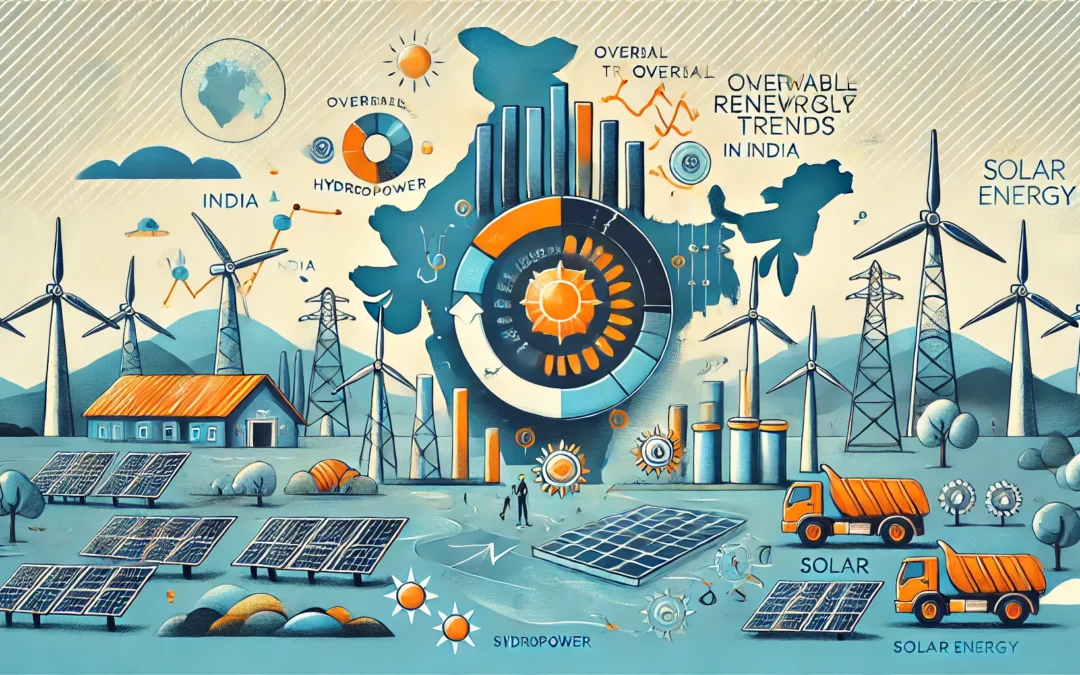
India is making significant strides in its energy sector, particularly focusing on the shift from conventional energy sources to renewable energy (RE). Solar energy, in particular, has emerged as a key player within the renewable energy landscape. Below is a comparative analysis of the overall renewable energy trends versus solar energy trends in India.
1. Renewable Energy Trends in India
India has established itself as one of the global leaders in renewable energy. The country is making continuous efforts to diversify its energy mix, with a strong emphasis on increasing the share of renewable sources like wind, solar, hydro, and bioenergy.
Key Trends in India's Renewable Energy Sector:
Installed Renewable Energy Capacity:
As of 2023, India's total renewable energy capacity stands at approximately 125 GW, which includes solar, wind, hydro, and bioenergy.
The government has set a goal of achieving 500 GW of non-fossil fuel energy capacity by 2030 to meet its climate and energy security objectives.
Diverse Energy Mix:
Wind Energy: India has a significant share of wind energy, with an installed capacity of over 42 GW. Coastal states like Tamil Nadu and Gujarat are leading in wind power generation.
Hydropower: India's hydropower potential is substantial, with a current installed capacity of over 46 GW. Large hydropower projects are crucial for balancing grid reliability and renewable energy integration.
Bioenergy: India is harnessing bioenergy from agricultural waste, municipal waste, and biomass, contributing approximately 10 GW to its renewable energy capacity.
Government Initiatives and Policies:
National Solar Mission: Launched in 2010, the mission aims to make India a global leader in solar power. The focus has been on large-scale solar projects and promoting rooftop solar installations.
Incentives and Subsidies: The government offers several incentives, such as capital subsidies, tax rebates, and accelerated depreciation, to promote investment in renewable energy.
Emerging Technologies:
Emerging Tech: India is exploring green hydrogen, pumped hydro storage, and smart grid integration to enhance RE capacity.
Challenges: Issues like land acquisition, financing, and intermittency continue to affect large-scale deployment.
Challenges:
Grid Integration: The intermittent nature of renewable energy sources presents challenges for grid stability. Efforts are underway to modernize the grid and enhance energy storage solutions.
Land Acquisition: Acquiring land for large-scale renewable energy projects, especially in densely populated areas, remains a challenge in India.
2. Solar Energy Trends in India
Solar energy is the most prominent segment of India's renewable energy sector. India is one of the fastest-growing markets for solar energy, and the country is poised to be a global solar powerhouse.
Key Solar Energy Trends in India:
Installed Solar Capacity:
India's installed solar power capacity exceeded 70 GW by the end of 2023. The country has set a target of 280 GW of solar capacity by 2030 as part of its broader renewable energy goals.
India is ranked among the top 5 countries globally in terms of installed solar power capacity.
Growth of Utility-Scale Solar:
Large-scale solar parks are the backbone of India's solar power generation. Projects like the Bhadla Solar Park in Rajasthan, one of the largest in the world, demonstrate India's focus on utility-scale solar.
States like Gujarat, Rajasthan, and Tamil Nadu are leading the country in solar capacity due to their vast land availability and high solar radiation.
Rooftop Solar Boom:
The rooftop solar market is growing rapidly, with a target of 40 GW of rooftop solar capacity by 2022. While India has yet to meet this target, the market is expanding in urban areas, commercial buildings, and industrial sectors. Reliable solar panel company in India provide turnkey solutions for homeowners and businesses.
Government schemes like PM-KUSUM promote solar installations for farmers, incentivizing solar pumps and solar irrigation systems, especially for off-grid rural areas.
Solar-Wind Hybrid Projects:
Solar-Wind Hybrids are being deployed to enhance power consistency and grid performance.
Innovations include:
Bifacial PV panels that capture light on both sides
Floating solar farms on reservoirs and canals
Solar tracking systems that follow the sun for higher efficiency
Cost Decline and Technology Advancements:
The cost of solar energy has fallen dramatically in the last decade due to advancements in technology, economies of scale, and competitive bidding in government auctions. As of 2023, solar tariffs in India are some of the lowest globally, at around INR 2 per kWh.
Advances in solar PV technologies such as bifacial solar panels, floating solar plants, and solar tracking systems are further driving the growth of solar energy in India.
Solar Manufacturing and Domestic Production:
To reduce import dependency, India is investing in local production under the PLI (Production Linked Incentive) scheme.
This includes manufacturing solar modules, cells, inverters, and batteries.
Solar Energy Storage:
Solar power generation is being coupled with energy storage systems (ESS) like lithium-ion batteries. This integration addresses the intermittency of solar energy, providing backup power during non-sunlight hours and stabilizing the grid.
Comparison: Renewable Energy vs. Solar Energy Trends in India
Aspect
Renewable Energy Trends
Solar Energy Trends
Installed Capacity
125 GW overall (wind, solar, hydro, bioenergy)
70 GW solar capacity (2023)
Growth Focus
Balanced focus on wind, hydro, solar, and bioenergy
Solar is the dominant growth sector with utility-scale and rooftop solar
Policy Support
National policies for various RE sectors; incentives for all RE types
Special focus on solar through National Solar Mission, PM-KUSUM, etc.
Cost Trends
Wind and hydro energy costs remain steady; bioenergy still evolving
Solar costs have dropped significantly, making it one of the cheapest energy sources
Challenges
Grid integration, land acquisition, financing
Land use, supply chain for domestic manufacturing, intermittency
Technology Focus
Wind-solar hybrids, green hydrogen, energy storage
Solar storage, advanced PV tech, floating solar, solar-wind hybrids
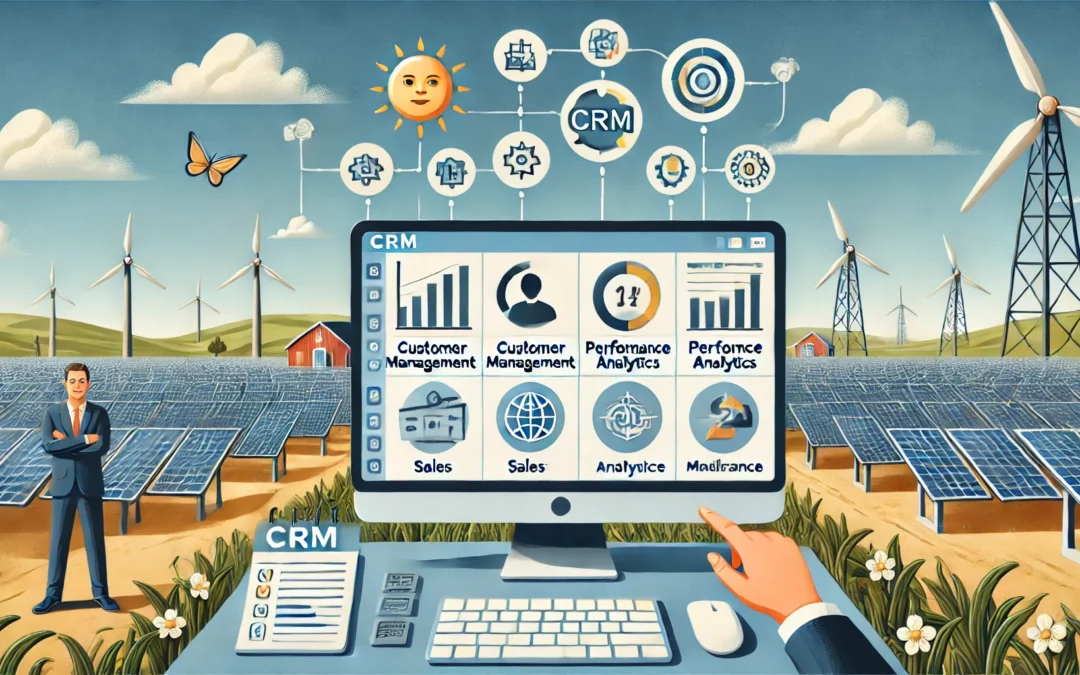
A Customer Relationship Management (CRM) system can be highly beneficial for solar farm owners, helping them streamline operations, manage customer interactions, and optimize sales processes. Here's how CRM can benefit solar farm owners:
Centralized Customer Data Management
A CRM acts as the central hub for storing customer information, from initial inquiries to ongoing service records. It keeps track of interactions, preferences, and transaction history, ensuring a personalized experience for farmers, agricultural businesses, and government stakeholders using agriculture solar solutions.
Example: If a client prefers email updates and previously inquired about panel upgrades, your team can proactively reach out with personalized offers.
Streamlined Lead Management for Expansion
For solar farm owners aiming to scale, a CRM provides full visibility into the sales pipeline. From initial inquiry to signed contract, you can track every step, prioritize hot leads, and improve conversion rates.
Pro Tip: Tag leads by interest (e.g., residential solar, commercial installations, EPC partnerships) for targeted follow-up campaigns.
Project Management:
CRM software can integrate with project management tools, enabling solar farm owners to manage installation, maintenance schedules, and new projects more efficiently. This helps in ensuring timely project completion and customer satisfaction.
Enhanced Customer Support:
Solar farm owners can use CRM to provide better after-sales support. With service history, warranties, and customer feedback stored, support teams can resolve issues faster, improving customer satisfaction and retention.
Performance Monitoring and Reporting:
CRM systems allow owners to monitor the performance of their sales and customer service teams through dashboards and reports. This data can guide decisions about marketing strategies, resource allocation, and customer targeting.
Automation of Routine Tasks:
Routine processes like invoicing, sending maintenance reminders, and follow-up emails can be automated in a CRM system. Automation saves time, reduces errors, and ensures no customer is overlooked.
Data Analytics for Strategic Decisions:
CRM systems offer insights through data analytics, helping solar farm owners identify trends, forecast sales, and optimize operations. This allows for better planning and decision-making based on reliable data.
Enhanced Collaboration:
CRMs allow teams within the solar farm business to collaborate effectively. Sales, marketing, and technical teams can access the same customer data, reducing miscommunication and improving coordination.
Regulatory Compliance Management:
Solar farms must comply with various regulations and incentives related to clean energy. A CRM can track compliance deadlines, policy changes, and customer eligibility for government schemes, making it easier to manage regulatory requirements.
Better Financial Management:
CRM systems can integrate with financial software, helping track payments, generate invoices, and manage financial reports. This reduces manual errors and ensures timely billing and collections.
By leveraging a CRM system, solar farm owners can enhance customer satisfaction, improve operational efficiency, and drive growth, ensuring long-term success in their business.