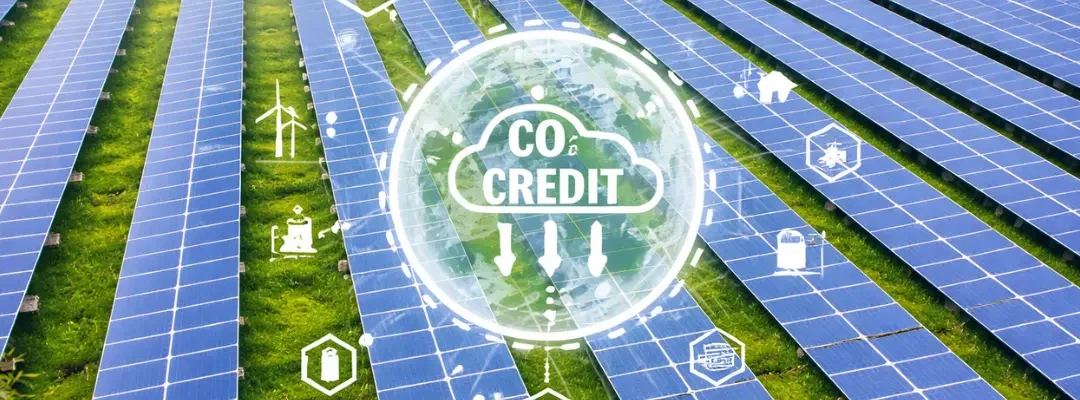
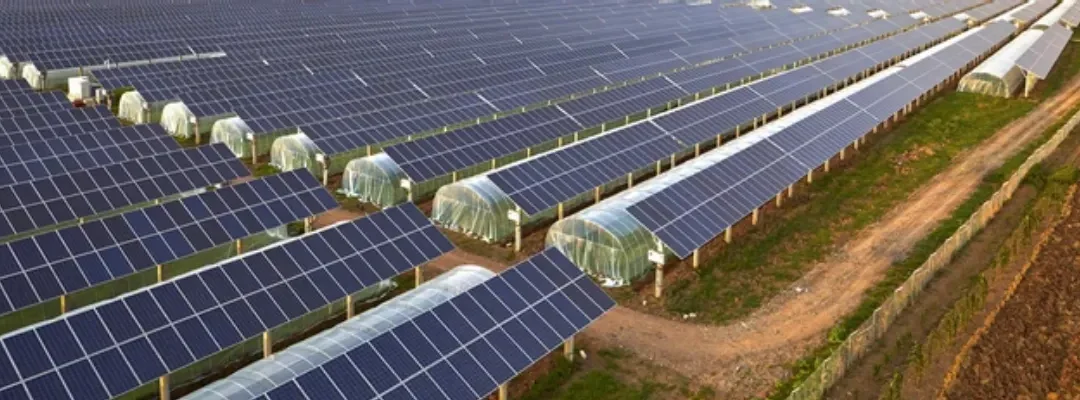
Solar farms do more than generate electricity — they help reduce greenhouse gas emissions by displacing fossil‑fuel power. In carbon markets, these emissions reductions can translate into carbon credits — an additional revenue stream for solar project owners.
What Are Carbon Credits?
A carbon credit is a tradable certificate representing one tonne of carbon dioxide equivalent (tCO₂e) that has been avoided or removed from the atmosphere through verified climate action.
In simple terms:
Your solar farm replaces electricity that would have been generated by fossil fuels.
This displacement reduces CO₂ emissions.
The avoided emissions can be quantified and certified as carbon credits.
These credits can be sold, traded, or retired — giving you financial benefit and environmental recognition.
How Solar Farms Create Carbon Credits
Solar installations create carbon credits by reducing emissions. Each megawatt‑hour (MWh) of solar electricity displaces a corresponding amount of fossil fuel generation, directly cutting CO₂ emissions.
Key Steps in the Process:
Establish a Baseline Estimate the CO₂ emissions that would have occurred without the solar farm (based on grid or diesel alternative generation).
Measure Emission Reductions Track actual energy output and calculate the avoided emissions per standard methodology.
Certification & Verification Work with an accredited verifier (under standards like Verra, Gold Standard, UNFCCC/CDM, or India’s emerging frameworks).
Issue Carbon Credits Verified reductions are converted into carbon credits (e.g., 1 credit = 1 tCO₂e).
Trade/Monetize Credits Sell credits on carbon markets — national, voluntary, or international.
This ensures emissions reductions are credible, measurable, and market‑ready.
Carbon Credit Standards & Certification
To monetize carbon reductions from a solar farm, you must conform to recognized standards. Verified Carbon Standard (VCS), Gold Standard, or Clean Development Mechanism (CDM) are common international protocols.
In India, a new domestic carbon market is emerging under the Carbon Credit Trading Scheme (CCTS), which includes voluntary frameworks for renewable energy projects.
These schemes require:
Project registration
Third‑party verification
Ongoing monitoring
Accurate emissions calculations
Once certified, your credits can be traded or sold to entities seeking offsets.
Types of Carbon Credits Solar Farms Can Generate
Solar farms typically generate voluntary carbon credits, as they demonstrably avoid emissions rather than directly remove carbon from the atmosphere.
Two Main Markets:
Voluntary Carbon Market (VCM) — Buyers purchase credits to meet internal sustainability or ESG goals.
Compliance Market (Emerging in India) — Under programs like CCTS, credits may be used for regulatory purposes or ecosystem obligations.
Both have distinct price and demand drivers.
Benefits of Carbon Credits for Solar Projects
Solar farm owners can enjoy multiple advantages:
1. Extra Revenue Stream
Carbon credits can be sold to corporations, exporters, or utilities seeking to offset emissions, creating additional income beyond electricity sales.
2. Enhanced Project Economics
When combined with power sales and renewable incentives, carbon credit income improves overall return on investment.
3. ESG & Sustainability Branding
Corporate buyers increasingly seek renewable offsets for ESG reports, net‑zero targets, and sustainability claims.
4. Strategic Positioning
As carbon markets mature — especially in India — integrating credits into your solar investment strategy can future‑proof long‑term value.
How to Register and Sell Solar Carbon Credits
Here’s a simplified action plan:
Step 1: Choose a Carbon Standard
International (Verra, Gold Standard) or national (India’s emerging frameworks under CCTS).
Step 2: Baseline & Monitoring
Install measurement systems to collect generation and avoided emissions data.
Step 3: Third‑Party Verification
An accredited body reviews data and methodology to confirm legitimacy.
Step 4: Issuance of Credits
Once verified, carbon credits are issued.
Step 5: Market Sale
Sell credits via carbon exchanges, brokers, or directly to companies seeking offsets.
This ensures credibility in global or domestic carbon markets.
Real Impact: Solar Projects & Carbon Reduction
Solar farms contribute in measurable ways:
Large parks like Bhadla Solar Park avoid millions of tonnes of CO₂ annually by replacing fossil fuel electricity generation.
Clean energy projects in rural areas have been documented to reduce emissions at scale.
Each avoided tonne of CO₂ is a quantifiable economic and environmental outcome — which your project can convert into assets via carbon credits.
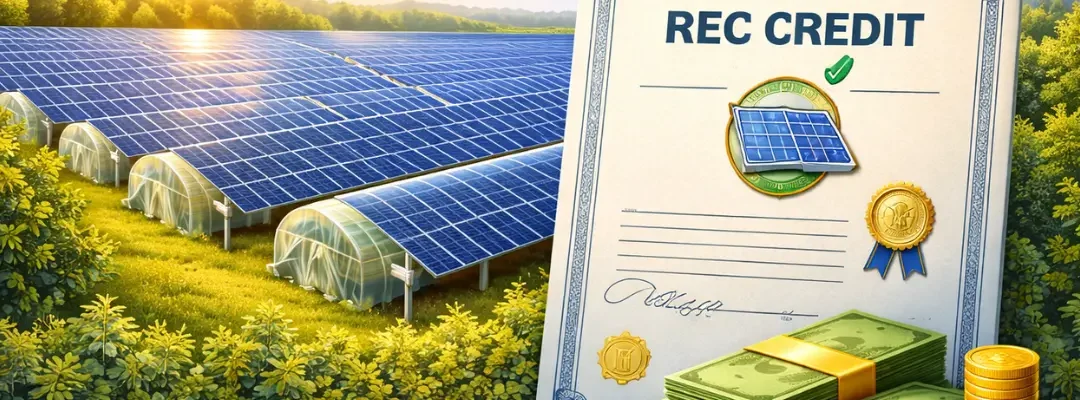
As the world moves toward clean energy, solar farm owners in India have a unique opportunity to not only generate electricity but also unlock additional income through Renewable Energy Certificates (RECs). These credits serve as proof of clean power generation and can be traded for profit, making them a smart financial tool for developers and investors alike.
In this guide, we explain exactly how REC credits work, how to qualify, and why they're becoming an essential part of India’s solar energy landscape.
What Are Renewable Energy Certificates (RECs)?
A Renewable Energy Certificate (REC) is a tradable instrument that certifies 1 megawatt-hour (MWh) of electricity was produced from a renewable source such as solar.
Think of RECs as the “environmental value” of your power — separate from the physical electricity. While your solar farm feeds clean power into the grid, RECs allow you to sell the green attributes of that electricity to buyers who want to claim renewable usage.
Why Are RECs Important for Solar Farms?
1. Unlock Extra Revenue
In addition to selling electricity to the grid, you can earn income by selling RECs. This makes your solar farm more profitable and attractive to investors.
2. Meet India’s RPO Requirements
India has mandatory Renewable Purchase Obligations (RPOs) for power distributors and large energy users. When these entities can’t source enough clean power directly, they buy RECs to meet compliance targets.
Your RECs help them meet their goals — and earn you money in return.
3. Enable Green Energy Claims
RECs are also purchased voluntarily by corporations that want to reduce their carbon footprint or meet net-zero targets. Selling RECs positions your project as a clean energy contributor in global ESG supply chains.
How the REC Mechanism Works in India
India’s REC framework is regulated by the Central Electricity Regulatory Commission (CERC) and allows eligible renewable energy generators to register, receive, and trade RECs on designated power exchanges.
Step-by-Step REC Process for Solar Farms
Project Registration Register your solar plant with the REC Registry of India through a State Nodal Agency.
Accreditation Obtain official accreditation confirming your project meets the criteria for REC issuance.
Metering & Generation Install accurate meters to track every megawatt-hour (MWh) of electricity your plant feeds into the grid.
REC Issuance For every 1 MWh of solar energy, one REC is issued by the REC Registry.
Trading on Power Exchanges Sell your RECs on platforms like:
Indian Energy Exchange (IEX)
Power Exchange India Limited (PXIL)
Buyers Retire RECs Once purchased, RECs are retired to show renewable compliance or sustainability impact.
Types of RECs Available
India recognizes two main types of RECs:
Solar RECs – Specific to solar power projects
Non-Solar RECs – For other renewables like wind, biomass, hydro
Solar RECs typically hold higher value due to higher demand and the premium associated with solar energy development costs.
Who Can Claim REC Credits from a Solar Farm?
To qualify for Renewable Energy Certificates (RECs) in India, your solar project must meet certain technical and regulatory requirements. Here's a clear breakdown:
1. Source of Generation
Your project must generate electricity using approved renewable sources like solar, wind, biomass, or small hydro. Only clean energy qualifies for REC issuance.
2. No Preferential Agreements
Your plant must not be tied to a subsidized solar Power Purchase Agreement (PPA) or any form of preferential tariff with a utility. Only those selling electricity at market-determined prices — without financial incentives — are eligible. This maintains a fair and competitive REC marketplace.
Note: Projects under state-supported PPAs or Feed-in Tariffs (FiTs) are typically not eligible for RECs.
3. Grid Connectivity
The solar farm must be connected to the main grid, and the electricity must be injected into the distribution network. Off-grid or captive systems are excluded from REC eligibility.
4. Regulatory Approval
You’ll need proper registration and accreditation through the REC Registry of India, and your project must comply with ongoing norms from CERC and respective state electricity regulators.
Benefits of RECs for Solar Developers
Benefit
Description
Additional Income
Earn beyond power sales — monetize the clean energy attribute
Better ROI
Increase the return on investment for utility-scale solar projects
Climate Impact
RECs prove your project's environmental contribution
Corporate Buyers
Tap into growing demand for clean power claims from MNCs
Regulatory Alignment
Helps the power ecosystem comply with national renewable targets
How to Get Started with RECs
If you operate or plan to set up a solar farm in India, here’s how to benefit from the REC market:
Connect with your State Nodal Agency Confirm eligibility and begin the application process.
Get the Right Metering Infrastructure Install revenue-grade meters with real-time tracking to ensure accurate reporting.
Complete Accreditation Submit project documents for review and approval under REC guidelines.
Track & Claim RECs Submit generation data to the REC Registry and receive certificates.
Sell on Power Exchange Participate in regular trading sessions and secure the best price for your RECs.
As the global energy landscape shifts, renewable energy technologies are becoming central to how we power our homes, industries, and cities. Driven by the need to reduce carbon emissions, achieve energy independence, and build resilient systems, renewables are no longer an alternative—they're the standard.
This guide explores the leading renewable technologies today, how they work, and where each excels. While all of them play vital roles, we’ll also take a closer look at solar energy, which continues to be one of the most accessible and fast-growing solutions for homeowners and small businesses.
What Is Renewable Energy?
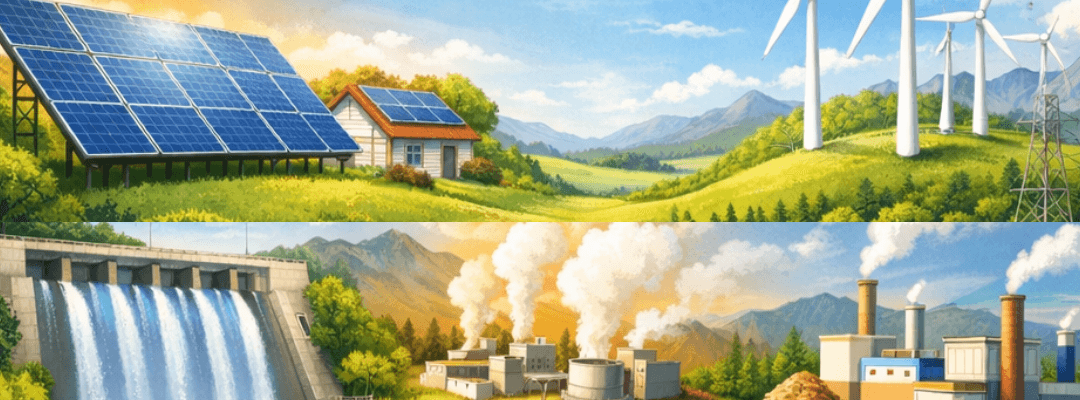
Renewable energy is power generated from natural sources that replenish themselves—like sunlight, wind, water, and underground heat. Unlike fossil fuels, these sources produce little or no greenhouse gas emissions and are considered vital to achieving net-zero carbon goals globally.
1. Wind Energy: The Giant of Clean Power
Wind energy is now one of the fastest-growing sources of electricity worldwide. By capturing kinetic energy from the wind using massive turbines, it provides a clean, renewable, and cost-effective energy source.
Onshore vs. Offshore Wind
Onshore Wind: Common in rural areas; generally cheaper to install.
Offshore Wind: Located in oceans where wind is stronger and steadier; higher energy potential.
Innovations :
Floating offshore wind farms
Taller turbines with advanced sensors
AI-powered predictive maintenance systems
2. Hydropower: The Backbone of Renewable Electricity
Hydropower uses the flow of water—usually from dams or rivers—to turn turbines and generate electricity. It currently provides over 15% of global electricity, making it the largest source of renewable power worldwide.
Types of Hydropower:
Reservoir (dam-based) systems
Run-of-river projects
Pumped storage (acts like a battery)
Pros:
Reliable base-load power
Long life span (50+ years)
Cons:
Ecological impact on river systems
Limited geographic scalability
3. Geothermal Energy: Power from the Earth’s Core
Geothermal power harnesses heat from beneath the Earth’s surface to produce electricity and heat buildings.
Best suited for:
Volcanic regions (Iceland, parts of the U.S., New Zealand)
Direct heating applications (district heating, greenhouses)
What’s New :
Enhanced Geothermal Systems (EGS): Use fracking-style tech to unlock heat in dry rock areas
Hybrid plants that combine geothermal with solar or biomass
4. Green Hydrogen: The Clean Fuel of the Future
Green hydrogen is made by splitting water molecules using electricity from renewable sources (like wind or solar). The result is a clean, storable fuel with zero emissions when used.
Key Benefits:
Can power industries that can’t easily electrify (steel, cement, shipping)
Useful in long-term energy storage and fuel cells
Growth Trends:
Pilot hydrogen trains, trucks, and ships
Electrolyzer costs are dropping fast
Backed by large-scale government investments (EU, Japan, U.S.)
5. Biomass & Bioenergy: From Waste to Watts
Biomass energy involves converting organic material—wood chips, crop residue, or even garbage—into electricity, heat, or fuel.
Applications:
Combined heat and power (CHP) plants
Biofuels for transport
Waste-to-energy incineration
Challenges:
Must be sustainably sourced
Can compete with food crops
Not always carbon-neutral
6. Solar Energy: Widely Accessible and Rapidly Advancing
Though it’s not the sole solution, solar energy remains a key pillar of renewable power—especially in residential and decentralized settings.
Most Common Uses:
Rooftop PV panels for homes
Community solar projects
Utility-scale solar farms
Solar + battery storage systems
Solar Highlights :
Widespread use of bifacial panels
Growth in solar-integrated building materials
Falling costs make it more accessible worldwide
While solar covers just over 30% of global renewable additions, it remains the most popular choice for individual consumers.
7. Battery Storage: The Enabler of Intermittent Renewables
Although not a power source itself, energy storage is crucial for balancing renewable supply and demand. Battery storage allows solar and wind energy to be used even when the sun isn’t shining or the wind isn’t blowing.
Popular Technologies:
Lithium-ion batteries: Dominant in homes and EVs
Flow batteries: For grid-scale applications
Solid-state batteries: Safer, higher-capacity tech on the horizon
Quick Comparison of Renewable Energy Types
Technology
Scalability
Reliability
Cost Trend
Ideal For
Wind
High
High
Falling
Grid-scale electricity
Hydropower
Medium
Very High
Stable
Base-load power
Geothermal
Low
Very High
High
Heating, base-load power
Green Hydrogen
Medium
Medium
High
Industry, storage
Biomass
Medium
Medium
Moderate
Heat, electricity, fuel
Solar
High
Moderate
Falling
Homes, small business, rural areas
The Future of Renewable Energy Is Integrated
Each renewable energy technology plays a distinct role in achieving global sustainability. While large utilities may favor wind, hydro, and hydrogen for their power needs, homeowners and small businesses often turn to solar for its accessibility and simplicity.
In the coming years, expect to see hybrid energy systems that combine:
Solar Panels for Rental Houses in India – DCR vs Non-DCR Explained
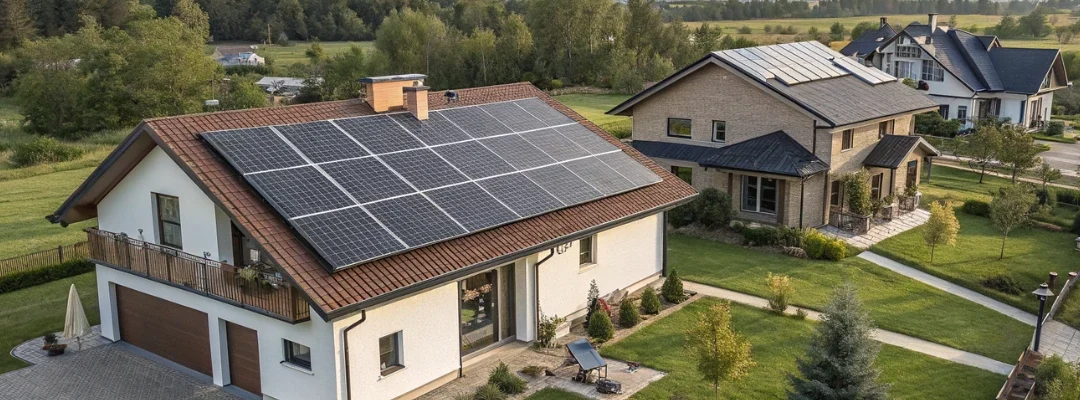
Installing solar panels on a rental house is one of the smartest ways to reduce electricity bills and embrace renewable energy. However, before investing, it’s important to understand which solar system suits you best — especially the difference between DCR and Non-DCR panels, and how subsidy eligibility affects your final cost.
At Synergy Solar Solutions, we simplify these details so that homeowners and residents of rental properties can make the most informed choice.
Can You Install Solar Panels on a Rental House?
Yes, you can install solar panels on a rental house — with the permission of the property owner and the local DISCOM (Electricity Board).
If the property owner applies for installation and the electricity connection is in their name, the system qualifies for government subsidy (with DCR panels).
If the property is on rent and the installation is done without ownership rights, the system will not receive subsidy, even if DCR panels are used.
In short:
DCR panels with subsidy → For property owners. No subsidy → For rental property users.
What Are DCR and Non-DCR Solar Panels?
Solar panels in India are categorized based on where their cells and modules are manufactured.
DCR (Domestic Content Requirement) Solar Panels
Entirely made in India (both cells and modules).
Eligible for MNRE rooftop solar subsidy (only for property owners).
Slightly older technology — mostly Poly or standard Mono panels.
Generates around 4 units per kW/day.
Higher initial cost, but the subsidy reduces overall price.
Non-DCR Solar Panels
Made in India using imported solar cells (mainly from China or Vietnam).
Not eligible for government subsidy.
Built with advanced technologies — Mono-PERC, Half-Cut, and Bifacial.
Generates higher output (~ 4.5 units per kW/day).
Cheaper upfront cost, requires fewer panels, and offers same warranty as DCR.
Government Subsidy Eligibility
Under the National Portal for Rooftop Solar (NPRS) by MNRE:
Condition Subsidy Eligibility Owner installing on rooftop with DCR panels Yes Rental house user installing system No Non-DCR panels used No DCR panels used on non-owner property No Rooftop installation ≤ 3 kW 40 % subsidy Rooftop installation > 3 kW 20 % subsidy (for next 7 kW)
Therefore, if you are living in or managing a rental house, the subsidy benefit is not available, but you can still install an efficient Non-DCR on-grid system at a lower cost. DCR vs Non-DCR Solar Panels – Detailed Comparison Feature DCR Solar Panel Non-DCR Solar Panel Manufacturing Fully Made in India (cells + modules) Made in India with imported cells Govt Subsidy Eligibility Yes (for owners only) No Cost (before subsidy) ₹ 65 000 – ₹ 70 000 per kW ₹ 50 000 – ₹ 55 000 per kW Cost (after subsidy for 3 kW) ₹ 1.2 – ₹ 1.3 lakh ₹ 1.4 – ₹ 1.5 lakh (no subsidy) Avg Power Generation per kW/day 4 units 4.5 units (+ 12 %) Technology Poly / Standard Mono Mono-PERC / Half-Cut / Bifacial Roof Space Required More (6–7 panels for 3 kW) Less (5–6 panels for 3 kW) Warranty 25 + years performance 25 + years performance Best For Homeowners eligible for subsidy Rental house installations (no subsidy) Example – 3 kW System Comparison Parameter DCR (With Subsidy) Non-DCR (Without Subsidy) System Cost ₹ 2 ,00 ,000 ₹ 1 ,50 ,000 Govt Subsidy ₹ 72 ,000 Not applicable Final Cost ₹ 1 ,28 ,000 ₹ 1 ,50 ,000 Daily Units Generated 12 13.5 Annual Units Generated ~ 4 ,380 ~ 4 ,900 ROI Period 3.5 – 4 years 3 – 3.5 years Insight:
Even though DCR systems receive subsidy, the final cost and annual generation value are almost equal to Non-DCR systems. Non-DCR panels generate more electricity and require fewer modules, offering better efficiency for rental properties.
Which System is Best for Rental Houses?
For rental houses, the Non-DCR solar system is the most practical and affordable solution. Here’s why:
No Subsidy Hassle: Non-DCR systems are free from government documentation and approval processes. Lower Upfront Cost: Even without subsidy, Non-DCR panels are cheaper. Higher Power Generation: Around 12 % more electricity than DCR panels. Fewer Panels Needed: Saves roof space – ideal for compact rental rooftops. Same Warranty & Lifespan: 25 + years performance, 10–12 years product warranty. Advanced Technology: Uses the latest Mono-PERC and Half-Cut cell technology.
So, for anyone installing solar in a rental property, a Non-DCR on-grid system offers the best mix of efficiency, flexibility, and ROI.
When Should You Choose DCR Panels?
If you are the owner of the rental house (not the tenant) and the electricity connection is in your name, installing DCR panels allows you to claim subsidy benefits.
Choose DCR when:
You own the property.
You plan long-term residence (10 + years).
You want MNRE subsidy through the National Portal.
Even though DCR uses slightly older technology, the subsidy brings the net cost close to Non-DCR systems.
Key Takeaways
Subsidy Eligibility: Only DCR panels used by property owners qualify.
Rental Houses: Non-DCR systems are recommended — cost-effective and efficient.
Performance: Non-DCR panels produce ≈ 0.5 unit more per kW/day.
Panel Count: Non-DCR systems need fewer modules — ideal for small rooftops.
Warranty: Both offer the same 25 + year performance guarantee.
Type Investment (₹) Avg Monthly Units Avg Monthly Savings (@₹7/unit) Payback Period DCR (With Subsidy) ₹ 1.28 L 360 – 400 ₹ 2 ,500 – ₹ 2 ,800 3.5 years Non-DCR (Without Subsidy) ₹ 1.50 L 400 – 450 ₹ 3 ,000 – ₹ 3 ,200 3 years
After 3 to 4 years, both systems generate free electricity for over two decades.
Why Choose Synergy Solar Solutions
MNRE-approved EPC contractor for DCR & Non-DCR systems.
Expert in on-grid installations for residential & rental houses.
Assistance with subsidy applications (for owners).
Premium brands – Waaree, Delta, Loom, Havells.
Over 500 residential and rental projects installed across India.
Synergy Solar Solutions helps both owners and rental property users go solar affordably and efficiently.
Frequently Asked Questions
Can a rental house get solar subsidy in India? No. Only the property owner is eligible for subsidy when using DCR panels under the MNRE scheme.
Are Non-DCR panels allowed for rental houses? Yes. They are fully approved under BIS standards and commonly used across India — but not eligible for subsidy.
Which is better for rental houses – DCR or Non-DCR? Non-DCR is better for rental houses – it’s low-cost, high-efficiency, needs fewer panels, and offers equal warranty.
Do Non-DCR panels generate more power? Yes. Non-DCR panels generate ≈ 4.5 units/kW/day — about 12 % more than DCR panels.
What about maintenance and warranty? Both DCR and Non-DCR systems need simple panel cleaning and offer 25 + years performance warranty.
If the rental property owner applies for subsidy, is it allowed? Yes. If the owner’s name is on the electricity connection, the owner can install DCR panels and claim the subsidy.
For rural landowners and farmers in India, solar energy has emerged as a reliable source of passive income. Unlike traditional farming, which depends on crops, weather, and active labor, solar farming allows you to earn money consistently without daily involvement.
With government schemes like PM-KUSUM, rising energy demand, and the push for renewable energy, solar farming is now a profitable, low-risk investment for rural entrepreneurs.
What is Passive Solar Farming?
Passive solar farming means earning income from solar energy without managing daily operations. The main approaches include:
Leasing your land to a solar developer – You receive fixed annual rent while the developer handles installation, maintenance, and power sales.
Power Purchase Agreements (PPA) – You install solar panels (or fund a project) and sell electricity at a fixed rate to the grid or corporate buyers.
Participation under PM-KUSUM – Government-backed scheme allowing farmers to set up small solar systems and sell surplus energy with minimal involvement.
This allows rural landowners to earn steady, long-term revenue without replacing their primary occupation.
Real-World Passive Income Potential
Land Size
Model
Expected Annual Income
Notes
1 acre
Lease to developer
₹30,000–₹80,000
Fixed rent, no maintenance
1–2 acres
Small solar plant under PM-KUSUM
₹1–2 lakh
Subsidy-backed, sells to grid
5+ acres
PPA for commercial solar
₹5–15 lakh
Long-term contract, minimal involvement
Key benefits:
Consistent revenue independent of crop yield
Low operational responsibility
20–25 years of income potential
Why Passive Solar Farming Works
Guaranteed Long-Term Income Solar leases and PPAs provide a stable cash flow over decades.
Low Risk Government-backed programs like PM-KUSUM reduce investment risk and ensure predictable returns.
Minimal Maintenance Modern solar farms require little upkeep, and developers typically manage operations.
Dual Benefits You can sometimes continue limited farming under solar panels (agro-solar), earning both agricultural and solar income.
How to Start Earning Passive Income from Solar Farming
Evaluate Your Land – Open, unshaded areas with grid connectivity are ideal.
Choose Your Model – Decide between leasing, PPA, or self-owned solar plant with government support.
Partner with Experts – Work with solar EPC companies like Synergy Solar Solutions to handle installation, approvals, and management.
Leverage Government Subsidies – PM-KUSUM can cover a portion of installation costs, improving ROI.