Solar panels are designed to convert sunlight into electricity efficiently. But when dust, dirt, or bird droppings cover the surface, light absorption drops, reducing energy generation by 10–30%.
To solve this, solar panel cleaning machines use a mix of mechanical engineering, material science, and robotics. In this blog, we’ll explore the science behind these machines — from simple brushes to advanced robotic cleaners.
The Basics: Brush-Based Cleaning Systems
How They Work
Brushes made of soft nylon or microfiber move across the panel surface.
Designed to avoid scratches while dislodging dust.
Can be manual (handheld) or motor-driven (semi-automatic).
Science Behind It
Brush bristles are engineered with low hardness (below glass surface hardness) to prevent damage.
Microfiber materials use static charge to attract fine dust particles.
Best for residential rooftops and small installations.
Hybrid Cleaning: Brush + Water Systems
How They Work
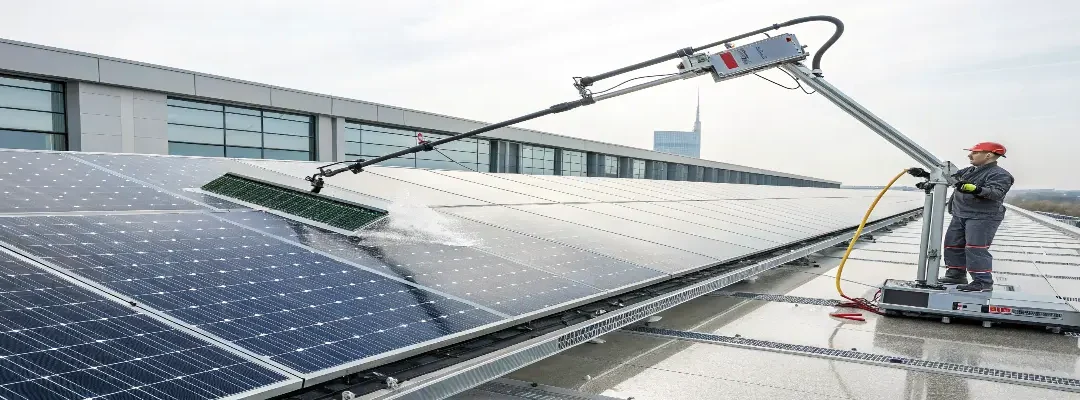
Combine rotating brushes with controlled water spray.
Used for sticky dirt, bird droppings, or oily residues.
Science Behind It
Uses the principle of lubrication + friction reduction.
Minimal water ensures dirt loosens without damaging anti-reflective coating.
Ideal for industrial rooftops and medium solar plants.
Robotic Cleaning Machines
How They Work
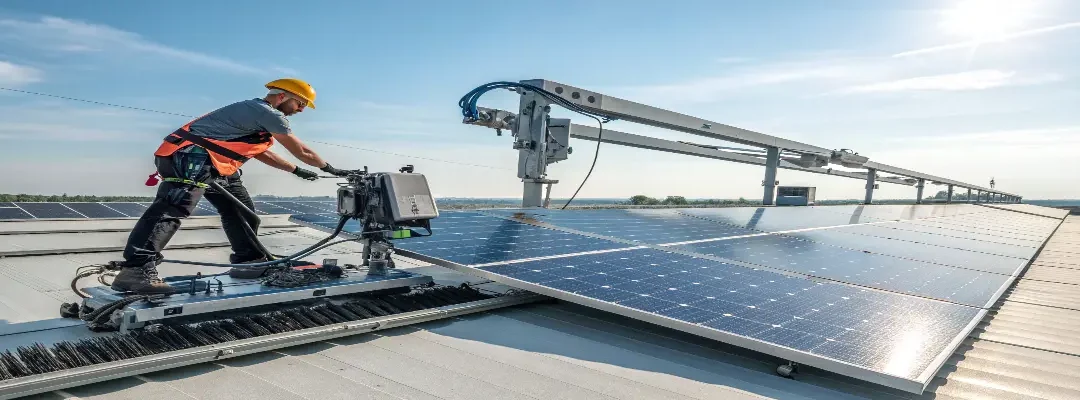
Fully autonomous robots travel across panels using tracks or rails.
Use AI + sensors to detect dust levels.
Operate mostly waterless, relying on microfiber rollers and suction.
Science Behind It
Weight Distribution: Robots are designed lightweight to prevent panel stress.
Friction Optimization: Wheels use low-friction materials to glide smoothly.
Solar panels are a long-term investment — designed to last 20–25 years. However, their performance depends heavily on cleanliness. Studies show that panels covered with dust, bird droppings, or pollution can lose 10–30% of efficiency.
For residential users, this means higher electricity bills. For solar farms, it can mean crores of rupees in lost revenue.
This is where solar panel cleaning machines step in. By automating the cleaning process, they improve energy generation, extend panel life, and maximize ROI.
Why Dirty Panels Hurt ROI
Reduced Sunlight Absorption → Dust blocks photons from reaching solar cells.
Hotspot Formation → Uneven dirt causes temperature imbalances that damage panels.
Accelerated Degradation → Dirt + moisture lead to corrosion over time.
Clean solar panels = higher energy generation. But the cleaning requirements for a household rooftop system and a large solar farm are very different.
This is why solar panel cleaning machines are designed differently for residential and industrial use. In this guide, we’ll break down the key differences, costs, and benefits of both.
Residential Solar Panel Cleaning Machines
Features
Small & Lightweight: Easy for homeowners to handle.
Manual or Semi-Automatic: Typically brush-based or handheld systems.
Waterless or Low-Water Options: Conserves water for households.
Cost Range: ₹15,000 – ₹1.5 lakh depending on technology.
Best Suited For
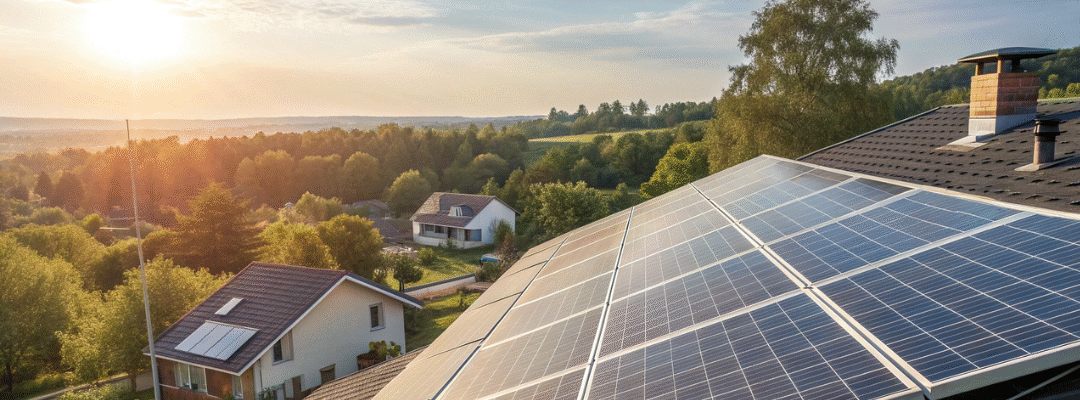
Rooftop solar systems (2 kW – 20 kW).
Housing societies with smaller common area solar setups.
Users who prefer low-cost and simple cleaning tools.
Industrial Solar Panel Cleaning Machines
Features
Heavy-Duty Design: Built for cleaning thousands of panels at scale.
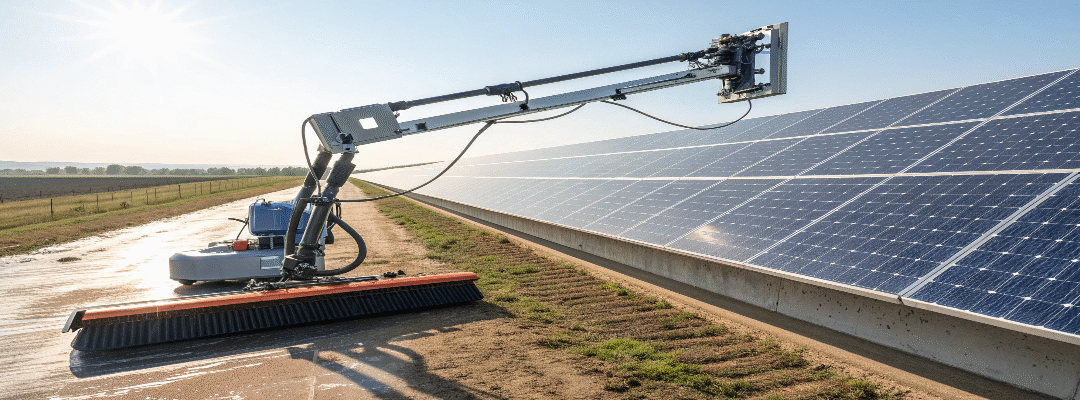
Automated/Robotic: Rail-mounted robots, tractors, or AI-powered cleaners.
High-Speed Efficiency: Can clean MW-scale solar farms within hours.
Cost Range: ₹2 lakh – ₹50 lakh+ depending on automation and capacity.
Best Suited For
Utility-scale solar farms (1 MW – 500 MW).
Large industries with captive solar plants.
EPC contractors and O&M companies managing multiple sites.
Side-by-Side Comparison
Feature
Residential Cleaning Machines
Industrial Cleaning Machines
System Size
2 kW – 20 kW
1 MW – 500 MW
Operation
Manual / Semi-Automatic
Automated / Robotic
Water Use
Waterless or minimal
Mostly waterless, high efficiency
Cost
₹15,000 – ₹1.5 lakh
₹2 lakh – ₹50 lakh+
Cleaning Speed
Few panels/hour
Thousands of panels/hour
Maintenance
Low
Medium to High
Users
Homeowners, small societies
Solar farms, industries, O&M firms
Case Example
Residential Rooftop (10 kW system, 30 panels)
Manual brush system cost: ₹20,000
Cleaning time: 30–40 minutes
Energy gain: 8–12% more efficiency
Industrial Solar Farm (50 MW, 1.5 lakh panels)
Robotic waterless cleaner cost: ₹25 lakh
Cleans entire site in <24 hours
Energy gain: 12–15% efficiency boost, saving ₹1.5–2 crore annually
Which One Should You Choose?
Go Residential Machines If: You are a homeowner or small society, with fewer panels and limited budget.
Go Industrial Machines If: You operate a large solar farm or industrial plant, where efficiency and speed directly impact ROI.
Both options improve performance, but the scale of your solar project determines the right choice.
Solar panels work best when they’re clean. Dust, bird droppings, and pollution can block sunlight and reduce power output by 10–30%. Traditionally, panels are cleaned with water, but in many regions — especially India, the Middle East, and Africa — water is scarce and expensive.
Enter waterless solar panel cleaning machines — an innovative, eco-friendly solution that cleans panels without wasting a single drop of water.
What Are Waterless Solar Panel Cleaning Machines?
Waterless solar panel cleaning machines are automated or semi-automated systems that remove dust and dirt using rotating brushes, microfiber pads, or robotic arms instead of water.
Mechanism: Soft brushes or rollers glide across panels.
Operation: Can be manual, semi-automatic, or fully robotic.
Technology: Some advanced machines use AI and sensors to detect dirt levels.
Why Go Waterless?
1. Water Conservation
Cleaning 1 MW of solar panels with water can require 7,000–10,000 liters.
Waterless machines eliminate this wastage — critical in arid regions.
2. Eco-Friendly & Sustainable
Reduces water consumption and carbon footprint.
Ideal for large solar farms in drought-prone areas.
3. Lower Operating Costs
No need to buy, transport, or pump water.
Saves thousands of rupees in annual cleaning expenses.
4. Better ROI
Panels stay consistently clean, ensuring maximum energy generation.
ROI improves as energy output increases by 10–15% compared to infrequent water-based cleaning.
Types of Waterless Cleaning Machines
Manual Waterless Cleaners
Lightweight, portable brush systems.
Suitable for residential rooftops.
Semi-Automatic Cleaning Machines
Motorized brush rollers, often rail-mounted.
Best for medium-sized solar installations.
Robotic Waterless Cleaners
Fully autonomous, AI-powered systems.
Designed for large solar farms and industrial plants.
Case Example: Solar Farm in Rajasthan
Capacity: 50 MW
Traditional Cleaning: 3,50,000 liters of water/month
Switched to Waterless Robots
Saved 42 lakh liters of water annually
Increased output by 12%
ROI achieved in 2 years
Challenges of Waterless Cleaning
Initial Investment: Higher than water-based cleaning.
Heavy Dust Regions: May require more frequent cleaning.
Compatibility: Some rooftop designs may need customized systems.
However, the long-term savings and sustainability benefits outweigh these challenges.
The Future of Solar Panel Cleaning
AI & IoT integration → Robots that self-schedule cleaning.
Drone-assisted cleaning → Emerging technology for rooftops.
Hybrid systems → Combining waterless cleaning with minimal water spray for sticky residues.
High electricity costs and the rising need for sustainability have pushed homeowners, businesses, and communities to explore solar energy. But many hesitate because of the hefty upfront investment required to buy and install solar panels.
This is where solar leasing comes in — a simple, affordable way to go solar without owning the system. In this guide, we’ll explain what solar leasing is, how it works, the costs involved, and why it may (or may not) be the right choice for you.
What is Solar Leasing & How It Works
Solar leasing is a financing model where you rent a solar power system instead of purchasing it. The solar provider installs and owns the panels, while you pay a fixed monthly fee or a rate based on electricity generated.
How it works in practice:
The solar company designs and installs the system at zero upfront cost.
You pay a monthly lease fee (15–25 years contract).
You consume electricity generated by the system, lowering your grid bill.
At the end of the lease, you can renew, upgrade, buy, or remove the system.
This makes solar accessible for households, SMEs, and institutions without requiring heavy investment.
Solar Leasing vs. Buying vs. PPA
Feature
Solar Leasing
Buying (CAPEX)
Power Purchase Agreement (PPA)
Ownership
Solar company
You
Solar company
Upfront Cost
₹0
High
₹0
Maintenance
Company handles
Owner responsibility
Company handles
Subsidy & Tax Benefits
Not available
Available
Not available
ROI
Moderate
Highest
High
Contract Period
15–25 years
None
15–25 years
In short:
Leasing = affordability, no ownership.
Buying = best long-term ROI.
PPA = pay only for units consumed, no fixed rent.
Benefits for Homeowners, Businesses & Industries
For Homeowners & Housing Societies
Zero upfront cost → go solar without loans.
Lower electricity bills from day one.
Hassle-free system maintenance.
For Businesses & SMEs
Fixed energy costs, protecting against grid tariff hikes.
No CAPEX burden → conserve cash for business growth.
Meets sustainability goals without complexity.
For Large Industries
Reduce carbon footprint to comply with ESG standards.
Flexible long-term contracts with predictable savings.
Strengthens green branding for global supply chains.