Understanding how to calculate the Return on Investment (ROI) for a solar power plant is essential for anyone considering a solar energy project—whether it's a rooftop setup or a large-scale commercial installation. ROI helps assess the long-term financial performance of your solar investment, taking into account costs, energy savings, incentives, and ongoing maintenance.
If you are working with a professional solar panel installation company, they can assist in accurate ROI projections and ensure maximum system performance.
Step-by-Step: How to Calculate ROI for a Solar Power Plant
Assess Total Initial Investment (CAPEX)
This includes all upfront costs required to install the system:
Solar Equipment & Installation: Panels, inverters, batteries (if any), mounting structures, and labor
Permits & Compliance: Government or utility approval fees and inspection charges.
Financing Costs: Interest or fees if the system is financed through a loan or lease.
Estimate Annual Energy Savings & Income
This is the amount of money the solar system will help you save or earn each year:
Electricity Bill Savings: Multiply the system's annual energy generation (in kWh) by the local electricity tariff.
Government Incentives: Include subsidies, tax credits, or capital subsidies from central/state governments.
Export Earnings (Optional): If you're exporting surplus power to the grid, calculate income via feed-in tariffs or Power Purchase Agreements (PPAs).
Account for Annual Operating Costs (OPEX)
Although solar systems are low-maintenance, they do involve ongoing costs:
Maintenance & Cleaning
Inverter Repairs or Replacements
Insurance Premiums
Monitoring Services (if any)
Subtract these recurring expenses from your annual savings to get the net benefit.
When planning a solar farm project, choosing the right financing model is crucial. Two primary options dominate the landscape: Capital Expenditure (CAPEX) and Operational Expenditure (OPEX). Each model offers distinct advantages and trade-offs in terms of investment, ownership, risk, and long-term value.
This guide breaks down the key differences between CAPEX and OPEX models to help businesses, institutions, and investors make informed decisions based on their financial strategy, risk appetite, and energy goals.
What is the CAPEX Model?
CAPEX (Capital Expenditure) refers to a model where the business invests upfront in purchasing and installing the solar power system. This approach gives full ownership and long-term control over the energy asset.
Benefits of CAPEX:
Total Ownership & Operational Freedom
You fully control system operations, upgrades, and decisions — with no dependency on third-party providers.
Maximum Long-Term Savings
After recovering the initial investment (typically within 4–7 years), energy generation is virtually free, making this model ideal for long-term savings.
Access to Financial Incentives
Take advantage of tax credits, accelerated depreciation (like India's AD benefit), and government subsidies directly.
Asset Addition
The solar plant becomes part of your business’s asset base, contributing to valuation and potential resale value.
Flexibility
With no long-term service contracts, you retain freedom to modify, expand, or upgrade the system anytime.
Drawbacks of CAPEX:
High Initial Investment
Significant upfront capital is required for system procurement, installation, and commissioning. Financing may be necessary.
Ongoing Maintenance Responsibility
You must manage regular maintenance, system monitoring, and handle unexpected failures or downtimes.
Technology Risk & Depreciation
Over time, panel efficiency may degrade, and outdated tech might require costly upgrades.
What is the OPEX Model?
OPEX (Operational Expenditure) is a pay-as-you-go model where a third-party solar developer installs and maintains the system. The business pays only for the electricity used, usually via a Power Purchase Agreement (PPA).
Benefits of OPEX:
Low/No Upfront Cost
Ideal for organizations that want to adopt solar energy without large capital outlays.
Hassle-Free Operations
All maintenance, repairs, and monitoring are handled by the service provider — reducing operational burden.
Performance Guarantees
Most providers ensure a minimum energy output, insulating you from performance risk.
Predictable Billing
Pay fixed or usage-based rates (per kWh), which simplifies budgeting and avoids market volatility.
Drawbacks of OPEX:
Higher Long-Term Costs
Over the 15–25 year contract duration, total payments may exceed the cost of outright ownership.
Lack of Ownership
You don’t own the solar asset — so there’s no appreciation, and you miss out on tax incentives and capital benefits.
Limited Flexibility
Long-term PPAs may include rate escalation clauses and early termination fees, locking you into rigid terms.
Potential Cost Premium
Providers factor in risk, guarantees, and service into the pricing, which can lead to a premium over market energy rates.
CAPEX vs OPEX Model – A Side-by-Side Comparison
Feature
CAPEX Model
OPEX Model
Ownership
You own the system
Third-party provider owns the system
Initial Investment
High upfront capital
Minimal or zero upfront cost
Maintenance
Your responsibility
Provider handles maintenance
Financial Incentives
You benefit from subsidies/tax credits
Provider retains incentives
ROI
High over long term
Predictable savings, lower ROI
Contract Length
None
Long-term PPA (15–25 years)
Best Suited For
Large businesses, long-term investors
Startups, SMEs, cost-sensitive users
Which Model is Right for You?
The right choice depends on your organization’s financial health, long-term goals, and operational strategy:
Choose CAPEX if you:
Have access to upfront capital
Want long-term energy cost savings
Prefer complete ownership and control
Choose OPEX if you:
Prefer a low-risk, no-investment approach
Want to avoid maintenance responsibilities
Need predictable energy costs and flexible scalability
The CAPEX (Capital Expenditure) model for solar power installation is an investment approach where the owner purchases and fully owns the solar system. Unlike the OPEX (Operational Expenditure) model, where users lease the system or pay only for the energy consumed, the CAPEX model offers complete control and potential long-term savings. For farmers and agri-businesses exploring agriculture solar solutions, the CAPEX model offers unmatched financial and operational benefits.
While businesses, industries, and large-scale solar investors often prefer this model for its ownership benefits, it also comes with significant financial and operational responsibilities. Let’s explore the pros and cons of the CAPEX model to help you determine if it’s the right choice for your solar energy needs.
Advantages of the CAPEX Model for Solar Farms
Full Ownership and Control
You own the solar power system outright, giving you full control over operations, upgrades, and maintenance decisions.
No reliance on third-party providers or long-term leasing agreements, ensuring energy independence.
Long-Term Cost Savings
After the initial investment is recovered, solar energy is essentially free, leading to substantial long-term savings on electricity bills.
Protection from rising electricity costs, making the investment more valuable over time.
High Return on Investment (ROI)
Solar CAPEX investments often yield an ROI of 15-25%, depending on location and energy consumption.
Energy savings, government incentives, and net metering policies can further boost financial returns.
Property Value Appreciation
A solar-powered property often attracts higher resale value due to reduced energy costs for future buyers.
Green-certified buildings with solar installations are more attractive to businesses and investors.
Tax Benefits & Government Incentives
Many countries offer tax credits, rebates, and accelerated depreciation benefits for CAPEX solar investments.
In India, solar installations under CAPEX are eligible for Accelerated Depreciation (80%), significantly reducing taxable income.
No Long-Term Contracts or Rent Payments
Unlike leasing or PPA (Power Purchase Agreement) models, there are no recurring rental fees.
Business owners are not locked into contracts with third-party energy providers.
Sustainability & Environmental Benefits
Investing in solar via the CAPEX model directly contributes to reducing carbon footprints and promoting clean energy.
Companies can enhance ESG (Environmental, Social, and Governance) scores, attracting eco-conscious investors.
Disadvantages of the CAPEX Model for Solar Farms
High Upfront Capital Requirement
The initial cost of a solar system, including panels, inverters, and installation, can be significant.
Businesses may need to divert funds from core operations or expansion plans to invest in solar.
Responsibility for Maintenance & Repairs
Owners are fully responsible for regular maintenance, repairs, and system upgrades.
Unexpected repairs can add to operational costs over time.
Risk of Underperformance & Technological Changes
If the system underperforms due to poor design, faulty components, or external factors (weather, shading), financial returns may be lower.
Rapid advancements in solar technology might make older systems less efficient compared to newer models.
Equipment Depreciation & Resale Value
Solar panels and inverters depreciate over time, impacting potential resale value.
After 15-20 years, older solar systems may require significant upgrades or replacements.
Financing & Loan Challenges
Many small businesses and individuals struggle to secure financing due to high upfront costs.
Loans for solar CAPEX projects may have high interest rates or require significant collateral.
Solution: Government-backed financing schemes, green energy loans, and power subsidies can help overcome this challenge.
Variability in Energy Production
Solar energy generation depends on weather conditions, location, and seasonal variations.
Unexpected shading, dust accumulation, or monsoon seasons can reduce energy output.
Solution: Use solar tracking systems and regular cleaning schedules to maximize efficiency.
Opportunity Cost of Capital
Investing in a solar system means locking capital that could be used for other high-yield business ventures.
Businesses must evaluate whether investing in solar offers better returns compared to other growth opportunities.
The Operational Expenditure (OPEX) model for solar farms is a financing approach that allows businesses to adopt solar energy without large upfront investments. Unlike the Capital Expenditure (CAPEX) model, where organizations purchase and own solar infrastructure, the OPEX model enables them to lease solar equipment or pay for the energy generated, often through a Power Purchase Agreement (PPA).
For farmers and agri-businesses exploring agricultural solar solutions, this model offers a low-risk, cost-effective way to transition to renewable energy while improving sustainability.
Advantages of the OPEX Model
Zero or Minimal Upfront Investment
One of the most significant benefits of the OPEX model is that it removes the financial barrier to solar adoption. Businesses can access solar power without heavy capital expenditures, making it an ideal option for organizations with budget constraints or other investment priorities.
Fixed and Predictable Energy Costs
By opting for an OPEX solar model, businesses can secure fixed-rate payments for electricity, shielding them from the fluctuations of grid energy prices. This ensures better financial planning and cost predictability over time.
Hassle-Free Maintenance and Performance Management
Unlike CAPEX models, where the owner is responsible for maintenance, the service provider in an OPEX agreement typically handles:
Regular maintenance to ensure system efficiency
Performance monitoring to maximize energy output
Repairs and troubleshooting, reducing downtime and operational risks
No System Performance Risks
With an OPEX arrangement, businesses do not bear the technical risks associated with system inefficiencies or equipment failures. If the system underperforms, the service provider is accountable for fixing the issue, ensuring consistent energy production.
Scalability and Flexibility
As energy demands grow, businesses can expand their solar capacity without additional capital investments. Many OPEX contracts allow for system scaling as operational needs evolve.
Tax and Financial Benefits
In some regions, OPEX solar agreements may qualify as operational expenses, making them tax-deductible. This can provide additional financial relief compared to CAPEX models, where tax benefits depend on depreciation rates.
Immediate Energy Cost Savings
Businesses start saving on energy costs from day one. Since there’s no waiting period for ROI, the cost benefits are instantaneous, unlike CAPEX models, where savings accumulate over time.
Challenges of the OPEX Model
Higher Long-Term Costs
Although the OPEX model eliminates upfront costs, long-term payments can exceed the cost of outright system ownership. Businesses should conduct a cost-benefit analysis to determine whether the cumulative payments outweigh the savings.
Contractual Commitments & Limited Flexibility
Most OPEX models require long-term contracts (typically 10–25 years), which may not be ideal if:
Energy needs change due to business expansion or shifting operations
Alternative energy solutions become more attractive in the future
Early termination clauses impose financial penalties
No Ownership, No Asset Value
Since businesses do not own the solar infrastructure, they miss out on residual value after the contract ends. This means they:
Cannot sell the system for asset recovery
Do not benefit from depreciating the asset for tax purposes
Complex Agreement Terms
OPEX contracts can be legally complex, with clauses related to:
Escalation of energy prices over time
Maintenance and system performance guarantees
Early termination fees
Understanding these terms is critical to avoid unexpected financial burdens. Businesses should seek legal and financial advice before signing agreements.
Potentially Lower Savings Compared to CAPEX
While OPEX models offer immediate savings, the total cost of ownership in a CAPEX model could be lower in the long run. Businesses that can afford the upfront cost may achieve higher financial returns by owning their solar system outright.
Credit & Eligibility Requirements
To qualify for an OPEX agreement, businesses often need:
Strong credit scores or financial stability
Demonstrated energy consumption patterns
A stable operational outlook for long-term commitments
This excludes startups, small businesses, or financially unstable enterprises from benefiting.
Key Considerations Before Choosing the OPEX Model
Assess Energy Needs: Determine long-term energy consumption trends before committing to a contract.
Compare OPEX vs. CAPEX Costs: Calculate total lifetime costs under both models, including energy savings, tax benefits, and maintenance expenses.
Understand Contract Terms: Carefully review clauses related to:
Energy pricing and annual escalation rates
Maintenance and system performance guarantees
Exit options and penalties
Evaluate Service Provider Reputation: Choose reliable solar providers with a proven track record of system performance and contract transparency.
The Jharkhand government has introduced an attractive solar panel subsidy to encourage residential homeowners to adopt renewable energy. The subsidy scheme offers up to 40% financial assistance for installing on-grid solar systems (up to 3 kW capacity). However, due to administrative processes, many applicants face challenges in availing of these benefits.
To implement the scheme, the Jharkhand Renewable Energy Development Agency (JREDA) works through approved vendors. This ensures that solar panel in Jharkhand installations meet quality standards and government compliance.
Eligibility for Solar Subsidy in Jharkhand
Homeowners are eligible for the subsidy.
Tenants can apply with permission from their landlord.
The system must be installed through an empaneled vendor approved by JREDA.
The applicant must follow the standardized procedures set by the government.
Key Components of a Solar System
1. Solar Panels
Solar panels are the heart of a solar system, converting sunlight into electricity. There are different types available:
Bifacial Solar Panels (capture sunlight from both sides, optimal for rooftop installations)
2. Solar Inverter
Since solar panels generate DC power, a solar inverter is required to convert DC into AC, making it usable for household appliances. Common inverter sizes range from 3 kW to 10 kW.
3. Solar Battery (Optional)
Batteries store excess power for use during nighttime or cloudy days. While on-grid systems do not require batteries, they can be useful in areas with frequent power cuts.
4. Mounting Structure & Wiring
A strong mounting structure ensures optimal placement of the panels for maximum sunlight exposure, while high-quality wiring ensures efficiency and safety.
5. Charge Controller (If Using Batteries)
This device regulates power flow to prevent overcharging and extend battery life.
How to Apply for Net Metering in Jharkhand
Net metering is crucial for homeowners to sell surplus electricity to the DISCOM, reducing their electricity bills. Here’s the step-by-step process:
Visit the JREDA Website – Apply for a net meter through the official portal.
Fill Out the Application Form – Provide details about your solar system.
Submit the Form – Upload necessary documents.
Await Approval – DISCOM will review and approve your request.
Installation & Inspection – After approval, install the system and request a DISCOM inspection.
Activation & Benefits – Once installed, start earning from surplus electricity.
Types of Rooftop Solar Systems
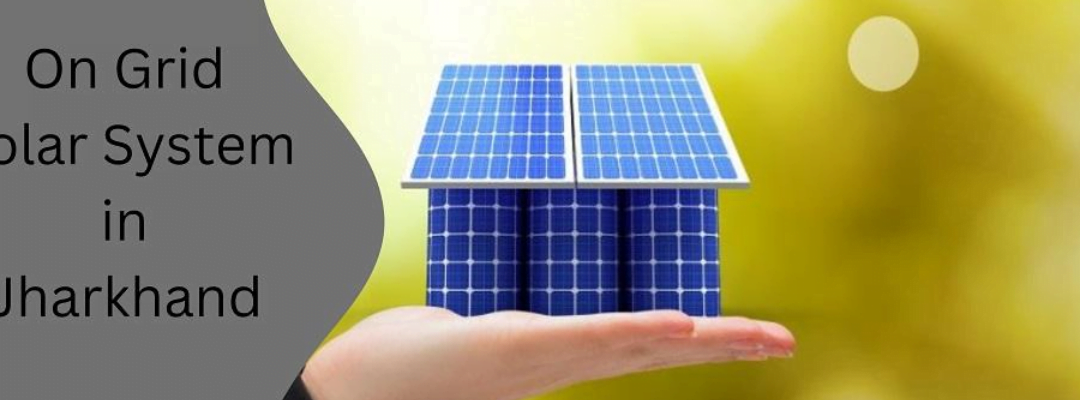
1. On-Grid Solar System
Connected to the electricity grid.
Reduces electricity bills by up to 80%.
Allows homeowners to sell excess power back to DISCOM.
Most recommended for urban households.
2. Off-Grid Solar System
Ideal for remote areas with unreliable electricity.
Uses batteries to store energy for nighttime or power outages.
Does not allow selling surplus power to the grid.
3. Hybrid Solar System
Combines the features of both on-grid and off-grid systems.
Includes battery backup for emergencies.
Enables surplus energy sale to DISCOM.
Recommended for households seeking energy independence.
Solar Panel Subsidy Schemes in Jharkhand
1. Central Government Subsidy (DBT Model)
Direct Bank Transfer (DBT) – The subsidy amount is credited directly into the applicant’s bank account.
Available through the National Solar Portal.
Processing time: Within 30 days of system commissioning.
2. Jharkhand State Government Subsidy
Provides an additional 50% discount on installation costs.
Available only for homeowners (tenants need landlord approval).
This subsidy is separate from the central subsidy.
Solar Panel Subsidy Pricing in Jharkhand
Capacity
Central Subsidy
State Subsidy
2 KW
₹29,176
₹X (Varies)
3 KW
₹43,764
₹X (Varies)
4 KW
₹51,058
₹X (Varies)
5 KW
₹58,352
₹X (Varies)
6 KW
₹65,646
₹X (Varies)
7 KW
₹72,940
₹X (Varies)
8 KW
₹80,234
₹X (Varies)
9 KW
₹87,528
₹X (Varies)
10 KW
₹94,822
₹X (Varies)
Step-by-Step Process to Apply for Solar Subsidy
Step 1: Schedule a Site Survey
Book an engineer visit through an approved vendor to assess the feasibility.
Step 2: Finalize the System & Costs
Choose the right capacity and system type based on your power needs and budget.
Step 3: Purchase & Install the Solar System
Buy the system through an approved installer and complete the installation.
Step 4: Apply for Net Metering
Submit the required documents to JREDA and DISCOM for net meter approval.
Step 5: Receive Subsidy in 30 Days
Once installation and inspection are completed, the subsidy amount is transferred within 30 days.
Why Choose Solar Energy in Jharkhand?
Reduce Electricity Bills – Solar power can cut bills by up to 80%.
Earn Money from Excess Power – Sell surplus electricity to the grid.
Environmentally Friendly – Contributes to a cleaner and greener future.
Government Backed Financial Support – Avail attractive subsidies and incentives.